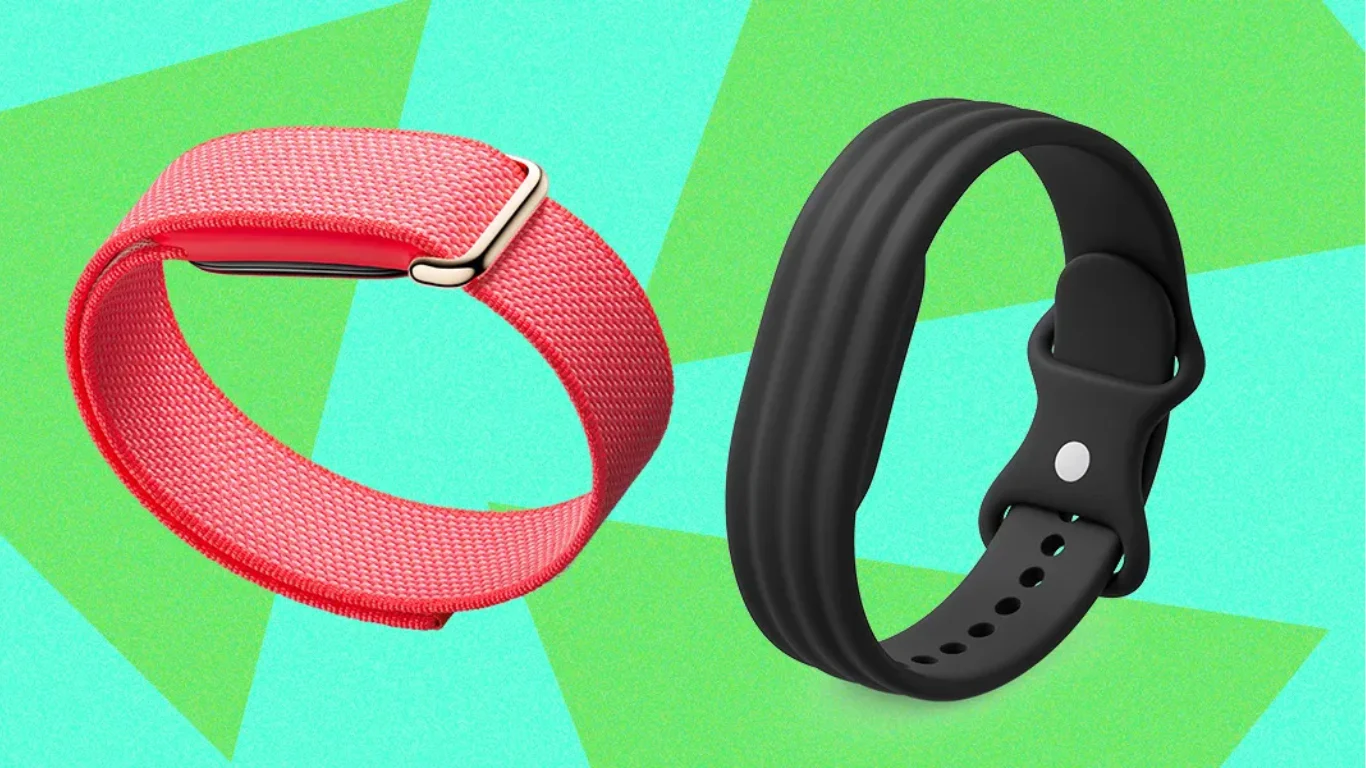
Google Fitbit Air Review 2026: The Screenless Fitness Tracker That Wants to Disappear on Your Wrist
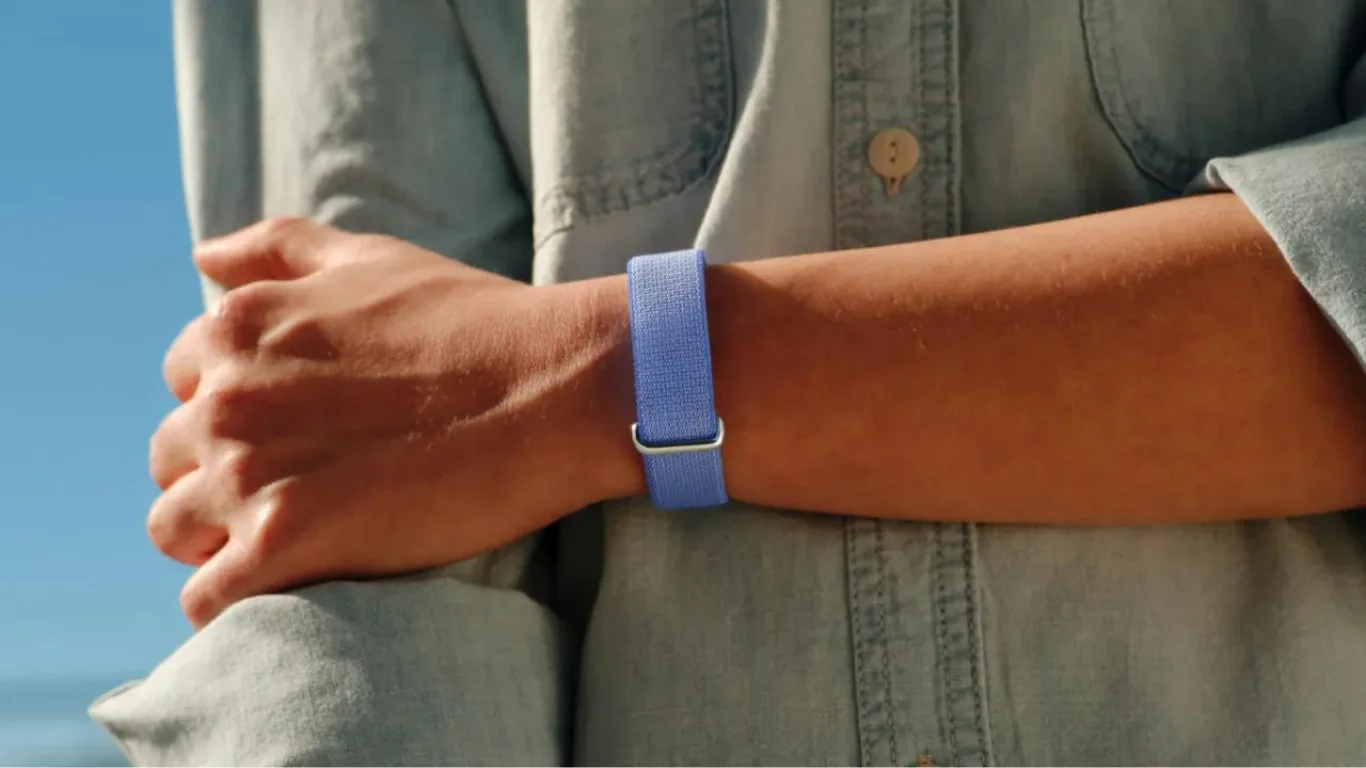
There is something quietly strange about a fitness tracker that has no screen. You put it on, and it just sits there. No glowing display. No notification buzz pulling you out of a conversation. Nothing to tap or swipe. Just a small, pill-shaped pebble on your wrist, silently watching.
That is exactly what Google wants with the Fitbit Air, its boldest wearable move in years, and perhaps the most interesting fitness device of 2026.
What Is the Fitbit Air, and Why Does It Have No Screen?
The Fitbit Air is Google's smallest and most affordable tracker, designed for comfortable, 24/7 health monitoring. It is a screenless fitness tracker that pairs with the Google Health app to provide advanced fitness insights, sleep tracking, and a week-long battery life.
The idea is simple once you sit with it. A screen means notifications. Notifications mean distraction. Distraction means you are no longer just living your life. You are performing it for a device.
Google's answer is to strip all of that away. The Air collects your health data quietly in the background while everything you actually want to see stays on your phone, available when you choose to look, invisible when you do not.
All the technology fits into a pill-shaped pebble made of plastic that can be easily removed from the band mechanism. The whole setup weighs just 12 grams. That is lighter than most rings, let alone smartwatches.
Pricing, Availability, and What You Actually Get
The $99 tracker is available to pre-order now, ahead of an official launch on May 26, 2026. Pre-ordering the Fitbit Air includes a three-month trial of Google Health Premium.
When that trial ends, Google Health Premium costs $9.99 per month or $99.99 per year. Subscribers to Google AI Pro or Ultra get access for free.
The preorder deal sweetens things further. Reports from The Verge confirm that preorders come with a second band included at no extra cost, and there is also a limited Steph Curry special edition.
Read More:Himanta Biswa Sarma Resigns as Assam CM: What Comes Next and Why This Moment Is Bigger Than It Looks
Sensors, Battery Life, and What It Actually Tracks
Do not let the minimalist design fool you into thinking this is a basic step counter.
The Fitbit Air offers an optical heart rate sensor for 24/7 monitoring, plus red and infrared sensors for SpO2 blood-oxygen monitoring. Beyond 24/7 heart rate tracking, this powers above/below range notifications, irregular heart rhythm notifications for AFib, and heart rate variability (HRV) readings.
Sleep tracking, resting heart rate, sleep stage detection, and automatic workout recognition are all part of the package.
The Fitbit Air has a 7-day battery life with quick charging that provides a full day of use in just 5 minutes, and a full 0-to-100% charge in 90 minutes. The new pill-shaped magnetic charger is bidirectional and uses USB-C. That quick-charge number is the kind of spec that matters when you forget to charge before bed.
The unit is also water resistant up to 50 meters, and it includes Bluetooth 5.0 plus a vibration motor for silent Smart Wake alarms.
The Google Health App and AI Coach: Where the Real Story Lives
Here is the part that separates Fitbit Air from a simple sensor strap.
The Fitbit app is officially being retired and rebranded as the Google Health app. This is more than cosmetic. Google has integrated its Gemini AI health coaching directly into the platform.
Read More: West Bengal Post-Poll Violence Explained: What Is Happening on the Ground and Why It Refuses to Stop
The Google Health Coach is powered by AI and functions as a personal health and fitness companion. It analyses your sleep, health metrics, and activity levels to give personalised feedback, and users can chat with it at any time about health and fitness topics.
The Google Health app, the Health Coach, and the photo-to-workout AI flow all run on the phone, which means the Fitbit Air is essentially a sensor on-ramp into Google's broader health ecosystem. Buying the band is also opting into that ecosystem.
That is worth pausing on. The Air is not just a tracker. It is Google's entry point for building a long-term health data relationship with you.
How It Compares to Whoop and the Competition
The obvious comparison is Whoop. Same category, same philosophy: screenless band, subscription model, deep health analytics. But the pricing changes the conversation significantly.
The Fitbit Air is 20% lighter than the discontinued Fitbit Luxe and appears designed to directly challenge Whoop's dominance in the screenless wearables category. Whoop requires an ongoing membership just to use the hardware. Fitbit Air at $99.99 is a one-time purchase, with an optional premium tier.
Amazfit with the Helio Strap, and Polar with its Loop Gen 2 have already released their own screenless band interpretations, and Garmin's much-leaked CIRQA looks set to debut soon. Fitbit's brand power, coupled with aggressive pricing, should give the Air significant traction in the market.
What Existing Fitbit Users Need to Know
If you are already a Fitbit user, things are changing whether you like it or not.
The rebranding to Google Health marks the symbolic end of the Fitbit of old. Multiple reports confirm that non-migrated Fitbit accounts will be deleted by July 15, 2026, and the Fitbit app will stop being available from May 19 onward. Several long-time users have expressed frustration over losing features they relied on through the transition.
The change is significant, but the direction is clear. Google is consolidating its health ecosystem around the Google Health brand, with Gemini AI at the centre and hardware like the Fitbit Air as the data collection layer.
Disclaimer: This article is based on information available across the web. Parchar Manch does not take responsibility for its complete accuracy, as the content could not be fully verified.
FAQs
Does the Fitbit Air work without a phone?
The Air collects data on its own throughout the day, but you need the Google Health app on your phone to view insights, start specific workouts, or interact with the AI coach.
Is the Fitbit Air worth buying if I already have a smartwatch?
If you want something lighter and less distracting for sleep tracking and passive health monitoring, yes. It is not a replacement for a smartwatch; it is a different tool entirely.
Is the Google Health Coach included for free?
You get three months of Google Health Premium free with purchase. After that, the coach is part of the $9.99 monthly or $99.99 annual subscription.
Can the Fitbit Air detect AFib?
Yes. The device includes irregular heart rhythm notifications designed to alert users to potential AFib episodes.