India Calls Pakistan an "Organised Factory of Hate" at UN Over Fitna al-Hindustan Claim
There is something revealing about the way Pakistan named its problem. Not a domestic insurgency. Not a governance failure. Not decades of state-sponsored extremism finally turning inward. No. Pakistan looked at the militant groups wreaking havoc inside its own borders in Balochistan and called them "Fitna al-Hindustan." A threat from India. Hindustan's trouble.
India did not let that pass quietly.
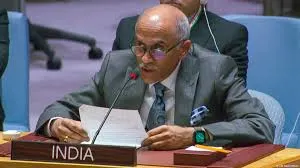
India's rejection of Pakistan's Fitna al-Hindustan narrative at the United Nations on June 8, 2026, was one of the sharpest diplomatic rebuttals New Delhi has delivered at an international forum in recent memory.
What Exactly Is "Fitna al-Hindustan" and Why Did Pakistan Use That Name
To understand what happened at the UN, you need to understand what Pakistan did before it.
Last year, the government of Pakistan officially designated all terrorist groups and organisations operating in Balochistan province as "Fitna al-Hindustan," alleging, without giving any proof, that the outfits indulged in terrorism at India's behest.
"Fitna" in Arabic roughly means chaos, discord, or sedition. So "Fitna al-Hindustan" translates, in effect, to "India's chaos" or "sedition from India." Pakistan was officially claiming, through government notifications, that the violent insurgency in Balochistan was not a homegrown crisis rooted in decades of political marginalisation, economic neglect and military repression, but rather an externally manufactured problem directed by India.
No evidence was produced. The label was the message.
Read More: Manoj Bajpayee Calls Ramayana and Varanasi Budget Hype a "PR Tactic" , And He Has a Point
What India Said at the UN Security Council
Speaking at a United Nations Security Council session focusing on the situation in Afghanistan, India's Permanent Representative to the UN, Ambassador Parvathaneni Harish, stated that Islamabad was merely attempting to deflect blame onto New Delhi.
India slammed Islamabad's decision to refer to groups inside its own borders as "Fitna al-Hindustan" as nothing but "officially sponsored misinformation and disinformation dressed in religious terminology."
That phrase is precise and worth sitting with. "Dressed in religious terminology" is how Ambassador Harish described it. Pakistan used an Arabic religious term to give a communal framing to what India argues is a straightforward attempt to deflect attention from domestic failure.
The Indian envoy further alleged that the narrative was being promoted by Pakistan's deep state to divert public attention from pressing domestic challenges. "It is an outcome of an organised factory of hate coming from the deep state of Pakistan, which aims to keep its citizens in a state of permanent hostility with India in order to perpetuate its control over power and resources while distracting attention from core political and economic problems," he stated.
The Afghanistan Context and Pakistan's Airstrikes
The UNSC session was specifically about Afghanistan, and India used the moment to deliver a wider critique of Pakistan's conduct in the region.
At the UNSC meeting, the Indian envoy strongly condemned Pakistan's campaign of military airstrikes against Afghanistan, which Delhi said is causing huge civilian casualties and suffering to the Afghan people. "Let me reiterate. Dressing up a massacre as a military operation does not absolve the perpetrator. Killing, maiming and orphaning civilians is not counter-terrorism," Parvathaneni said.
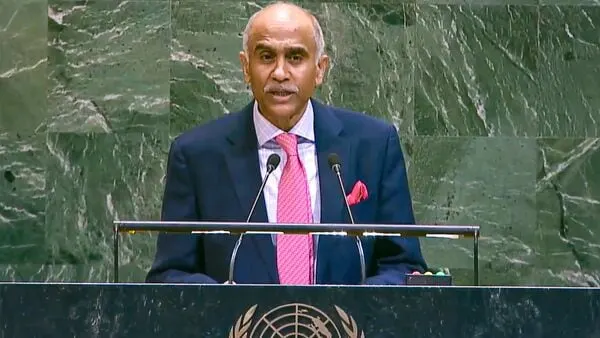
The Indian representative said such actions could not be justified under the guise of counter-terrorism. He stressed that civilian deaths, displacement, and destruction cannot be excused by political or military narratives. He also criticised Pakistan's stance of promoting international and religious solidarity while simultaneously carrying out military strikes during sensitive periods, calling it contradictory and deeply troubling.
Read More: RBI Holds Repo Rate at 5.25%: What the June 2026 MPC Decision Really Means for Your Money
Why This Diplomatic Exchange Matters Beyond the Headlines
India has consistently rejected such accusations and has repeatedly stated that Pakistan uses anti-India narratives to deflect attention from internal security, governance and economic challenges. At the UNSC, India dismissed the terminology as a politically motivated attempt to frame domestic issues through a religious lens.
The Pakistan-India UN dispute over the Fitna al-Hindustan label is not simply a war of words. International forums carry weight. When a label gets repeated enough, it starts entering diplomatic language, media coverage and even policy discussions. India's sharp pushback at the Security Council was a deliberate effort to prevent that from happening.
Parvathaneni asserted that such narratives would not alter facts on the ground and would not gain international legitimacy.
That last line is the core of India's counter-strategy. Reject early, reject loudly, reject at the highest forum available.
Read More: Kuku Technologies Files Confidential IPO: What the Rs 3,500 Crore Listing Really Means
Disclaimer: This article is based on information available across the web. Parchar Manch does not take responsibility for its complete accuracy, as the content could not be fully verified.
FAQs
What does "Fitna al-Hindustan" mean?
It is an Arabic-rooted term used by Pakistan to label militant groups operating in Balochistan, essentially accusing India of being behind their activities. "Fitna" means chaos or sedition; "al-Hindustan" refers to India.
Why did India raise this at the United Nations?
India raised it during a UN Security Council session on Afghanistan to reject the label and expose it as state-sponsored disinformation designed to deflect global attention from Pakistan's internal governance failures and cross-border terrorism.
Who represented India at the UNSC on this issue?
Ambassador Parvathaneni Harish, India's Permanent Representative to the United Nations, delivered the statement on June 8, 2026.
Did Pakistan provide evidence for the Fitna al-Hindustan claim?
No. India stated at the UNSC that Pakistan designated groups under this label without providing any evidence of Indian involvement.
What did India say about Pakistan's airstrikes on Afghanistan?
India strongly condemned Pakistan's military airstrikes on Afghanistan, calling them civilian massacres dressed up as counter-terrorism and demanding accountability for civilian deaths and displacement.
How does this fit into the broader India-Pakistan diplomatic conflict?
This is part of an ongoing pattern where India and Pakistan use international forums to contest each other's narratives on terrorism, sovereignty, and regional security. India has consistently pushed back against Pakistan's attempts to internationalise its domestic security failures.