India Women Beat England In First-Ever Lord's Test: Inside A 270-Run Rout For The History Books
Lord's has been hosting international cricket since 1884. That's 142 years. And somehow, in all that time, a women's Test match had never once been played there, not until this July. So when India Women beat England by 270 runs to win that inaugural fixture, it wasn't just a result. It was the ground finally catching up to a format it had kept waiting far too long.
Let's get the basics out of the way first, because this is the kind of story where the numbers do a lot of the talking. India posted 285 in their first innings, bowled England out for 170, declared their second innings at 341 for 7, and then dismissed England for 186 while chasing an improbable 457. That's a 270-run win, the fourth-biggest margin of victory by runs in the history of women's Test cricket.
Why This Lord's Test Actually Matters
Here's the thing worth sitting with for a second. Lord's staged its first women's international match all the way back in 1976, a one-day game between England and Australia. But a women's Test, the actual five-day format cricket considers its purest, didn't arrive until fifty years later. That gap says something about how long the women's game has had to wait for parity in scheduling and recognition, even at cricket's most storied venue.
This match mattered for another reason too. Both India and England came into it fresh off disappointment at the T20 World Cup, which had also been staged at Lord's just days earlier, with England losing the final to Australia and India getting knocked out in the group stage. So this wasn't just a historic fixture. It was a chance for both sides to leave Lord's with something to actually feel good about. Only one team managed that.
Read More: TMC MPs Join BJP: Inside The Kolkata Defection That Just Reshaped West Bengal's Rajya Sabha Math
What Actually Happened, Match By Match
Let me walk through this properly, because the shape of the game explains why India won so convincingly.
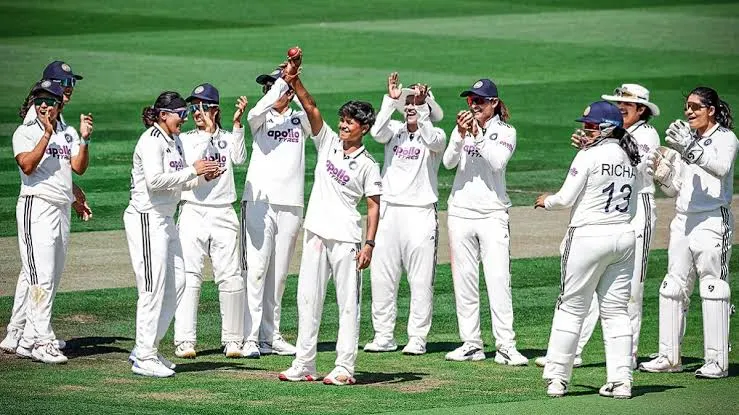
India batted first and posted 285, built on half-centuries from captain Harmanpreet Kaur, opener Smriti Mandhana, and all-rounder Deepti Sharma. England replied with 170, undone largely by 22-year-old pace bowler Kranti Gaud, who took 5 for 37 and became the first woman to have her name etched onto the Lord's honours board, an honour reserved for centuries, five-wicket hauls, or ten wickets in a match at the ground.
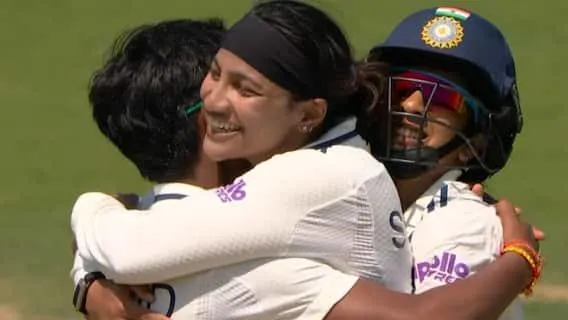
With a 115-run first-innings lead in hand, India batted again in their second innings. Wicketkeeper-batter Yastika Bhatia scored 113, her first century in any international format, joining Gaud on that same honours board. Smriti Mandhana added another fifty, and India declared at 341 for 7, setting England a target of 457, a number no team had ever chased successfully in a women's Test. For context, the highest successful fourth-innings chase in women's Test history stands at 198.
England never got close. They ended day three at 130 for 6, and on the fourth morning, spinners Sneh Rana and Deepti Sharma cleaned up the tail. Rana finished with 4 for 42, dismissing Amy Jones for 54 and then bowling Sophie Ecclestone, who had fought hard for a defiant maiden half-century of her own, for 50. England were all out for 186.
How India's Bowlers Sealed The Win, Step By Step
If you want the practical breakdown of how India closed this out, it went roughly like this. First, India's spin attack, Rana and Deepti Sharma in particular, targeted a pitch that was offering turn and occasional low bounce by the fourth day. Second, they picked off England's recognised batters early, removing Amy Jones just two runs past her overnight score. Third, they allowed Ecclestone room to counterattack briefly, understanding that her runs alone couldn't change the target. Fourth, once Ecclestone was dismissed, the remaining England batters folded quickly, with Deepti Sharma removing the last two wickets in short order. Fifth, the whole final-day effort took just around 95 minutes, a fittingly swift end to a lopsided contest.
Real-World Significance Behind The Scorecard
This match also closed a chapter for English cricket. It marked the final international appearances for Tammy Beaumont and former captain Heather Knight, two veterans who were part of England's title-winning squad at the 2017 ICC Women's Cricket World Cup, played at this very ground. Their careers ended on a heavy defeat, which is a hard note to finish on, though nobody's questioning what they built over the years.
For India, the win carries weight beyond the scoreline too. It's their second-highest winning margin by runs in women's Test cricket, behind a 347-run win over England in Navi Mumbai back in 2023. And it comes after a difficult recent stretch in white-ball cricket, giving the team a genuine high point to close out their England tour on.
Mistakes People Keep Making While Reading This Result
A common mistake is treating this as a fluke because women's Test cricket is played so rarely. It isn't. India's batting depth, five players contributing fifties or a century across the match, and their spin-bowling discipline reflect squad strength built over years, not a one-off good day. Another mistake is underselling England's effort simply because they lost heavily. Ecclestone's fighting fifty, coming from a bowler, and the brief resistance from the middle order showed England competed even while losing.
Pro Tips For Following Women's Test Cricket Going Forward
If this match got you interested in the format, here's a quiet tip: track the honours boards. Lord's now has both Kranti Gaud and Yastika Bhatia inscribed on them, and watching which players earn that recognition over time tells you a lot about where the format's next stars are coming from. Also worth following: India's captain has openly said she wants more Test matches scheduled, which suggests this fixture won't be a one-off if the boards responsible for scheduling listen.
Closing Thoughts
There's a version of this story that's just about numbers, 270 runs, a century, a five-wicket haul, a target no one had chased before. But the quieter part of it is the wait itself. Fifty years between Lord's first women's international and its first women's Test. Once that wait ended, India didn't just win, they made the occasion feel like it belonged to them from the very first ball.
Read More: Modi Albanese Meeting: Why This Melbourne Handshake Could Reshape India's Energy Future
Disclaimer: This article is based on information available across the web. Parchar Manch does not take responsibility for its complete accuracy, as the content could not be fully verified.
FAQs
By how many runs did India Women beat England?
India won by 270 runs, setting England a 457-run target and bowling them out for 186.
Who was the standout performer for India in this Test?
Yastika Bhatia scored 113, her maiden international century, while Kranti Gaud took 5 for 37 in England's first innings.
Why was this match historic for Lord's?
It was the first-ever women's Test match played at Lord's in the ground's 142-year Test history, despite the venue hosting a women's ODI as far back as 1976.
Which England players retired after this match?
Tammy Beaumont and former captain Heather Knight both played their final international match in this Test before retiring from all formats.
What was the target England failed to chase?
England were set 457 runs to win, a target higher than any successful fourth-innings chase in women's Test history, and were bowled out for 186.
Who took the most wickets for India in this match?
Sneh Rana finished with six wickets across the match, including the final wicket that sealed the win, while Kranti Gaud's 5 for 37 in the first innings was the standout bowling performance.