JD Vance Reports "Good Foundation" After US-Iran Talks in Switzerland: What Was Actually Agreed and What Comes Next
There is something almost surreal about a sitting US Vice President sitting across the table from Iranian officials in a Swiss mountain resort, trying to wind down a war that was still producing fresh threats from Washington while the negotiations were literally underway.
That is exactly what happened over the weekend of June 21-22, 2026.
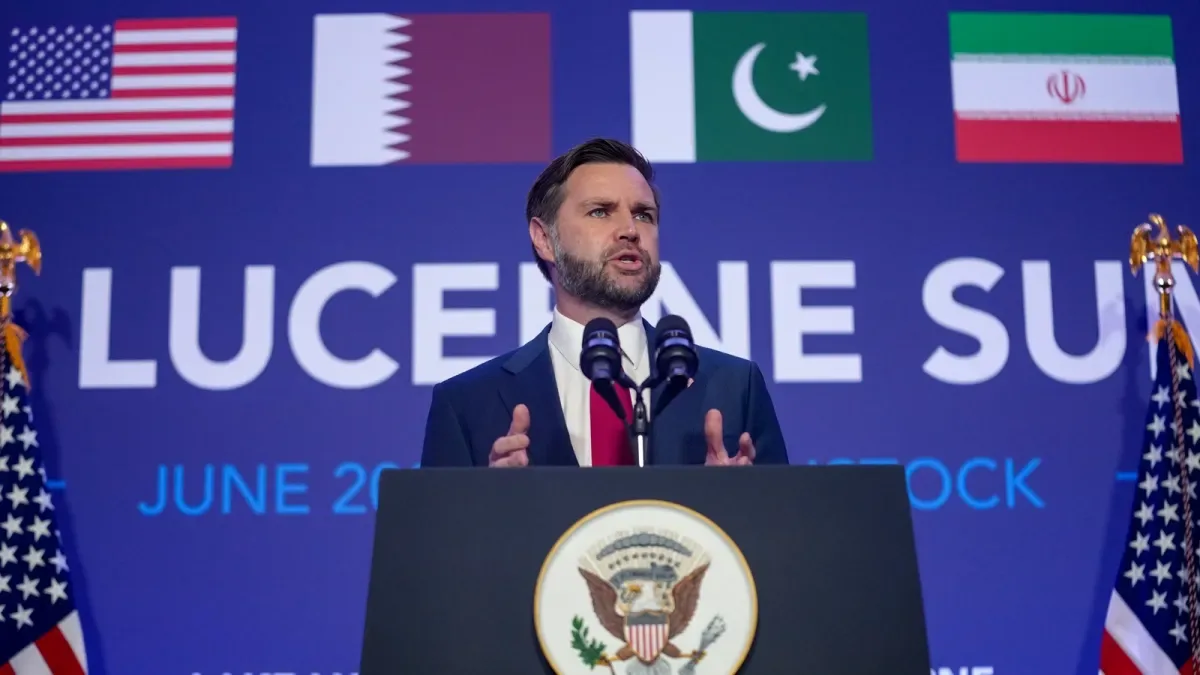
JD Vance led high-level US-Iran talks at the Burgenstock resort overlooking Lake Lucerne in Switzerland. On Monday, departing for Washington, he told reporters the discussions had made "a lot of good progress" and had laid a "good foundation for a successful final deal." He used a construction analogy that felt deliberately modest: "We set the foundation. We haven't built the house."
It was careful language. Chosen carefully.
Why These Switzerland Talks Are Unlike Any Previous US-Iran Diplomacy
These were not conventional arms reduction negotiations or quiet backroom exchanges facilitated through intermediaries. The context here is a military conflict. The US and Israel began a war involving Iran in late February 2026. A memorandum of understanding was signed last week by the leaders of both the US and Iran, establishing a 60-day window for negotiators to work through a permanent deal. These Switzerland talks were the first major high-level face-to-face meeting under that framework.
The stakes are not abstract. The Strait of Hormuz, the narrow waterway through which a substantial share of the world's oil supply passes, was at the center of proceedings. So was Iran's nuclear program. And so was the continuing fighting between Israel and Hezbollah in Lebanon, which Iran is deeply invested in and which was threatening to derail everything as it unfolded.
Who Was in the Room and What the Setup Looked Like
The talks were structured as a quadrilateral meeting involving the United States, Iran, Qatar, and Pakistan, with the latter two serving as mediators. Vance led for the US side, alongside envoys Steve Witkoff and Jared Kushner. Iran was represented by Mohammad Bagher Ghalibaf, the country's parliamentary speaker.
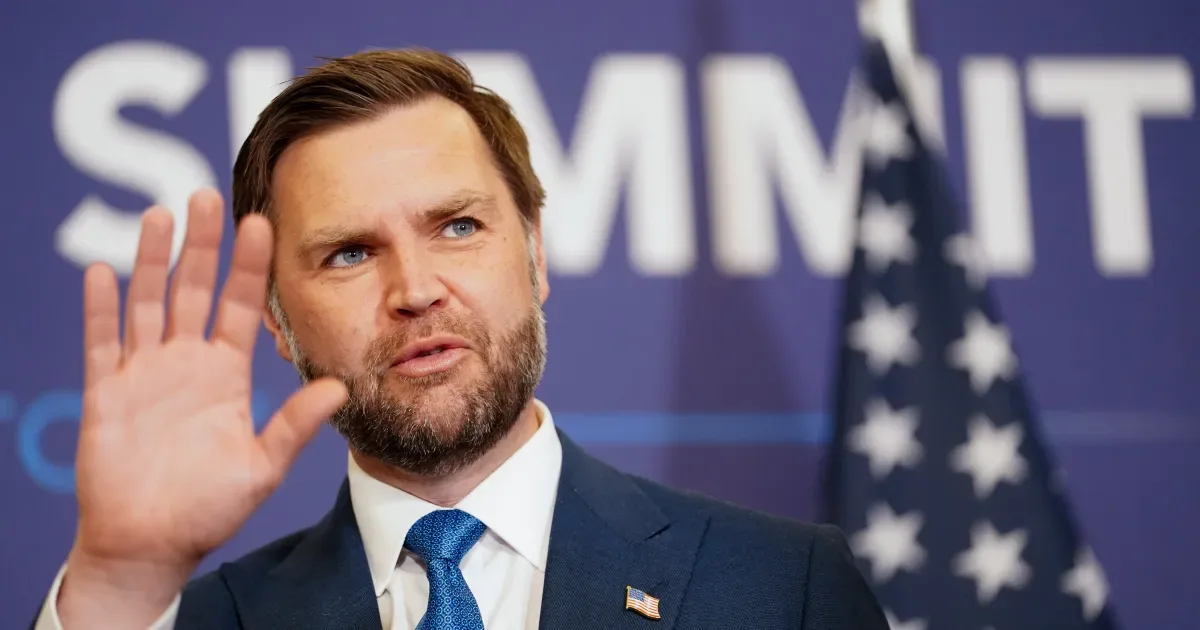
Rafael Grossi, the chief of the International Atomic Energy Agency, was also present in Switzerland, which signals that the nuclear component of talks was never far from the surface.
Pakistani Prime Minister Shehbaz Sharif and Pakistani Staff Field Marshal Asim Munir met with Vance separately. The Qatari Prime Minister was also present in the diplomatic circuit around the talks.
What Was Actually Agreed: Breaking Down the Outcomes
The joint statement from Qatar and Pakistan, released Monday morning, confirmed an agreement on "a road map" to reach a final deal within the 60-day window and the establishment of a communication line specifically designed to prevent incidents in the Strait of Hormuz. The statement described "encouraging progress" and announced the "immediate commencement of technical talks."
On the nuclear question, Vance said Iran has formally agreed to invite IAEA inspectors back into the country to access its nuclear sites. He added that inspections could begin "possibly this week" or "as soon as today." This is significant. Vance himself described it as "a major milestone for the American people and the first step in permanently denuclearising" Iran.
Iranian Foreign Minister Abbas Araghchi described "major progress" on Lebanon and said that as part of the broader framework, oil and petrol exports are being waived, the blockade is being lifted, some frozen assets are to be released, and a reconstruction and development plan for Iran is being launched.
The Drama That Nearly Broke the Talks Before They Could Finish
This was not a smooth 48 hours. On Sunday night, the Iranian delegation reportedly walked out of negotiations in protest after President Trump posted on Truth Social threatening to "hit Iran very hard again, only harder" if Iranian-backed proxies in Lebanon did not stop fighting. The message went out while Vance was sitting in Switzerland negotiating with those same Iranians.
Ghalibaf responded publicly that Iran "don't count on the American threats." Vance, asked about Trump's post on his way out, said that when Iran engages in what he described as "trash talk," they cannot expect the US president not to respond. He asked reporters to "mistrust a little bit what you see coming out of Iranian social media" regarding the state of the talks.
A ceasefire monitoring mechanism was separately established by US Central Command to track compliance in Lebanon in real time, giving policymakers visibility on violations by both Israel and Hezbollah.
Read More: The Iran-US Peace Deal Is Almost Here — But Israel's War in Lebanon Could Still Unravel Everything
Closing Thoughts
What emerged from Switzerland is not a peace deal. Vance was careful to say that. But the 60-day framework now has some structure around it: a roadmap, technical talks, IAEA access, and a Strait of Hormuz coordination mechanism. Whether that foundation holds depends entirely on what happens in Lebanon in the coming days, whether Israeli operations pause, whether Hezbollah respects the ceasefire, and whether the technical negotiations that begin this week can move fast enough to build something durable before the political temperature rises again.
"This region has been a basket case for a very long time," Vance said, departing Switzerland. Which is either candid or bleak, depending on how you read it. Possibly both.
Read More: From a Beijing Apartment to $92.8 Billion: How Zhang Yiming Just Overtook Mukesh Ambani
Disclaimer: This article is based on information available across the web. Parchar Manch does not take responsibility for its complete accuracy, as the content could not be fully verified.
FAQs
What were the US-Iran talks in Switzerland about?
The talks aimed to advance a deal to end the war involving the US and Israel against Iran, which began in late February 2026. Key topics included the Strait of Hormuz, Iran's nuclear program, IAEA inspector access, and a framework to end fighting between Israel and Hezbollah in Lebanon.
What did JD Vance say was achieved at the Switzerland talks?
Vance said negotiators made "a lot of good progress," laid a "good foundation for a successful final deal," established a Strait of Hormuz coordination mechanism, and secured Iran's agreement to invite IAEA inspectors back into the country. He described the outcome as a foundation, not a finished house.
Did Iran agree to stop enriching uranium?
No. Iranian President Masoud Pezeshkian said Iran would "never back down from the right to enrich uranium." The IAEA inspector agreement is about verification and transparency, not about Iran abandoning enrichment activities.
Who mediated the US-Iran Switzerland talks?
Qatar and Pakistan served as mediators. Both countries issued the joint closing statement and described the atmosphere as "positive and constructive" despite significant tensions during the process.
Why did the Iranian delegation reportedly walk out during the talks?
The Iranian side reportedly left negotiations briefly on Sunday night in protest after Trump posted threats to strike Iran again while Vance was simultaneously sitting in Switzerland for negotiations. The talks resumed, and a joint statement was issued on Monday morning.
What happens next after the Switzerland talks?
Technical negotiations are continuing in Switzerland following the conclusion of the high-level meetings. The 60-day framework established by the US-Iran memorandum of understanding sets a window for reaching a final deal, with IAEA inspections potentially beginning within days of the talks concluding.