Keir Starmer Resigns as UK Prime Minister: What Led to the Fall and What Happens Next
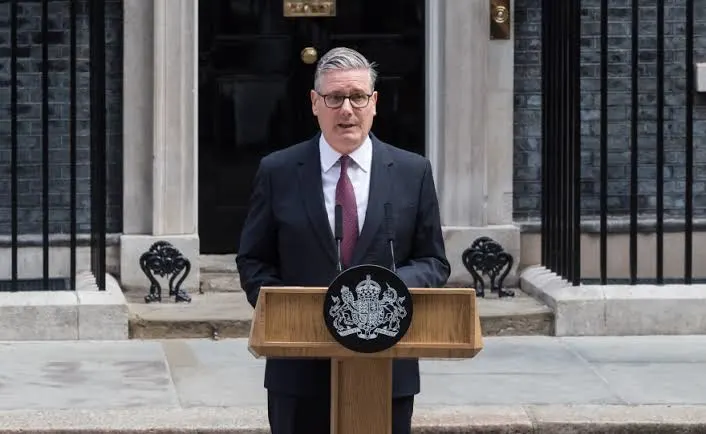
He said he accepted the answer "with good grace." Standing outside 10 Downing Street on June 22, 2026, Keir Starmer announced his resignation as UK Prime Minister and Labour Party leader, just under two years after winning one of the biggest landslide election victories in British political history.
It was a quiet, dignified ending to a premiership that had been anything but quiet for months.
Why Keir Starmer's Resignation Was a Long Time Coming
The story did not begin on June 22. It began in May 2026, when Labour Party local election results arrived as something close to a political catastrophe. The party lost over 1,400 council seats. The far-right Reform UK, led by Nigel Farage, surged, gaining 1,453 councillor positions, largely from Labour, and took control of 14 councils.
The elections were widely read as a referendum on Starmer personally. His net approval rating had fallen to minus 46 percent by November 2025, and an Ipsos poll that month identified him as the most unpopular prime minister since the firm began tracking public approval in 1977. By the end, 79 percent of the British public said they were dissatisfied with his performance.
Those numbers do not explain everything. But they explain a great deal.
Read More: The Cockroach Janta Party: India's Gen Z Turned Humiliation Into a Political Warning Shot
The Moment That Forced the Issue: Andy Burnham Enters Parliament
The timeline that finally pushed Starmer out was set in motion by a coordinated move within Labour. A sitting MP, Josh Simons, resigned his constituency of Makerfield specifically to create a vacancy. Andy Burnham, the popular Mayor of Greater Manchester, widely known as the "King of the North" after nearly a decade leading the city, needed a parliamentary seat to be eligible to challenge for the party leadership. He stood in the resulting by-election on June 18, 2026, and won decisively with over 9,200 votes majority.
Burnham arrived in London by train the following Monday, was sworn into Parliament, and the path became clear. Starmer's position was untenable. Former Health Secretary Wes Streeting, once seen as Burnham's most likely rival, threw his support behind Burnham rather than contest the race. Without a credible alternative, the internal dynamics collapsed around Starmer rapidly.
What Starmer Said and How He Said It
The resignation statement was notable for its composure. "The question my party is asking now is whether I am best placed to lead us into the next general election," Starmer said. "I have heard the answer of my parliamentary party to that question, and I accept that answer with good grace."
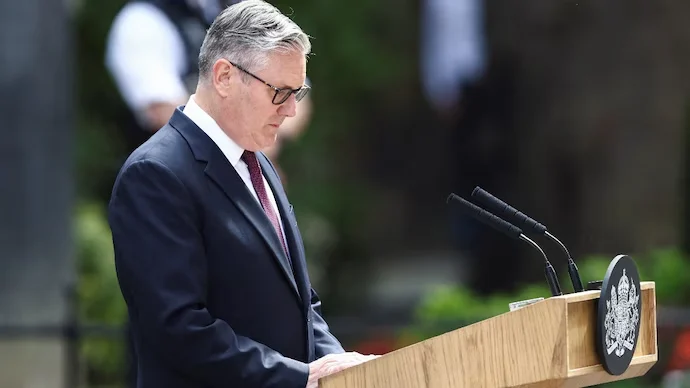
He announced that Labour leadership nominations would open on July 9, with a new leader expected before Parliament returns in September after the summer recess. He confirmed he spoke with King Charles on the morning of June 22 to inform him of his decision. He said he would remain as caretaker Prime Minister until a successor is confirmed.
He appeared to choke up toward the end, speaking of his family, his wife Victoria, and his children.
What Brought Starmer Down: The Bigger Picture
Starmer's difficulties were not simply about personality or communication style, though those were widely criticized. His government inherited a country dealing with the long-term economic damage of Brexit, stagnant wages that had not meaningfully risen in two decades, and a cost of living crisis that made the promise of rapid change feel hollow.
The appointment of Peter Mandelson as British Ambassador to the United States became a significant scandal in September 2025 following the release of the Epstein files. His Chief of Staff Morgan McSweeney resigned in February 2026. His deputy Angela Rayner had already resigned over a tax scandal. The cumulative effect of cabinet losses and scandals steadily eroded the authority of a leader who had never managed to generate strong public enthusiasm even at his electoral peak.
Reform UK's rise exposed a gap that Starmer could not close. His attempts to adopt tougher immigration rhetoric did not slow Farage's momentum. Left-leaning voters drifted toward the Greens and Liberal Democrats. He was losing support in both directions at once, and no rhetorical repositioning appeared capable of stopping it.
What Comes Next: Andy Burnham and the Labour Leadership Race
Burnham has confirmed he will seek the Labour leadership. If the party unites around him without a formal contest, which is increasingly likely given Streeting's withdrawal from contention, he could enter office as Prime Minister as early as late July 2026. Political risk analysts at the Eurasia Group have projected July 18 or 19 as the likely transition date if a leadership contest is avoided.
Burnham's pitch is centred on reconnecting Labour with working-class voters in northern England, the very communities that drifted toward Reform in the local elections. Whether that appeal can translate from Greater Manchester to national government, and whether a new Labour leader can tackle the same structural problems that defeated Starmer, remains the question that will define British politics for the rest of 2026.
Closing Thoughts
Keir Starmer's resignation makes him the UK's sixth prime minister to leave office in a decade, with a seventh now set to take his place. That is an extraordinary rate of political turnover for a stable democracy, and it reflects something deeper than any individual leader's strengths or weaknesses. The country is searching for something: economic stability, a sense of direction, a government that can translate landslide mandates into felt change. Whether Andy Burnham provides that, or whether the pattern simply continues, is a question Britain will spend the coming months beginning to answer.
Disclaimer: This article is based on information available across the web. Parchar Manch does not take responsibility for its complete accuracy, as the content could not be fully verified.
FAQs
Why did Keir Starmer resign as UK Prime Minister?
Starmer resigned following catastrophic local election results in May 2026, which saw Labour lose over 1,400 council seats to Reform UK. His personal approval ratings had fallen to historic lows, and the entry of Andy Burnham into Parliament as a direct leadership challenger made his position untenable.
Who will replace Keir Starmer as UK Prime Minister?
Andy Burnham, former Mayor of Greater Manchester, is the frontrunner. He won the Makerfield by-election on June 18, 2026, which gave him the parliamentary seat required to contest the Labour leadership. Former Health Secretary Wes Streeting has already pledged his support, making a Burnham coronation without a formal contest possible.
When will the UK get a new Prime Minister?
Starmer will remain as caretaker Prime Minister while the Labour leadership contest runs. Nominations open July 9. If Burnham runs unopposed or wins quickly, he could take office in late July. If there is a contested race, the new leader and Prime Minister will be confirmed before Parliament returns in September 2026.
Did a general election trigger Starmer's resignation?
No. His resignation was triggered by an internal Labour Party leadership challenge, not a general election. Critics, including opposition politicians, have pointed out that Starmer himself demanded a general election when Conservative leaders changed without a public vote in 2022, making his own party-managed transition politically awkward.
What happens to Labour's parliamentary majority during the leadership transition?
Labour retains its large parliamentary majority from the 2024 general election. Starmer stepping down does not trigger a general election. The new Labour leader will take over as Prime Minister while the same parliamentary mandate remains in place, though pressure to call a public vote may intensify depending on how Burnham's leadership begins.