Meet the Four Astronauts NASA Just Named for Artemis III, the Mission That Has to Work Before Humans Walk the Moon Again
Two months after Artemis II flew around the Moon and returned safely to Earth, NASA has kept its momentum going. On June 9, 2026, the agency named the four astronauts assigned to Artemis III, the next mission in its step-by-step return to the Moon. No, they will not be landing on the lunar surface. But what they are being asked to do is arguably just as critical, and if they get it right, everything that comes after becomes possible.
The Artemis III crew announcement marks a real turning point in America's deep space programme. Here is everything worth understanding about who these astronauts are and what this mission actually involves.
The Artemis III Crew: Who Are the Four Astronauts?
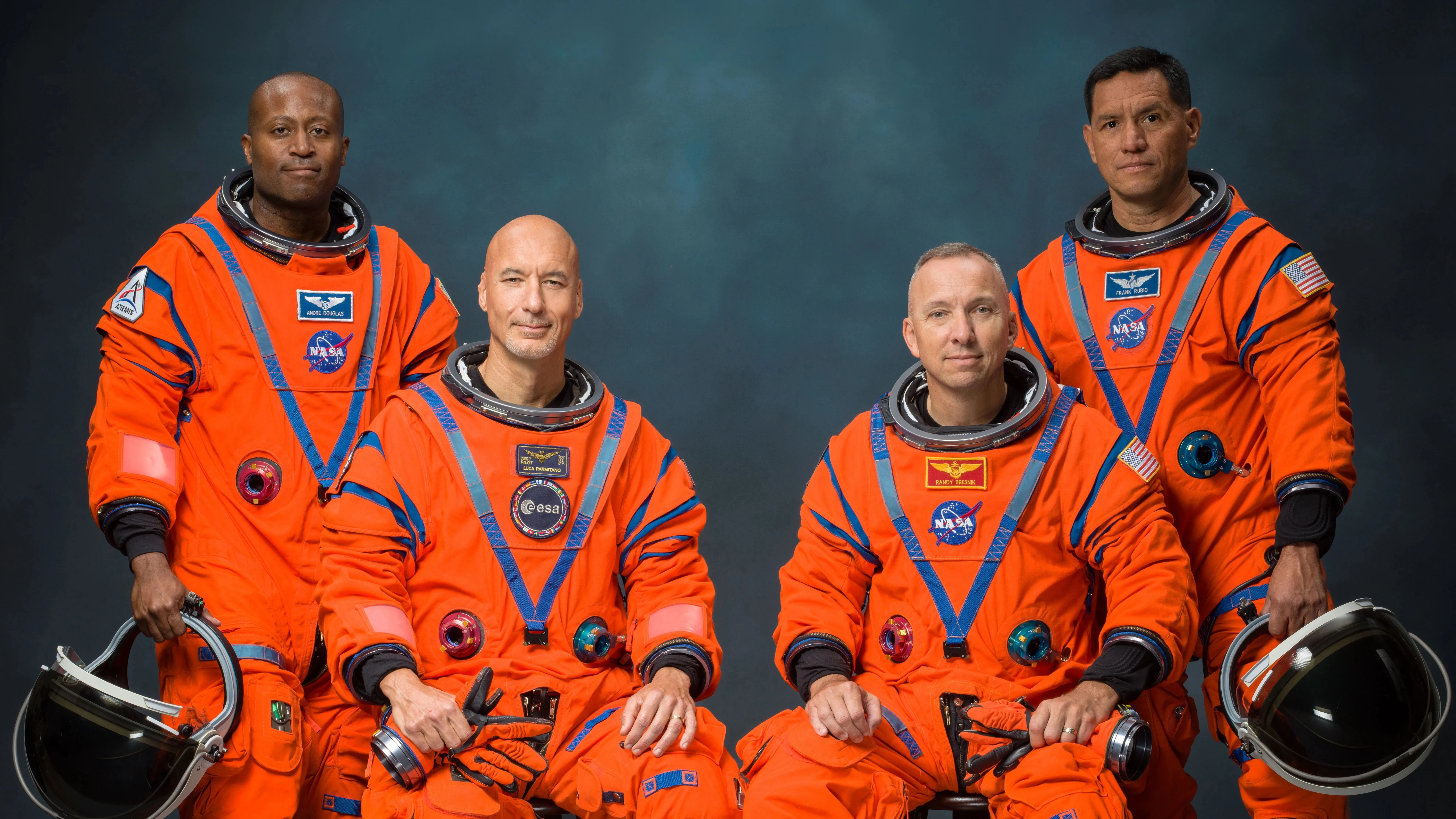
NASA announced the crew of Artemis III on June 9, 2026: commander Randy Bresnik from NASA, pilot Luca Parmitano from the European Space Agency, and mission specialists Frank Rubio and Andre Douglas, both from NASA.
Randy Bresnik will lead the mission as commander. A native of Santa Monica, California, Bresnik graduated with a bachelor's degree in mathematics from The Citadel Military College of South Carolina in 1989, followed by a master's in aviation systems from the University of Tennessee-Knoxville. He served as a U.S. Air Force pilot, became a test pilot in 1999, and was selected by NASA as an astronaut in 2004.
Luca Parmitano, the Italian astronaut flying as pilot, brings an almost legendary composure to the crew. ESA Director General Josef Aschbacher noted that early in Parmitano's career, during a spacewalk, his helmet began to fill with water. He handled it with calm and clarity and brought himself back safely. The director said that tells you more about an astronaut than any CV ever could. Parmitano was visibly emotional at the announcement event, crediting his family as the fuel behind the mission.
Andre Douglas, a mission specialist making his first foray into spaceflight, was born in Miami and studied engineering at the U.S. Coast Guard Academy. He earned three master's degrees and a Ph.D. from institutions including the University of Michigan and George Washington University, and carried out research for NASA at the Johns Hopkins University Applied Physics Laboratory. His reaction at the announcement said it all: his brain going a mile a minute, his heart warm.
Frank Rubio, 50, rounds out the crew as the second mission specialist. NASA astronaut Bob Hines was named as a backup crew member.
Read More: Power Shifts 2026: A Clear Look at India’s Changing Political Scene
What Artemis III Will Actually Do, and Why It Is Not the Moon Landing People Expect
This is where things get a bit counterintuitive. Artemis III is not the mission that lands humans on the Moon. That is Artemis IV, planned for 2028. So what does Artemis III do?
Artemis III will launch four astronauts from NASA's Kennedy Space Center aboard the Orion spacecraft on the SLS rocket. The mission will test critical rendezvous and docking capabilities between Orion and commercial human landing systems needed to deliver astronauts to the lunar surface.
Think of it like a dress rehearsal. The crew orbits Earth and practices docking their Orion capsule with two lunar landers currently being built by SpaceX and Blue Origin. Both companies said in updates on Tuesday that they expect their vehicles to be ready.
This dress rehearsal will set up Artemis IV to land people on the Moon as early as 2028.
Read More: CBSE Re-Evaluation Portal 2026: Everything Students Need to Know Before the Deadline Passes
Why Artemis III Matters: The Stepping Stone Between Now and the Moon
The logic of the Artemis programme is sequential. Every mission either proves something or breaks something, and both are valuable. Artemis I was uncrewed. Artemis II flew four astronauts around the Moon in April 2026. Artemis II set a record-breaking trip around the Moon that surpassed the distance record of Apollo 13. Now Artemis III tests the hardware that will ultimately lower astronauts to the lunar south pole.
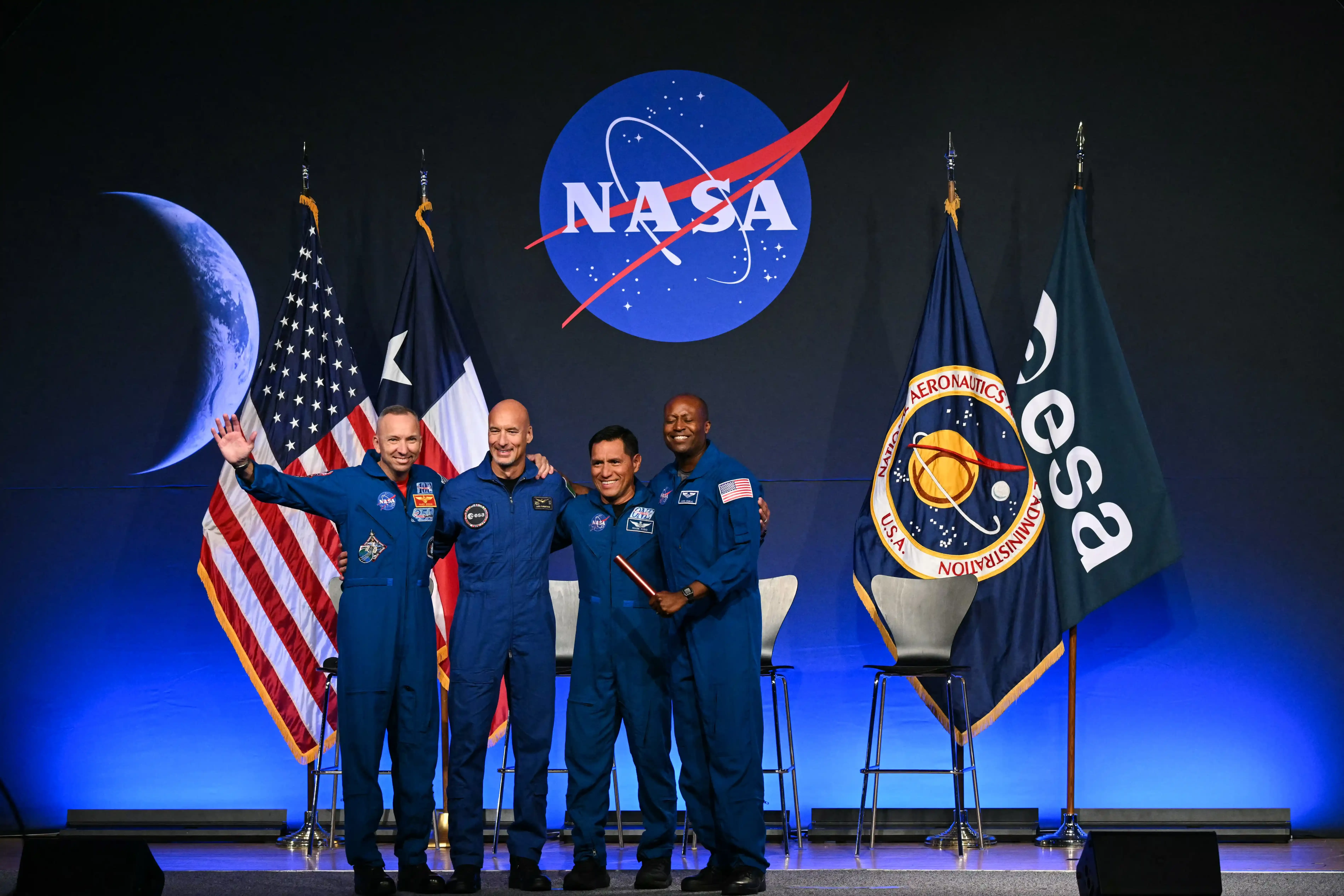
NASA Administrator Jared Isaacman put it plainly: "Today we take another bold step in humanity's return to the Moon, building on the extraordinary foundation laid by the Artemis II astronauts. Their achievements reignited global excitement for exploration, and now they pass the torch to the Artemis III team."
The mission is also a significant moment for international collaboration. An ESA astronaut sitting in the pilot's seat of an Orion spacecraft orbiting Earth is not a footnote. It reflects how genuinely global the Artemis programme has become.
Read More: Trump's Iran Deal: The "Final Determination" That Nobody Has Made Yet
The Bigger Picture: What Artemis Is Building Toward
The Artemis programme aims to build toward a sustained human presence on the south pole of the Moon. Unlike the Apollo programme, Artemis is designed to maintain human exploration of the Moon in the long term and eventually build a base there.
The goal is not flags and footprints. It is infrastructure. Lessons for Mars. A permanent human presence beyond Earth. Artemis III is one careful step in that direction.
NASA Artemis programme manager Jeremy Parsons described the mission's ambition clearly: "This test flight will enable us to prove we can carry out highly choreographed operations with our partners across hardware interfaces, software propulsion systems and life support elements with crew in the high-stakes space environment."
Closing Thoughts
There is something quietly significant about the fact that a European astronaut will be at the controls of an American spacecraft testing two commercially built lunar landers above Earth, as part of a mission that exists only to make the next one possible. Artemis III is not the headline mission. But the headline mission cannot happen without it.
The four astronauts named on June 9, 2026 will begin training immediately. The launch is expected in 2027. Whatever comes next, it starts with them getting this right.
Read More: DK Shivakumar Is Finally Becoming Karnataka Chief Minister: The Wait, The Deal, and What Comes Next
Disclaimer: This article is based on information available across the web. Parchar Manch does not take responsibility for its complete accuracy, as the content could not be fully verified.
FAQs
Will the Artemis III crew land on the Moon?
No. Artemis III is a test flight in Earth orbit. The crew will practice docking with lunar landers built by SpaceX and Blue Origin. The actual Moon landing mission is Artemis IV, targeted for 2028.
Who are the four Artemis III astronauts?
Randy Bresnik (commander), Luca Parmitano (pilot, ESA), Frank Rubio (mission specialist), and Andre Douglas (mission specialist). Bob Hines is the backup crew member.
When will Artemis III launch?
The crew is expected to launch into Earth orbit in 2027. Training has begun immediately following the June 9, 2026 announcement.
What is the purpose of Artemis III if it does not go to the Moon?
Artemis III will test rendezvous and docking between the Orion spacecraft and two commercial lunar landers in Earth orbit. This is a critical step to verify all hardware and procedures before a crewed lunar surface landing in Artemis IV.
Why is a European astronaut part of the Artemis III crew?
ESA is a key international partner in the Artemis programme. Luca Parmitano's selection as pilot reflects the global collaboration NASA has built and ESA's long-standing contribution to human spaceflight hardware and expertise.