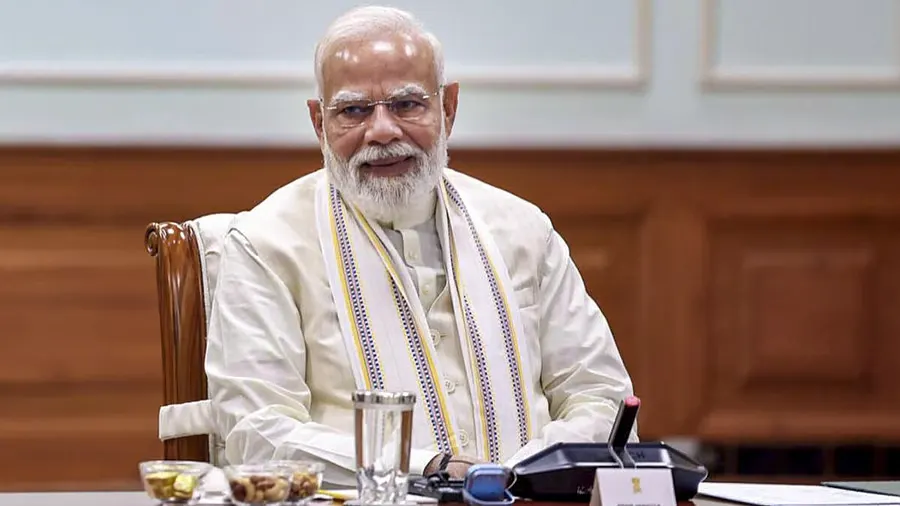
Modi at 12: A Decade-Plus of Leading India , What Changed, What Didn't, and What It All Means
On May 26, 2014, a political figure from Gujarat walked into the forecourt of Rashtrapati Bhavan and took oath as India's Prime Minister. Twelve years later, that moment still echoes. May 26, 2026 marks 12 years since Narendra Modi took oath as Prime Minister, after leading the BJP to a historic single-party majority. The Modi era has been defined by major economic reforms like GST and the growth of India's economy to $4.3 trillion.
That is not a small thing. India at $4.3 trillion is a different country than the one he inherited.
Why Modi's 12 Years in Power Matter to Every Indian , and Beyond
Modi has secured victory in three consecutive Lok Sabha elections in 2014, 2019, and 2024 , a feat that underscores political longevity and a sustained public mandate. Twelve years of continuous leadership means twelve years of policy direction, institutional change, and cumulative choices that are now baked into daily life.
This is not about political loyalty. It is about understanding how decisions made at the top level filter down , into gas cylinders, bank accounts, roads, hospitals, and a country's seat at the global table.
Read More: Kuku Technologies Files Confidential IPO: What the Rs 3,500 Crore Listing Really Means
The Economy: The Number That Stopped the Argument
India's GDP was Rs 103 lakh crore in 2013-14, which increased to Rs 357 lakh crore by 2025-26 , a threefold increase. The numbers are genuinely large. India is now the world's fourth-largest economy, a fact that came with years of work on infrastructure, digital systems, and manufacturing incentives under the Make in India initiative.
The government adopted a poverty-centric development agenda, lifting 250 million people out of poverty in the last 10 years. Rural poverty falling from 26% in 2012 to under 5% in 2024 is, whatever else one says about this era, a meaningful achievement.
The Flagship Schemes: What Actually Reached People
The Modi government welfare schemes cover an unusually wide range of everyday needs.
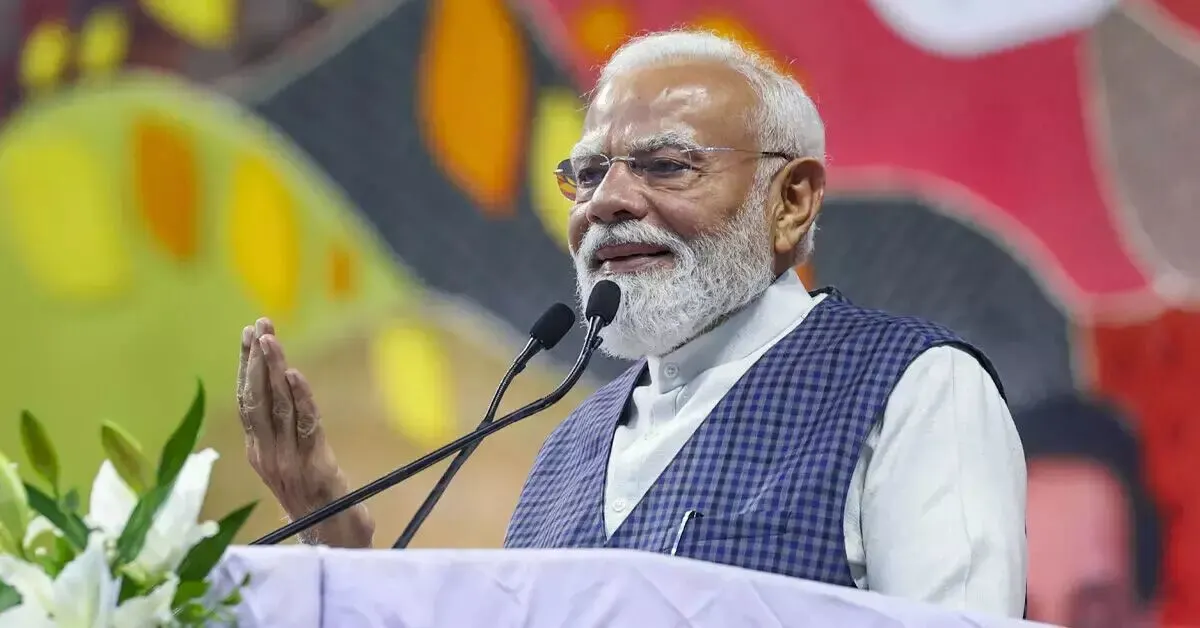
PM Modi highlighted the 12 years of the Pradhan Mantri Garib Kalyan Yojana, focusing on the key achievements of Antyodaya Yojana, Swachh Bharat, PM Awas Yojana, Jal Jeevan Mission, and Ayushman Bharat , saying the main purpose was ensuring people have dignity and opportunity.
Ayushman Bharat extended health insurance to millions who previously had none. Jal Jeevan Mission brought tap water to rural homes that had relied on hand-pumps and open wells for generations. PM Awas Yojana built crores of homes for families living in kutcha structures. Each of these programs, taken individually, sounds like government paperwork. Taken together, they describe a significant shift in how the state relates to its poorest citizens.
The Ujjwala Yojana gave clean cooking gas to women in households that previously cooked on wood and dung fuel. Less smoke, fewer respiratory illnesses, and an unexpected but real effect on women's time and dignity.
Read More: RBI Holds Repo Rate at 5.25%: What the June 2026 MPC Decision Really Means for Your Money
Digital India: The Transformation That Happened Without Warning
UPI is perhaps the most visible export of the Modi era's digital ambitions. What started as a payment system is now a financial infrastructure used by hundreds of millions of Indians daily. International observers, including those in advanced economies, have noted that India's Digital India initiative produced a payments ecosystem that many richer countries still do not have.
Modi noted that 42 lakh crore rupees have been transferred into beneficiary accounts through Direct Benefit Transfer , eliminating middlemen and ensuring subsidies reach actual recipients.
What the Critics Note , and Why It Is Worth Listening
Twelve years of Modi's leadership reveal infrastructure gains, global confidence, economic struggles, and unmet employment promise. Educated youth unemployment remains a persistent concern. Questions around institutional independence and the quality of political discourse have not disappeared. A fair assessment holds both the numbers and the concerns.
India holds elections, and they are contested, and sometimes the BJP loses them. Democracy is not only elections , it is also the quality of disagreement, the freedom to dissent, and the confidence of institutions to act without looking over their shoulder.
India's Place in the World After 12 Years
The India that sits across the table from Washington today is not the India that used to nod politely and hope for the best. Twelve years of deliberate strategic autonomy built a different posture. The Viksit Bharat 2047 vision , a developed India by the centenary of independence , is now the organizing framework for long-term policy planning.
Twelve years is long enough to change a country. Whether the changes are sufficient is a question every Indian answers differently. The data offers one view. The street offers another.
Read More: When Fashion Becomes Living Art: 2026 Met Gala “Costume Art” Theme Explained
Disclaimer: This article is based on information available across the web. Parchar Manch does not take responsibility for its complete accuracy, as the content could not be fully verified.
FAQs
When did Modi complete 12 years as Prime Minister?
Narendra Modi completed 12 years as Prime Minister on May 26, 2026, having first taken oath on May 26, 2014.
What is Viksit Bharat 2047?
It is the Modi government's vision to make India a fully developed nation by 2047, the centenary of Indian independence, targeting high income status, modern infrastructure, and elimination of poverty.
How much has India's economy grown under Modi?
India's GDP grew from Rs 103 lakh crore in 2013-14 to Rs 357 lakh crore by 2025-26 , a roughly threefold increase , and India is now the world's fourth-largest economy.
What is Ayushman Bharat?
It is a government health insurance scheme that provides coverage of up to Rs 5 lakh per family per year to eligible low-income households, making it one of the world's largest public health programs.
What are the main criticisms of 12 years of Modi rule?
Key criticisms include concerns about youth unemployment, weakening of independent institutions, growing political polarisation, and questions about the quality of dissent and democratic discourse.
What is Direct Benefit Transfer?
It is a system that transfers government subsidies and welfare payments directly into beneficiaries' bank accounts, bypassing middlemen and reducing leakage of public funds.