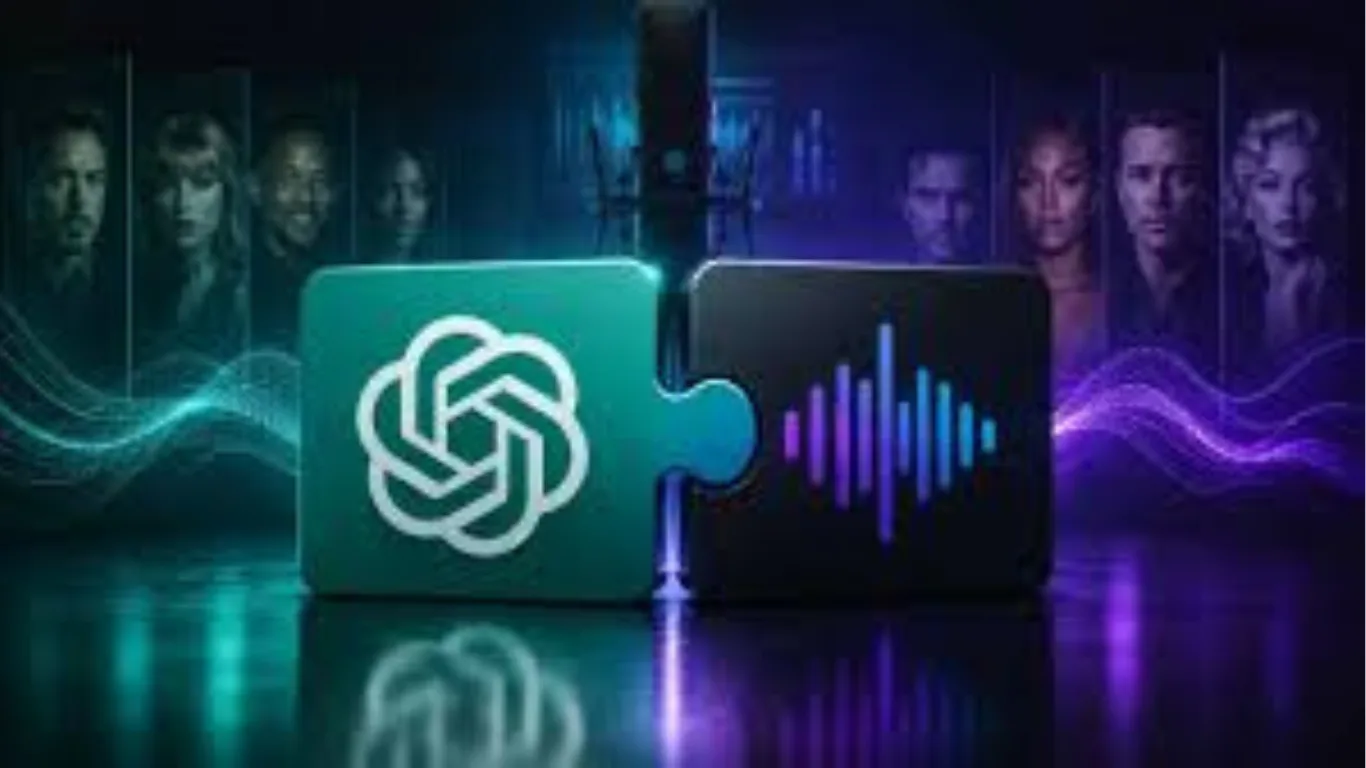
OpenAI Just Bought the Startup That Cloned Celebrity Voices , Here's Why That's a Bigger Deal Than It Sounds
OpenAI's acquisition of Weights.gg was not announced with a press release, a blog post, or even a tweet. It just happened. Quietly. And that silence, more than anything else, is what makes this story worth paying attention to.
The news broke through The New York Times, citing people familiar with the deal. OpenAI had purchased Weights.gg , a small, six-person AI voice cloning startup , along with its intellectual property. No financial terms were disclosed. The team has since been folded into various internal OpenAI departments. The startup's platform and its consumer app, Replay, went dark on April 1, 2026.
So why does any of this matter? Because of the technology.gg built was genuinely powerful , and genuinely controversial.
What Were Weights.gg , And Why Did It Go Viral?
Weights.gg was not a typical AI company. It operated more like a social network, except instead of sharing photos or videos, users created and shared synthetic voice models. Through its app Replay, the platform hosted eerily realistic audio clones of Taylor Swift, Kanye West, Donald Trump, Joe Biden, Samuel L. Jackson, members of Blackpink, and even cartoon characters like Bugs Bunny.
The technology used was a form of generative audio AI, sometimes called a voice synthesis model. Feed it enough audio samples of a person, and it learns to reproduce their vocal patterns, tone, pitch, and cadence. The result sounds genuinely like that person speaking.
Before shutting down, Weights.gg had raised roughly four million dollars in venture capital, according to PitchBook. Small for a tech company. Large enough to build something real.
Read More: UAE Quits OPEC Amid Iran War – Impact on Global Oil Markets & Prices
Why OpenAI Wanted This , And What It Says About the AI Race
Here is where things get interesting. OpenAI already has its own voice cloning tool. It is called Voice Engine, and it has existed since at least early 2024. The company has been deliberately cautious about releasing it to the public, restricting access to a narrow group of trusted partners working on things like speech therapy, language learning tools, and AI-powered customer service.
So this was not an acquisition born out of desperation or a missing capability. OpenAI bought Weights.gg for different reasons , and the most honest interpretation, based on what sources told The New York Times, is that one key reason was removal.
By purchasing the company, OpenAI took a sprawling, publicly accessible catalogue of unauthorised celebrity voice clones off the open internet. The timing matters here. OpenAI is reportedly preparing for a public stock market listing by the end of 2026. A library of replicated celebrity voices , built without consent , is exactly the kind of liability that makes investors and legal teams nervous.
Taylor Swift has already filed with the US Patent and Trademark Office to trademark her voice and likeness. Scarlett Johansson previously threatened legal action against OpenAI over a ChatGPT voice assistant called Sky that she alleged was an unauthorised imitation of her own voice. OpenAI ultimately pulled Sky from its platform.
The AI deepfake voice problem is not theoretical. It is already in the courts.
Read More: Russia Launches Progress MS-34 Cargo Ship to the ISS, Delivering Over 2.5 Tonnes of Vital Supplies
How the Technology Actually Works
Voice cloning, at its core, is a machine learning problem. A model listens to audio samples of a specific person , sometimes just a few seconds, sometimes hours of recordings , and builds a mathematical representation of how that person sounds. When you ask it to speak a new text, it generates audio that matches those vocal characteristics.
Earlier systems needed large datasets. Newer AI voice synthesis models, including some open-source ones like F5-TTS, can now replicate a voice from a short clip on ordinary consumer hardware. The barrier to entry has dropped fast.
Weights.gg built its platform on top of this kind of technology and made it social. Users contributed voice models, improved them, and shared the results. The community was the product.
What Happens Now , What OpenAI Plans to Do With It
No standalone Replay replacement is coming. That much seems clear. The former Weights.gg employees have been distributed across multiple internal OpenAI teams, not assembled to build a public-facing product. The acquired intellectual property is expected to feed into OpenAI's broader audio AI infrastructure , improving voice-based AI agents, reducing latency in real-time speech tools, and refining the natural quality of voice outputs.
OpenAI has recently been expanding its audio capabilities. The company updated its developer API to support real-time voice translation. ChatGPT was integrated into Apple CarPlay as a voice-only interface. These are all signs that conversational audio is becoming a core product surface.
Weights.gg's technical expertise likely helps OpenAI build better versions of those things. The team knew what made voices sound right , not just technically accurate, but human.
Read More: India's Forex Reserves Jump By Over $2 Billion To $703.3 Billion Amid Iran War , What This Means For You
The Ethical Minefield Nobody Wants to Talk About Directly
Voice cloning sits at an uncomfortable intersection. It is a genuinely useful technology. It helps people with speech disabilities communicate. It enables personalised learning. It powers more natural AI assistants.
It also makes AI impersonation trivially easy. A cloned voice can be used to spread false statements attributed to real people, fabricate audio evidence, or run scam calls that sound like someone's actual family member.
OpenAI has been relatively consistent in saying it will not release unconstrained synthetic voice technology to the general public. The acquisition of Weights.gg, at minimum, reduces one visible channel through which that kind of technology was widely available. Whether that is sufficient is a different question.
The bigger structural problem , that the underlying models are rapidly becoming open-source and accessible to anyone , is one no single acquisition can solve.
Closing Thoughts
There is something quietly significant about the way this story unfolded. A small startup built a remarkable, controversial tool. It grew, sparked debate, raised a few million dollars, then went dark , absorbed into a much larger organisation that may or may not ever use what it built visibly.
That is how a lot of this technology moves. Not with announcements, but with transactions. Not with policy debates, but with acquisitions that happen on a Thursday and make the news on a Friday.
The question of who controls the sound of a human voice , who owns it, who can replicate it, and what rules apply , is not answered by this deal. It is only made more pressing.
Disclaimer: This article is based on information available across the web. Parchar Manch does not take responsibility for its complete accuracy, as the content could not be fully verified.
Read More: Sanjay Dutt Returns as Ballu in Khal Nayak Sequel
FAQs
What is Weights.gg, and what did it do?
Weights.gg was an AI startup that built tools for creating and sharing AI-generated voice clones. Its consumer app, Replay, hosted realistic synthetic voice models of celebrities, musicians, and public figures. The platform functioned like a social network for voice AI models.
Why did OpenAI acquire Weights.gg?
OpenAI acquired the startup's intellectual property and small team to strengthen its internal audio AI capabilities. Analysts also note that the acquisition effectively removed a public catalogue of unauthorised celebrity voice replicas from the internet, reducing potential legal exposure ahead of OpenAI's expected public listing.
Will OpenAI release a public voice cloning app similar to Replay?
No , at least not based on current reporting. OpenAI has stated it considers unrestricted voice cloning technology too risky for general release. The Weights.gg team has been integrated across different internal divisions rather than kept together to build a successor product.
What happened to Replay after the acquisition?
Replay and all of the weights.gg's services were officially shut down on April 1, 2026. The platform no longer hosts voice models or allows new content creation.
What is OpenAI's Voice Engine?
Voice Engine is OpenAI's own internal AI voice synthesis tool, launched in limited preview in early 2024. It is currently restricted to a small group of trusted partners due to safety concerns, and OpenAI has not indicated plans for a broad public release.