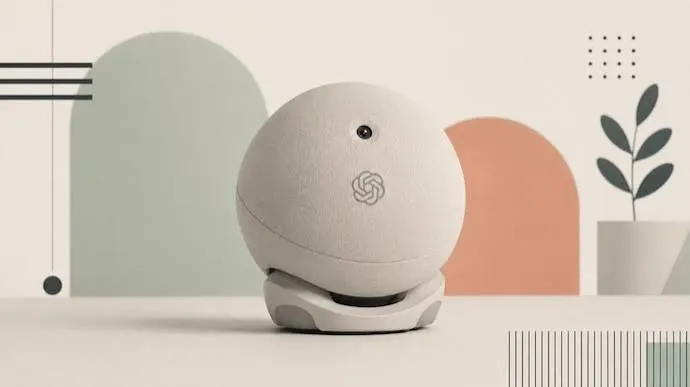
OpenAI Screenless Speaker: Inside the ChatGPT Device That Wants to Live in Your Home
There's something almost funny about this. For years everyone kept asking Sam Altman what OpenAI's first gadget would look like, half expecting a phone, maybe glasses, something that would make Apple nervous overnight. And now, after all that waiting... it's a speaker. A speaker without a screen. That's it. Or, well, that's not quite it either, because the more you read about this thing, the less it sounds like a speaker at all.
According to Bloomberg's Mark Gurman, the OpenAI screenless speaker is the company's first real hardware product, and it's being described internally not as a gadget but as a new kind of home computer built for the AI era. It's meant to sit in your kitchen, or move to your bedroom, or sit quietly on a shelf while it learns who you are.
Why This Actually Matters
Here's the thing people miss when they hear "smart speaker" and roll their eyes, thinking Alexa, thinking Google Nest, been there. This isn't that. Or at least, it's not supposed to be.
OpenAI has spent billions building toward this moment, including a reported six and a half billion dollar acquisition of io Products, the startup founded by former Apple design chief Jony Ive. That's not pocket change for a speaker. It signals OpenAI wants hardware to become a real business line, not a side project, especially with an IPO possibly on the horizon and a need to diversify beyond software subscriptions.
And there's tension baked right into the story. Apple sued OpenAI in mid July, alleging the company stole trade secrets during hardware development, with more than 400 former Apple employees reportedly now working at OpenAI. So this ChatGPT speaker isn't launching quietly into a calm market. It's launching into a lawsuit.
What It Really Is, Explained Simply
Picture a small, portable object with no screen at all. No buttons to stare at, no interface to scroll through. Just a voice, a camera, and a handful of sensors quietly paying attention to the room.
The OpenAI hardware device is designed to be carried around, not fixed to one spot. Battery powered, so you could bring it into the laundry room, then the kitchen, then leave it in the living room to play music later. Think of it less like a smart speaker and more like a companion that happens to look like one, something OpenAI is pitching as a humanlike presence rather than a tool you issue commands to.
It runs on GPT-Live, a newer voice system built to listen and talk at the same time, the way a person actually does in conversation, rather than the stiff turn-taking of older voice assistants.
How It Works, Step by Step
- It listens continuously. No wake word required in the way older devices needed one, since the camera and microphones are meant to understand context, not just commands.
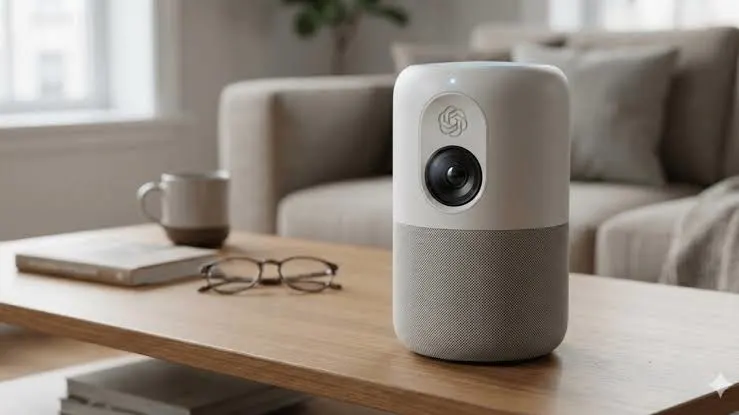
- It sees the room. The camera and sensors help it understand your surroundings, so it can respond to what's actually happening around you, not just what you say.
- It learns over time. Sources told Bloomberg the device draws on personal information, including emails, to build a deeper, more personalized picture of its owner.
- It moves, sort of. Mechanical elements let parts of the device shift on their own, creating a sense that it's alive rather than a static box.
- It connects to everything else. Smart home control, media playback, messaging, all routed through ChatGPT's existing capabilities.
Real World Examples
Imagine cooking dinner and asking it, without touching anything, to double a recipe while it already knows what's in your fridge because you mentioned it that morning. Or picture it noticing you've been quiet for a while and gently checking in, the way this AI companion device is supposedly designed to behave, proactive rather than purely reactive. Whether that's comforting or unsettling probably depends entirely on the person you ask.
Mistakes People Keep Making, and Why
The biggest one: assuming this is just another Echo or Nest with ChatGPT bolted on. It's easy to think that, honestly, because on paper it does the same basic jobs. But the emphasis on personality, on always-on camera awareness, on emails feeding into personalization, that's a genuinely different bet, and a riskier one on privacy grounds.
Another mistake is assuming pricing and release dates are locked in. Reports point to a $200 to $300 range and a possible late 2026 unveiling with a 2027 release, but none of that is confirmed by OpenAI itself, and the ongoing Apple lawsuit could still delay things.
Pro Tips That Actually Help
If you're the kind of person who cares about data privacy, pay close attention once OpenAI actually announces this thing, specifically to what happens with camera footage and email access, since those are the two features drawing the most scrutiny. If you're curious about the underlying voice tech, GPT-Live already shipped inside ChatGPT this year, so you can get a feel for how the conversational style behaves before any hardware exists at all.
Closing Thoughts
Maybe the strangest part of all this is how ordinary the shape is. A speaker. After years of teasers about jaw-droppingly good prototypes, the debut form factor turns out to be something you could mistake for a Sonos on a shelf. Then again, maybe that's the point, wrap something quietly unfamiliar inside something reassuringly familiar. We'll find out, probably later this year, whether that gamble pays off.
FAQs
What is OpenAI's first hardware product?
Reports point to a portable, screen-free smart speaker built as an AI companion powered by ChatGPT, developed with former Apple designers under Jony Ive.
When will the OpenAI screenless speaker launch?
Bloomberg reports a possible unveiling in the second half of 2026, with a full release targeted for 2027, though nothing is officially confirmed.
How much will it cost?
No. It's intentionally screen-free, relying on voice, camera input, and sensors instead of a display.
Why is Apple suing OpenAI over this device?
Apple filed a lawsuit in July 2026 alleging trade secret theft tied to OpenAI's hardware development, partly because OpenAI hired hundreds of former Apple employees. OpenAI denies the claims.
Is this the same as OpenAI's rumored phone?
No. Reports describe the speaker as one of roughly five hardware products in development, with a separate long-term goal of a mobile device that could replace smartphones entirely.