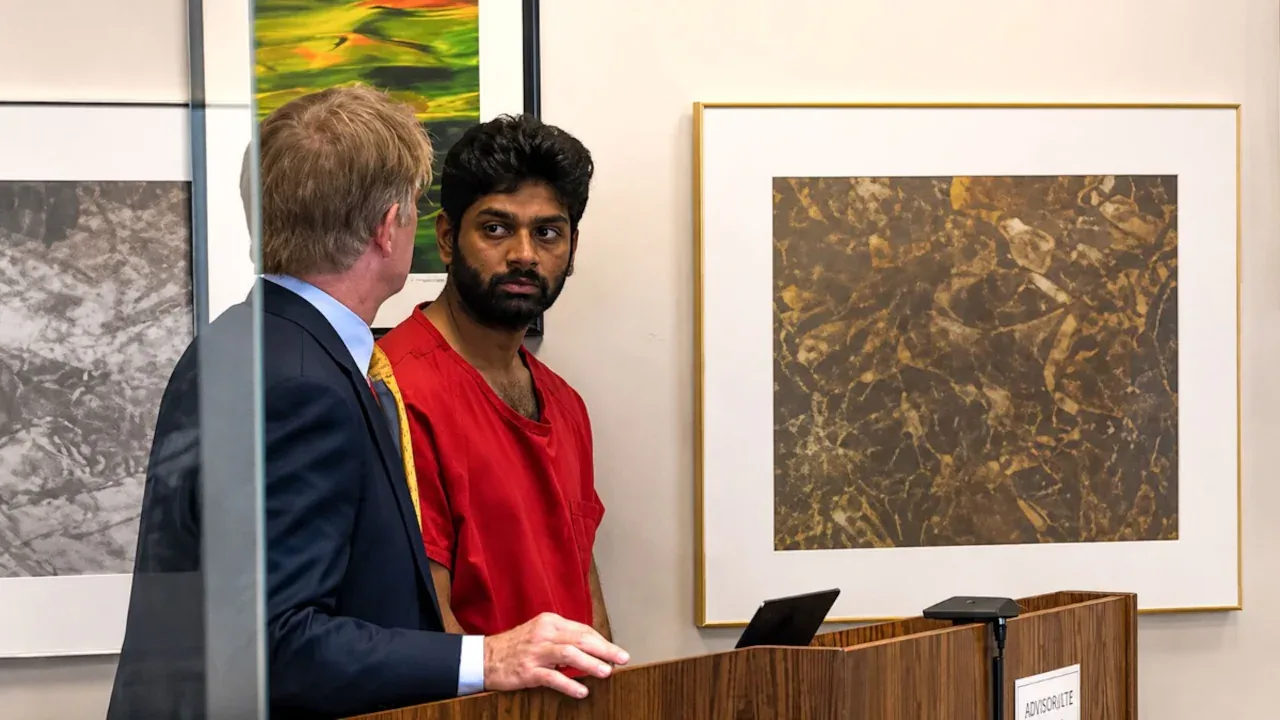
Avinash Narne Arrest: Inside the Bellevue Murder Case That Took Eight Months to Charge
A young woman locks herself in a bathroom. Hours later, she's gone. That's how this began, on paper anyway. But the real story of the Avinash Narne arrest took nearly nine months to surface, and it's the kind of case that makes you sit with your phone a little longer than you meant to.
Here's what we actually know, laid out plainly.
Why This Case Is Getting So Much Attention
An arranged marriage. A move across the world. A death inside a locked bathroom that police first treated as unexplained. Then, months later, an arrest and a set of allegations involving a secret relationship overseas. It's the kind of story that pulls at something ordinary and something unsettling at the same time, which is probably why the Avinash Narne murder case has spread so quickly through Indian and American news outlets alike.
But beyond the shock value, there's something worth understanding here: how an investigation like this actually unfolds, what evidence
prosecutors lean on when there's no eyewitness, and why an arrest can take eight months even when police suspect someone from day one.
Read More: Trump's "Mandatory" Demand: Why Saudi Arabia and Qatar Must Now Choose Between Iran and Israel
What Actually Happened — The Timeline
Avinash Narne, 30, a software engineer at Amazon originally from Telangana, married 27-year-old Raajitha Sabbineni (also reported as Rajitha) in an arranged marriage in June 2025. The couple moved into an apartment at Woodland Commons in Bellevue, Washington, the following month.
On October 27, 2025, Bellevue Police received an emergency call. Narne said he'd come home from running errands to find his wife locked inside the bathroom, unresponsive. Officers forced entry into the bathroom and found her lying prone on the floor. Medics moved her to the living room and attempted to revive her, but she was declared dead.
At first, investigators treated it as a suspicious but unexplained death not, no, not immediately a murder case. That distinction matters. It's why Narne wasn't arrested that day, or that week. What changed things was the digital trail. Detectives examined the apartment's smart-lock system and front-door security records, which confirmed Narne had briefly left the apartment but showed no one else entered while he was gone.That ruled out an intruder. From there, investigators moved into phone records, messages, and social media.
A search of his devices and accounts allegedly showed Narne had a secret relationship with another woman in India one he'd reportedly proposed to with a ring in late 2024, months before his wedding. Investigators claim that relationship continued after the marriage, and that the woman had even attended the wedding ceremony.
There's also a detail that's harder to read past: in the weeks before her death, Sabbineni had reportedly complained to Narne that drinks he'd prepared tasted unusually bitter, and on the day she died, she allegedly texted that a smoothie tasted like "medicine." Investigators have included those messages as part of the case file. Narne was arrested by Bellevue Police on June 27, 2026, and prosecutors filed the first-degree murder charge on July 1.He's being held at King County Jail on $5 million bail. He's since pleaded not guilty, with a trial date set for August 24.
How Investigators Built the Case — Step by Step
Cases like this rarely hinge on one piece of evidence. They stack up.
- Scene response. Officers forced entry, found the victim, and medics attempted resuscitation. That established the immediate facts of the death itself.
- Access control review. Smart-lock and door records let detectives establish, with something close to certainty, who could have been physically present.
- Digital forensics. Phones, Google accounts, WhatsApp, Instagram all reviewed for a motive, a pattern, a relationship that didn't fit the marriage on paper.
- Interviews. Narne was questioned directly, including according to the affidavit — being asked outright whether he killed his wife. He reportedly laughed and said no.
- Corroborating communications. Text messages between the couple in the weeks before her death were pulled into the file as supporting context for the medical examiner's findings.
Only after all of that did prosecutors feel confident enough to charge. That gap between suspicion and charge is normal in homicide cases — it's frustrating for families waiting on answers, but it's also what keeps a weak case from collapsing in court later.
Read More: Iran Reveals Mojtaba Khamenei's Injuries: What Really Happened the Day Tehran Was Struck
What People Get Wrong About Cases Like This
A lot of true-crime commentary jumps straight to guilt the moment an arrest is made. It's an understandable impulse the details here are genuinely disturbing but an arrest and a charge are not a conviction. Narne has pleaded not guilty, and the burden sits with prosecutors to prove the case at trial in August.
People also tend to underestimate how long digital forensics takes. Eight months sounds slow until you consider how much data years of messages, financial records, location history has to be pulled apart and verified.
A Few Things Worth Watching As This Moves Forward
If you're following this case, the trial itself will likely turn on three things: the strength of the digital evidence tying Narne to the apartment during the window of death, how the alleged secret relationship is framed as motive, and whether the toxicology and medical examiner reports support the strangulation and "bitter drink" allegations as connected events rather than coincidence.
Closing Thoughts
There's no tidy way to end a piece like this. A young woman is dead. A man awaits trial. And a lot of people, understandably, want to know why right now, immediately when the honest answer is that the courts will take months more to say anything definitive. That's uncomfortable. It's also how the system is supposed to work.
Disclaimer: This article is based on information available across the web. Parchar Manch does not take responsibility for its complete accuracy, as the content could not be fully verified.
FAQs
Who is Avinash Narne?
A 30-year-old software engineer at Amazon, originally from Telangana, India, based in Bellevue, Washington. He's been charged with first-degree murder in the death of his wife.
Who was the victim?
Raajitha Sabbineni (also reported as Rajitha), 27, Narne's wife. Her death occurred in October 2025 inside their shared apartment.
When was Narne arrested?
He was taken into custody on June 27, 2026, and formally charged on July 1, 2026 — roughly eight months after his wife's death.
What evidence do prosecutors have?
Smart-lock and security data ruling out an intruder, digital communications suggesting a secret relationship, and text messages from the victim describing an unusual taste in drinks he'd prepared shortly before her death.
Has Narne been convicted?
No. He has pleaded not guilty, and his trial is scheduled for August 24, 2026. He remains innocent until proven guilty in court.
Where is Narne currently held?
King County Jail, with bail set at $5 million.