Operation Sindoor One Year Later: How India’s Bold Strike Changed Everything
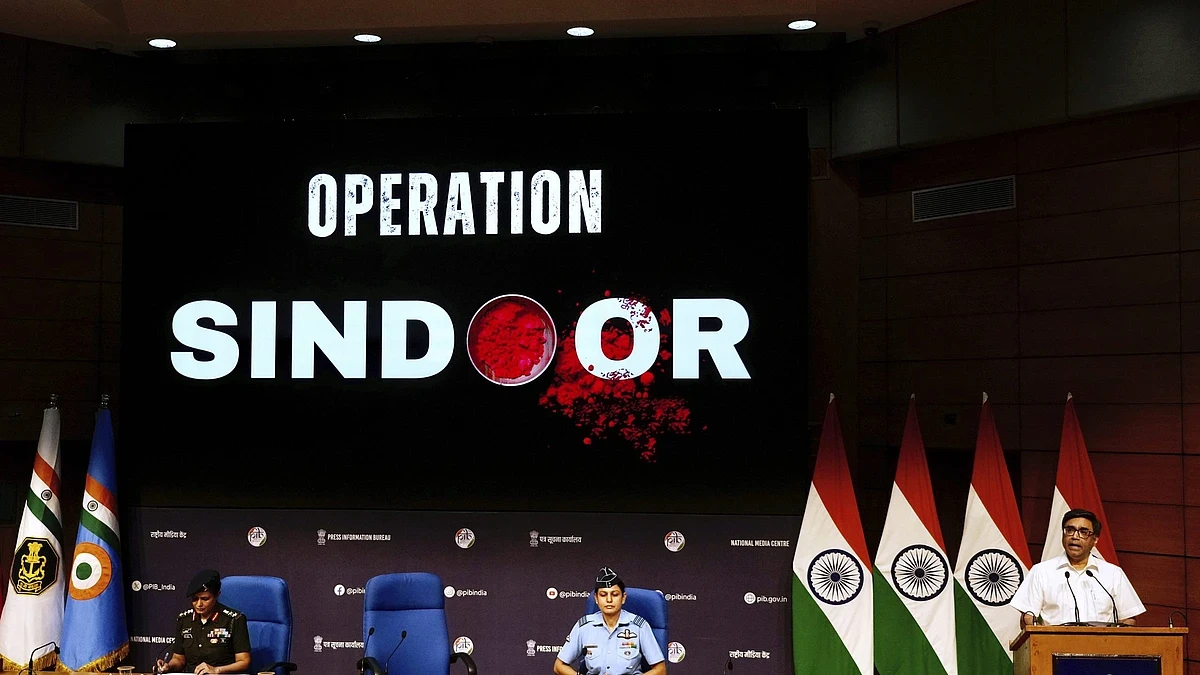
On May 7, 2025, India did something it had never done so openly before. It launched missile strikes deep into Pakistani territory , not in the fog of a full-scale war, not behind diplomatic ambiguity, but in a named, declared military operation with a stated objective.
Operation Sindoor was India's response to the Pahalgam terror attack of April 22, 2025, in which 26 civilians , mostly Hindu tourists , were killed by Pakistan-backed terrorists in the Baisaran Valley of Jammu and Kashmir. It was the deadliest attack on Indian civilians since the 2008 Mumbai massacre.
One year later, as India marks the anniversary of both the attack and the military response, the question worth asking is not whether Operation Sindoor was justified. Most Indians believe it was. The question is: what did it actually change? And what did it leave unresolved?
Why Operation Sindoor Was Different From Everything That Came Before
India has absorbed Pakistan-sponsored terror attacks for decades. After each one , the 2001 Parliament attack, the 2008 Mumbai attacks, the 2016 Uri attack, the 2019 Pulwama bombing , there was anger, there were diplomatic démarches, there were sanctions threatened and sometimes imposed. There were the surgical strikes of 2016 and the Balakot airstrikes of 2019. But there was always ambiguity. India was careful to limit escalation, careful not to trigger a wider conflict between two nuclear-armed states.
Operation Sindoor broke that pattern. India struck nine sites in Pakistan and Pakistan-administered Azad Kashmir , terrorist infrastructure linked to Jaish-e-Mohammed and Lashkar-e-Taiba , using BrahMos missiles and domestically developed systems, including Akashteer air defence units and loitering munitions. The strikes were named. The press briefing was clear. India said what it did, why it did it, and what it targeted.
That clarity, that willingness to act openly rather than maintain deniability, was itself a strategic signal. And the signal was received.
What Happened in the 19 Days That Shook South Asia
The 19 days between the Pahalgam attack and the May 11 ceasefire compressed more geopolitical drama than most years produce.
After the attack on April 22, India moved fast. The Indus Waters Treaty , a 1960 agreement that had survived three India-Pakistan wars , was suspended. Pakistani military, naval, and air advisors at the High Commission in New Delhi were declared Persona Non Grata. Diplomatic strength was reduced from 55 to 30 on each side. Trade was halted. Borders closed. Airspace was shut.
Pakistan retaliated symmetrically , closing the Wagah border, expelling Indian nationals, and shutting its airspace to Indian aircraft. Families were separated. The Attari-Wagah Beating Retreat ceremony stopped. The diplomatic architecture between the two countries, already thin, was nearly dismantled entirely.
Then came the strikes. On May 7, India launched Operation Sindoor , nine targets in a four-day campaign using precision munitions. Pakistan struck back with drone attacks and shelling targeting, in a move that drew international condemnation, religious sites including a temple in Jammu and a Gurdwara in Poonch.
A ceasefire was reached on May 11, 2025, brokered with US involvement. Donald Trump announced it on social media and has since claimed credit for stopping the conflict over 90 times. Pakistan later nominated him for the Nobel Peace Prize.
What Operation Sindoor Actually Achieved , Honestly Assessed
This is where honest analysis matters more than triumphalism.
On the military-strategic side, India demonstrated something significant. It conducted precise strikes across the border using entirely domestically developed or assembled weapons systems , without US platforms, without foreign logistics. The Small Wars Journal noted this marked a genuine demonstration of indigenous military capability. India used BrahMos, Akashteer, and loitering munitions. It worked.
The Indian Navy's role added a further dimension that is less discussed. Four submarines were covertly deployed. Surface Action Groups were positioned at forward locations. A comprehensive air-sea-subsurface blockade was created around Pakistani maritime positions. Pakistan's navy was neutralised as a factor before it became relevant.
Read More: I Could Be Wrong, But Not All 7": Raghav Chadha Explains His Shock Move From AAP to BJP
On the diplomatic side, the picture is more mixed. India had hoped that Operation Sindoor would force a decisive international reckoning with Pakistan's support for cross-border terrorism. It did not fully happen. Several countries that India counts as strategic partners declined to explicitly name Pakistan as the sponsor of the Pahalgam attack. The UN Security Council, as it has done before, produced a diluted response.
Pakistan, paradoxically, emerged with some diplomatic gains , Islamabad's role as a mediator in US-Iran talks, and General Asim Munir's elevation to Field Marshal and international rehabilitation, were built partly on the optics of the crisis. For India, this was a frustrating outcome.
The Indus Waters Treaty: The Lasting Strategic Shift
One year on, the single most consequential long-term change from the Pahalgam-Sindoor crisis may not be military. It may be water.
The Indus Waters Treaty, which had governed how India and Pakistan shared the rivers of the Indus basin since 1960, remains in abeyance as of today. India has used the suspension to begin planning new infrastructure on the western rivers , Jhelum and Chenab , that were previously restricted under the treaty's terms.
For Pakistan, which depends on the Indus system for a significant portion of its agricultural water, this is not an abstract diplomatic point. It is existential. Pakistan's Senate called India's actions on water "an act of war." The consequences of a permanently suspended treaty will unfold over years, not months.
Rajnath Singh's Message at SCO: What India Is Saying Now
Just two days ago, Defence Minister Rajnath Singh addressed the Shanghai Cooperation Organisation meeting in Bishkek with language that was clearly calibrated for Pakistan's benefit.
"During Operation Sindoor, we demonstrated our firm resolve that terrorism epicentres are no longer immune to justifiable punishment," he said, adding that the SCO must not tolerate "double standards" in countering state-sponsored cross-border terrorism.
This was not a speech about the past. It was a warning about the future. India is telling the world , and Pakistan specifically , that the strategic calculus has changed. The old logic, that nuclear deterrence made decisive Indian military responses impossible, has been tested and found incomplete.
Read More: Narendra Modi Addresses Vijay Sankalp Sabha in Mathurapur: Impact on West Bengal Election 2026
What Remains Unresolved , And Why It Matters
The ceasefire held. But the underlying causes of the Pahalgam attack have not been resolved.
The Lashkar-e-Taiba commander Abu Musa Kashmiri, in a video that went viral, stated openly that the attack had increased Pakistan's international standing. TRF, the LeT proxy that initially claimed the attack, has not been formally designated by the UN Security Council because Pakistan blocked it.
The terrorists who carried out the attack , who walked into Baisaran Valley, asked people their religion, and killed them , remain unaccounted for in full. Operation Mahadev, launched by India after Sindoor, eliminated several Pakistan-linked operatives in South Kashmir. But the intelligence assessment remains that cross-border infiltration infrastructure survives.
For ordinary Indians, and particularly for Kashmiris who depend on tourism as their primary livelihood, the shadow of April 22 still falls long.
Closing Thoughts
Operation Sindoor will be studied in military academies and strategic think tanks for years. It changed what India is willing to do, openly and on the record, in response to terrorism. That shift is real and permanent.
What it did not do was solve the problem it was responding to. Pakistan's deep state, its relationship with militant groups, its strategic calculation that terrorism remains a usable instrument of foreign policy , none of that was dismantled by four days of strikes.
The anniversary of Pahalgam is a moment of grief. The anniversary of Sindoor is a moment of complicated pride , pride in what India demonstrated it could do, and a clear-eyed acknowledgement of what remains undone.
FAQs
What was Operation Sindoor?
Operation Sindoor was India's military response to the April 22, 2025, Pahalgam terror attack. On May 7, 2025, India launched precision missile strikes on nine sites in Pakistan and Pakistan-administered Azad Kashmir, targeting infrastructure linked to Jaish-e-Mohammed and Lashkar-e-Taiba.
What was the Pahalgam terror attack?
On April 22, 2025, terrorists linked to The Resistance Front , a proxy of Pakistan-based Lashkar-e-Taiba , attacked tourists in the Baisaran Valley near Pahalgam in Jammu and Kashmir, killing 26 civilians. It was the deadliest attack on Indian civilians since the 2008 Mumbai attacks.
What happened to the Indus Waters Treaty?
India used BrahMos missiles, Akashteer air defence systems, and loitering munitions , all domestically developed or assembled. The operation was noted for not relying on US platforms or foreign military logistics.
What happened to the Indus Waters Treaty?
India suspended the Indus Waters Treaty , a 1960 agreement governing water sharing , after the Pahalgam attack. As of April 2026, it remains in abeyance. India has begun planning new water infrastructure projects in Jammu and Kashmir that were previously restricted under treaty terms.
When was the ceasefire reached?
A ceasefire between India and Pakistan was reached on May 11, 2025, brokered with US involvement. The conflict lasted approximately four days after India launched its strikes on May 7.