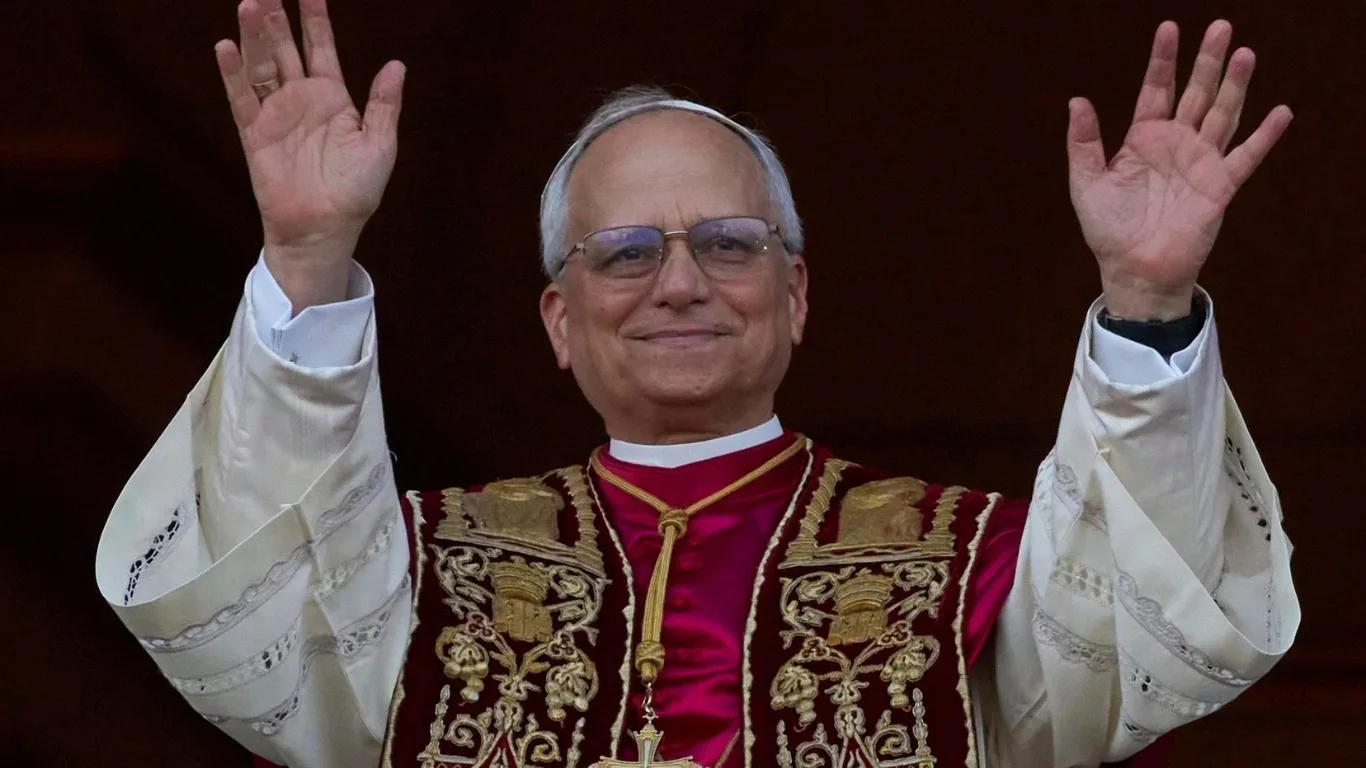
Pope Leo XIV at One Year: The American Pope Who Has Refused to Stay Quiet
A year ago, white smoke rose from the Sistine Chapel and changed history in a way few people had genuinely expected. The world's 1.4 billion Catholics got their first-ever American pope. His name is Pope Leo XIV, born Robert Francis Prevost, raised in Chicago, formed in Peru, and elected in Rome.
The assumption, in those first days, was that he would be careful. Measured. That an American pope, conscious of his country's already overwhelming global footprint, would tread lightly on political matters. That assumption did not last long.
Who Is Pope Leo XIV and Why the World Is Watching Him Closely Right Now
Pope Leo XIV is the first pope to have been born in the United States, the first from the Order of Saint Augustine, and the second pope from the Americas after Pope Francis. Born in Chicago and raised in Dolton, Illinois, Prevost became a friar in 1977 and was ordained as a priest in 1982. He spent extensive years as a missionary in Peru, working as a parish pastor, diocesan official, seminary teacher, and administrator.
His election caught many by surprise, including senior figures in the Vatican.
For years, the prospect of an American pope had seemed impossible because of the military, economic, and cultural power of the United States. But Prevost was seen as the least American of the Americans, and cardinals from Latin America felt that, although a gringo, he was one of them. That framing is everything. He is American by birth, Peruvian by decades of lived experience, Roman by office. The combination made him electable in a way a more straightforwardly American cardinal never could have been.
Read More: One Year of Operation Sindoor: How India Rewrote the Rules of War with Pakistan
The Election Nobody Saw Coming
Prevost was elected pope on May 8, 2025, the second day of the conclave, on the fourth ballot. White smoke appeared from the Sistine Chapel at 18:07 local time. In the tense days leading up to the conclave, a battle took place inside the College of Cardinals: should they vote for a pope to continue the legacy and reforms of Francis, or make a course correction? An Italian frontrunner faded from contention, and efforts to elect a pope who would go in a different direction from Francis were ultimately thwarted.
It was Pope Francis who had quietly promoted Prevost, first appointing him a bishop in Chiclayo, Peru, and then bringing him to Rome to run one of the most important Vatican departments, responsible for appointing bishops worldwide. Clearly, Pope Francis had his sights set on him. So in a real sense, Francis chose his own successor, without ever formally doing so.
Pope Leo XIV vs Donald Trump: The Clash That Defined His First Year
This is the part that has genuinely surprised people. A pope from America, one might expect, would be diplomatically cautious about criticising an American president. Pope Leo XIV has not been that pope.
Read More: When Fashion Becomes Living Art: 2026 Met Gala “Costume Art” Theme Explained
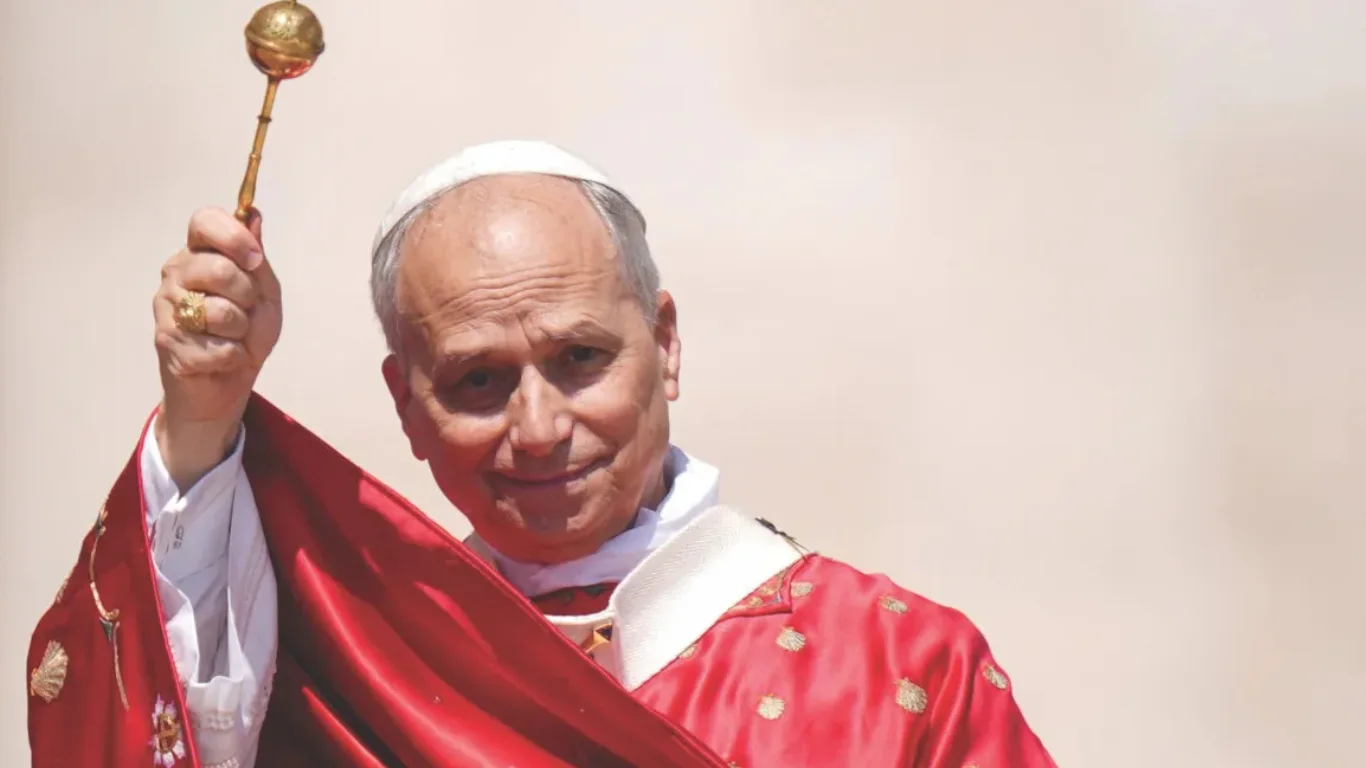
As he approached his first anniversary, Leo became the target of criticism by US President Donald Trump, who objected to the pope's denunciations of the war in Iran initiated by the United States and Israel in February 2026. Leo made several calls for peace early in the year. During his Urbi et Orbi blessing on Easter Sunday, he asked world leaders to lay down their weapons, choose peace, and engage in dialogue.
Trump posted on social media that Leo is "WEAK on Crime, and terrible for Foreign Policy" and claimed that the pope "should be thankful" for his election, implying that Leo was selected only because he is an American and because Trump is president.
The response from the pope was direct and unambiguous. The next day, Leo told reporters: "I have no fear of the Trump administration or speaking out loudly of the message of the Gospel, which is what I believe I am here to do, what the church is here to do."
That exchange landed globally. A sitting pope and a sitting American president in open, public disagreement. It is the kind of friction that has not been seen between the Vatican and Washington in living memory at this intensity.
Read More: Modi in Gangtok: What Sikkim's 50 Years of Statehood Really Means for India's Smallest State
What Pope Leo XIV Actually Stands For
Understanding Leo requires looking at the full picture, not just the headline moments.
Within the first year of his papacy, Leo showed himself to be unafraid of speaking out on issues of war and the rights of migrants, reminding the world repeatedly that his role is that of a peacemaker.
Leo is considered an overall centrist in his ideologies but more progressive on certain social issues, championing migrants and those living in poverty. He has forcefully supported efforts to address climate change and has criticised US immigration policies.
Observers describe a papacy that combines quiet, measured deliberation with a clear and prophetic voice on many issues of the day, both within the church and beyond it.
He has also been careful not to become a purely political figure. Vatican insiders note that he has deliberately ceded ground to local bishops on sensitive national issues, avoiding the appearance of using the papacy as a political platform even as he speaks on global moral questions.
The Africa Trip and a Pope Who Keeps Moving
Pope Leo XIV planned a 10-day trip to four African countries in April, reflecting his deep familiarity with the continent from his years leading the global Augustinian order. When he served in that role, Prevost visited members of his congregation serving in various parts of Africa several times.
Leo XIV is the first pope from the Order of Saint Augustine and is counted as the 267th pope. He is a dual citizen of Peru and the United States.
His papacy is shaped by this mobility, this sense of belonging to multiple worlds simultaneously. That is both his greatest political asset and the source of the most complex expectations placed on him.
Closing Thoughts
A year in, Pope Leo XIV has turned out to be precisely what his most optimistic supporters hoped for, and his most cautious critics feared. He is not a pope who will quietly manage the institution from behind closed doors. He has opinions, and he shares them, even when those opinions put him in direct conflict with the most powerful person in his home country.
Whether the Catholic Church needed exactly this kind of pope at exactly this moment is a question the next few years will answer. What is already clear is that the assumption of quiet caution, the prediction that the first American pope would be careful above all else, did not survive contact with the world as it actually is.
Disclaimer: This article is based on information available across the web. Parchar Manch does not take responsibility for its complete accuracy, as the content could not be fully verified.
Read More: Core Member Sandeep Pathak's Exit from AAP Hits Party the Most , And Here Is Why
FAQs
Who is Pope Leo XIV and where is he from?
Pope Leo XIV, born Robert Francis Prevost on September 14, 1955, is the first American-born pope in the history of the Catholic Church. He was born in Chicago, Illinois, but spent decades as a missionary in Peru, and holds dual citizenship in the United States and Peru.
When was Pope Leo XIV elected?
He was elected on May 8, 2025, on the fourth ballot of the conclave, succeeding Pope Francis. White smoke appeared from the Sistine Chapel that evening, marking the beginning of his papacy.
Why did Trump criticise Pope Leo XIV?
The public clash began when Pope Leo condemned the US-Israeli war against Iran in early 2026, calling for peace and an end to attacks on civilian infrastructure. Trump responded on social media, calling the pope weak on crime and bad for foreign policy. The pope replied publicly that he had no fear of the Trump administration.
What does Pope Leo XIV believe in?
He is considered a centrist overall, but more progressive on social issues, including migrant rights, poverty alleviation, and climate change. He has been a strong proponent of synodality, a governance approach that emphasises broad participation within the church, and has positioned himself as a global peacemaker.
Is Pope Leo XIV the first pope from the Americas?
He is the second pope from the Americas, after Pope Francis, who was from Argentina. However, Leo XIV is the first pope born in the United States, making him the first American pope by birthplace.
What is the significance of his Augustinian order?
Pope Leo XIV is the first pope from the Order of Saint Augustine. The order's tradition emphasises community life, scholarship, and service to the poor, all of which have visibly shaped his approach to the papacy