
RG Kar Rape Case & West Bengal Elections 2026: When Grief Turns Political
There is a kind of grief that does not stay quiet. It spills out of court corridors, into the streets, and eventually, onto the ballot.
That is what happened in Panihati. The mother of Abhaya — the trainee doctor raped and murdered inside RG Kar Medical College in August 2023 — stepped onto a campaign stage in the 2026 West Bengal Assembly Election. Her name is Ratna Debnath. She is 54 years old. She had never contested an election in her life. And the constituency she chose to fight from is a Trinamool Congress stronghold.
What is happening here is not simply politics. It is something rawer than that. It is a story about what people do when they feel that the system has failed them so completely that the only option left is to become the system.
Why the RG Kar Case Still Shakes West Bengal to Its Core
The RG Kar Medical College rape and murder case broke open in August 2023 in a way that few crimes in recent Indian history have. A young woman, referred to publicly as Abhaya, was found sexually assaulted and murdered inside a seminar hall of the government hospital in Kolkata. She was a postgraduate trainee doctor. She was on duty.
The protests that followed were enormous. Doctors across India went on strike. Women took to the streets in the middle of the night in Kolkata, carrying torches and chanting. The Abhaya movement, as it came to be called, was one of the most sustained civic uprisings India had seen in years around the issue of women's safety. A junior from a government hospital. Attacked inside the walls of that very institution. The cruelty of the location — a place where people go to be healed — made the outrage deeper and more lasting.
The handling of the case did not help. Accusations of a cover-up, questions about the timeline of events, allegations that evidence was tampered with — all of it added to a sense among many that justice was being quietly buried. Women's safety in India, and specifically within public institutions, became an unavoidable conversation.
For Ratna Debnath, that conversation never ended. Because it was her daughter.
Read More: Modi's Matua Gambit: The One Speech That Could Decide West Bengal's 2026 Election
Who Is Ratna Debnath, and What Brought Her to Panihati
Before all of this, Ratna Debnath was not a public figure. She was a mother. That is important context, because it explains the weight of what it meant when she decided to contest the Panihati Assembly seat on a Bharatiya Janata Party ticket in the 2026 West Bengal state elections.
PM Narendra Modi shared a stage with her during campaigning, and she stood there — not as a politician performing grief, but as a mother who had decided to take her grief somewhere it might matter. She said plainly: she joined politics for justice. She said women's safety would be her top priority if elected.
Her opponent in Panihati was Tirthankar Ghosh, the Trinamool Congress candidate, in what had become, even before a vote was cast, one of the most emotionally charged contests in the entire election.
The Panihati seat carries symbolic weight precisely because it is not a natural BJP territory. TMC has held it for years. A win here for Ratna Debnath would not just be an electoral upset. It would be interpreted across Bengal as a direct verdict on the ruling party's handling of the RG Kar case and the broader question of women's safety under the Mamata Banerjee government.
Even her decision to contest from this particular seat was seen as defiant and deliberate.
The Panihati Constituency: Why This Seat Is Being Watched So Closely
Panihati is part of North 24 Parganas, a dense urban-industrial stretch north of Kolkata. TMC has built strong roots here over the years of organisational work. For Ratna Debnath to win would require her to do something that purely political campaigns rarely manage: cut through voter loyalty based on the sheer moral force of personal grief and a demand for justice for the RG Kar victim.
The local response has been complicated, which itself tells you something true about how Indian democracy actually works.
Not everyone welcomed her campaign. Some longtime RG Kar protest supporters felt a kind of shock — even betrayal — when she chose a BJP ticket. They had been part of the Abhaya movement, carrying candles and marching through rain, not for any party but for a principle. Seeing that grief adopted by a political machinery felt, to some of them, like a contradiction they had not anticipated. An interview from that period captures it starkly: a protester described feeling "shocked and shattered" at the association.
Ratna Debnath's father, when asked on polling day, broke down in tears and said simply: "We will win. We will get justice for our daughter." That moment, caught on camera, circulated everywhere.
The RG Kar campus issue had travelled 16 kilometres north to reach Panihati. That is how one newspaper put it. The geography is precise. The politics is not.
Read More: Core Member Sandeep Pathak's Exit from AAP Hits Party the Most , And Here Is Why
The EVM Controversy and What It Signals About the Tension on the Ground
The polling day in Panihati was not without incident. Reports emerged of an ink mark found on the BJP button of an EVM machine in a local booth. Voting was delayed. Ratna Debnath alleged that TMC supporters used abusive language against her and threatened her. Her father separately alleged voter intimidation.
Accusations of booth-level irregularities are not new in West Bengal election cycles. But the specific nature of the allegations here — targeting a candidate who is also the mother of a rape-murder victim — gave them a different texture in national coverage. The BJP pointed to these incidents as evidence of the ruling party trying to suppress a voice it found politically inconvenient.
TMC disputed the narrative, as it always does.
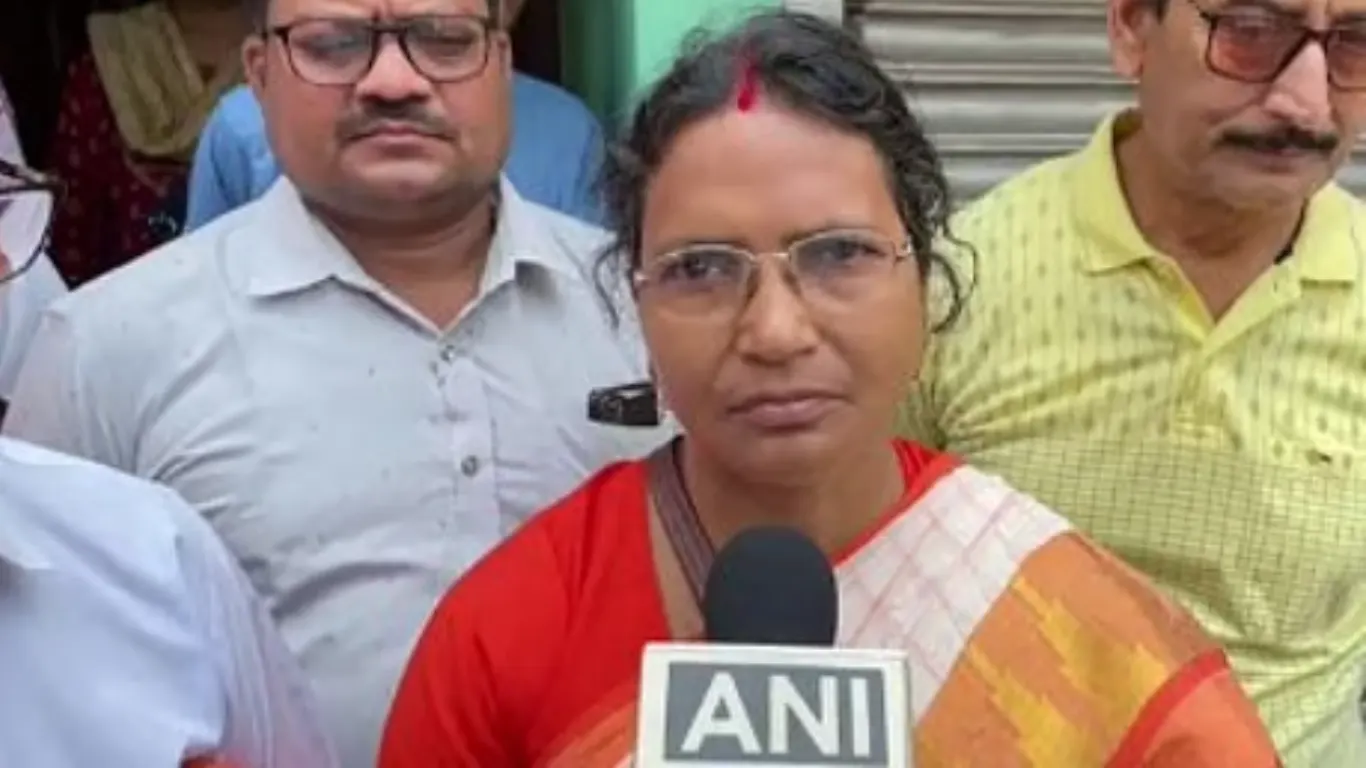
What cannot be disputed is that the atmosphere in Panihati during this election carried a charge that most routine assembly constituencies do not. People were not just voting for a local representative. They were, in some cases, consciously casting a vote about what they believed about Abhaya's case and who they trusted to pursue it.
What the 2026 Bengal Elections Tell Us About Women's Safety as a Political Issue
There is a larger pattern here worth naming clearly. The RG Kar case did not begin as a political issue. It began as a crime, then became a protest movement, then became an electoral question — almost against the wishes of many of the people who first took to the streets.
That transformation is uncomfortable, but it is also deeply revealing. It shows how justice movements work in democratic systems, and how they don't. Street protests can sustain pressure for months. They can change the national conversation. They can embarrass governments. But unless they translate into some form of political accountability, their energy slowly dissipates.
Ratna Debnath's candidacy is one answer to that problem. It is not the only answer. And it is not without its own complications, as the divided reactions among Abhaya movement supporters made clear.
But it represents something that political analysis alone cannot fully capture: a mother refusing to let the story end on the state's terms.
The Tension Between Grief and Party Politics: A Mistake People Make
Here is a misreading that is worth addressing directly, because it appears in a lot of the commentary around this story.
Many observers framed Ratna Debnath's candidacy as either a BJP masterstroke or a politicisation of tragedy — as if those two things are the complete set of options. They are not.
Grief does not have clean political allegiances. When an institution fails someone catastrophically, the people seeking redress often align with whoever is willing to carry their case forward, not because they share a complete worldview with that party, but because no one else offered to help. That is a structural feature of how marginalised voices often enter formal politics. It is not naivety. It is a desperate meeting opportunity.
To criticise Ratna Debnath for accepting the BJP ticket is to implicitly ask a question that has no good answer: what was the alternative? File another petition? Attend another memorial?
Closing Thoughts: When Justice Wears a Candidate's Badge
The counting at Panihati produced its own drama — early trends showed TMC ahead. Whether Ratna Debnath wins or loses this particular seat, something has already been established that cannot be unestablished.
A mother walked into a polling booth and stood as a candidate for justice. Thousands of people voted for her not because of any party platform but because they believed, at some level, that a vote for her was a vote for something that the courts and the protests and the news cycles had not yet fully delivered.
That is both the power and the limitation of democracy. It can transform grief into a ballot. It cannot always transform a ballot into the specific justice that grief demands.
The West Bengal Assembly Election 2026 will be remembered for many things. The Panihati seat will be one of them. Not because of what it finally decided in the vote count — but because of what it forced everyone watching to ask about what we mean when we say we want justice, and who we expect to deliver it.
Disclaimer: This article is based on information available across the web. Parchar Manch does not take responsibility for its complete accuracy, as the content could not be fully verified.
Read More: Tim Cook to Step Down as Apple CEO: Inside Apple’s Biggest Leadership Transition in Years
FAQs
Who is Ratna Debnath, and why is she contesting the 2026 West Bengal election?
Ratna Debnath is the mother of Abhaya, the trainee doctor who was raped and murdered at RG Kar Medical College in Kolkata in August 2023. She entered electoral politics in 2026 by contesting the Panihati Assembly seat on a BJP ticket, saying she joined politics specifically to fight for justice for her daughter and for women's safety.
What is the RG Kar Medical College case?
The RG Kar rape and murder case refers to the brutal assault and killing of a postgraduate trainee doctor inside the seminar hall of RG Kar Medical College and Hospital in Kolkata in August 2023. The case triggered massive nationwide protests by doctors and citizens demanding justice and safer working conditions for healthcare workers, particularly women.
Why is the Panihati seat significant in this election?
Panihati is a Trinamool Congress stronghold in North 24 Parganas. Ratna Debnath, contesting from here on a BJP ticket, made it one of the most emotionally and politically charged contests in the 2026 Bengal elections, seen by many as a symbolic verdict on the ruling party's handling of the RG Kar case.
Did the Abhaya movement protesters support Ratna Debnath's candidacy?
Reactions were divided. While many supported her campaign as an extension of the justice movement, some longtime protesters felt discomfort with her accepting a BJP ticket, believing it politicised a movement that had started as nonpartisan. This tension was widely reported during the campaign.
What does this case mean for the larger debate on women's safety in India?
The RG Kar case intensified the national conversation around the safety of women in public institutions, particularly healthcare settings. Ratna Debnath's political entry transformed that conversation into a direct electoral issue in Bengal, pushing women's safety from a protest demand into a campaign promise, and forcing political parties to address it as a governance question.