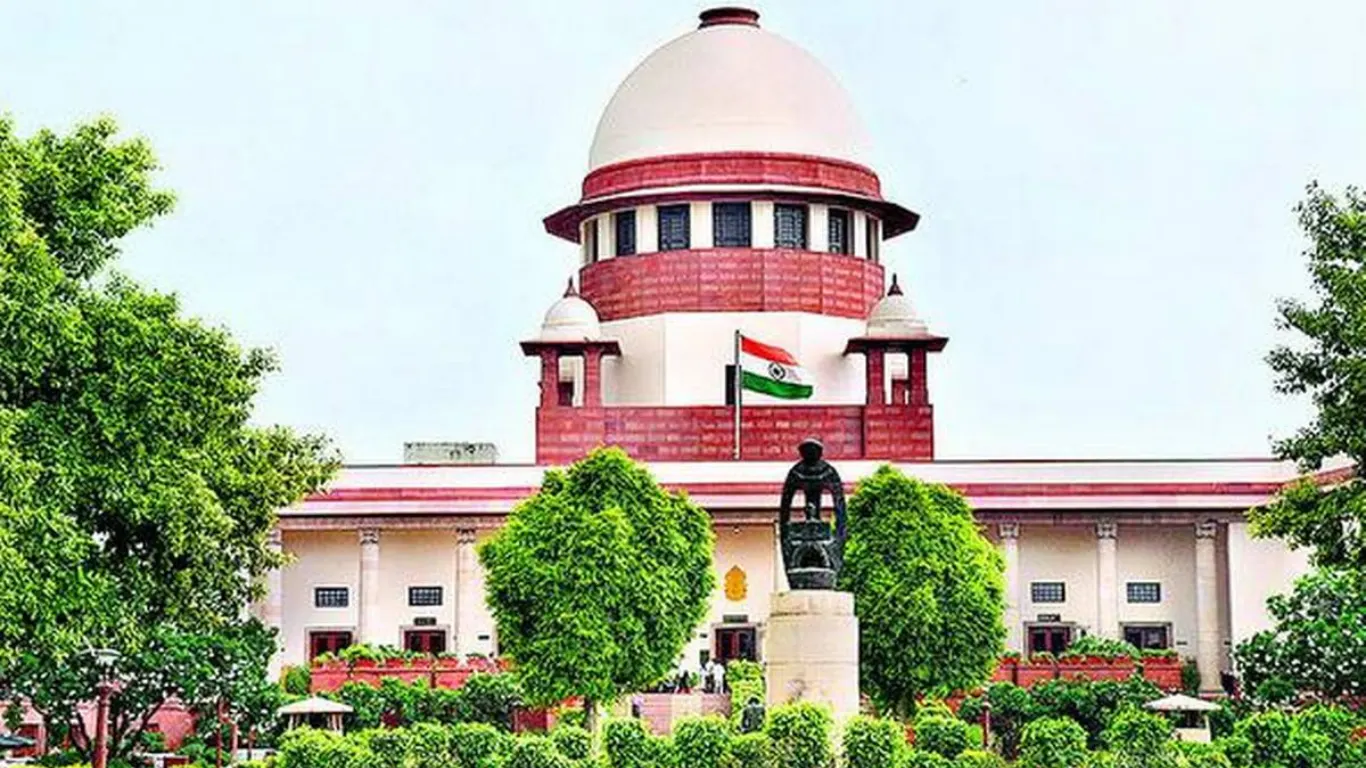
Role of the Supreme Court of India: Powers and Functions Explained
A law that is passed by Parliament, a dispute between two nations, or a person with a fundamental right that has been violated may, in a variety of ways, be part of the same entity. This is where the role of the Supreme Court of India is crucial. It is more than just the nation's top court. It is also the final interpreter of the Constitution and, in crucial instances, an advocate for that constitutional equilibrium.
Understanding the role of the Supreme Court of India lets ordinary citizens understand that the system of law defends rights, resolves major disputes, and makes sure that the government's actions are within constitutional limitations.
Why the Role of the Supreme Court of India Matters to Every Citizen
The function of the Supreme Court of India is closely tied to the daily routine, even though the majority of people do not ever go to court. Issues related to individual liberty, equality, freedom of speech, property disputes, and even the decisions of government could eventually lead to questions of the fundamental rights of people.
The Court may decide whether government policies or laws are in violation of the Constitution by way of judicial review in India. This is because elected governments can exercise broad powers; however, they are not able to exercise unlimited power.
However, Court decisions frequently define legal rules which lower courts are required to follow. Thus, the role of the Supreme Court of India goes beyond just the decision of a single case.
What Is the Supreme Court and What Does It Actually Do?
The Supreme Court is the highest judiciary in India's constitutional system. Its function can be understood simply: it provides the ultimate legal solution when crucial legal or constitutional questions have to be resolved.
The most significant aspect of the role of the Supreme Court of India is defining the boundaries of the Supreme Court's authority. Its jurisdiction encompasses original jurisdiction as well as appellate and advisory jurisdiction.
As per its jurisdictional origins under its original jurisdiction, the Court is able to directly hear certain disputes, especially those between states or the Union and the states, as well as between the states. The Court's appellate power allows the Court to consider appeals made by lower courts. Its advisory function lets the President seek the Court's advice on key legal issues.
This expansive authority is one of the reasons why the Court has such a prominent place in India.
Role of the Supreme Court of India in Judicial Review and Rights Protection
The most significant aspect of the function of the Supreme Court in India is the judicial review process in India. In a nutshell, it means that the Court is able to examine legislation and executive actions that violate the Constitution.
If a law does not conform to constitutional laws If a law is in violation of constitutional provisions, the Court could declare it unconstitutional. However, this doesn't mean that judges are able to substitute for the government. The idea is narrower and more crucial: each branch of the government must function within constitutional limits.
This is the reason judicial review in India is an instrument of constitutional oversight.
The Court also plays an important part in the enforcement of fundamental rights. Citizens may approach it in accordance with Article 32 when their fundamental rights are being violated. The Court may issue writs or other directives to defend the rights of citizens.
According to many experts in the field, Article 32 gives special importance to the fundamental right to enforce, as it provides an explicit remedy in the Constitution. The role of the Supreme Court of India is therefore not just concerned with interpreting the law when the size of a dispute increases. It could also serve as a direct route to constitutional protection.
How Supreme Court Powers Work in Practice
The role of the Supreme Court of India has a variety of connected roles:
- It is the court that hears appeals in relation to crucial constitutional and legal issues within its authority.
- It settles conflicts directly under its original Supreme Court power.
- It safeguards citizens' basic rights.
- It is a way to determine whether an action is unconstitutional through the process of judicial review in India.
- It interprets constitutionally difficult questions by the Supreme Constitutional Bench.
- It ensures that crucial legal guidelines are used to guide courts throughout the country.
A Supreme Court Constitutional Bench usually deals with major issues regarding the legal interpretation of the Constitution. The consequences of these cases may go beyond those affected.
Why Constitutional Benches Carry Special Importance
It is not always necessary to have the presence of a huge bench. If a case requires important constitutional issues or interpretation, a Supreme Court constitutional bench might be created.
Imagine that the system slows down in answering a question that can influence the country for years. The ruling of the Supreme Court of the Constitutional Bench could clarify the nature of constitutional provisions as well as guide future legal cases.
Another important aspect is the function of the Supreme Court of India. It ensures consistency when complicated constitutional issues are confusing.
A constitution-based Supreme Bench assists in cases in which legal interpretations are not clear enough and require more thorough scrutiny. This procedure increases the authority of constitutional law, but the decisions of a judge can be the subject of legal and public debate.
Real-World Meaning of These Powers
If a citizen feels that an action taken by the government has violated their fundamental rights. The enforcement of fundamental rights could allow the issue to be analysed with the help of constitutional remedies.
Imagine that Parliament adopts the law, which is later contestable as being illegal. Judicial review in India allows courts to examine the law in relation to the Constitution.
Imagine two states face an important legal dispute. The Court's initial Supreme Court authority may be deemed relevant.
If the dispute is a source of an issue about what the Constitution really refers to. A Supreme Court of the Constitutional Bench might decide to look into the issue.
When viewed this way, the function of the Supreme Court of India is not just one power. It is a set of interconnected constitutional duties.
Mistakes People Often Make About the Supreme Court
A common error is to believe that the Supreme Court can interfere in any administrative or political decision. It is not able to do so. The Court operates within its constitutional and legal powers.
Another misconception is to view judicial review in India as a threat to democracy. It's better understood in terms of constitutional accountability. The government is elected; however, constitutional limitations still exist.
The assumption is that fundamental rights enforcement means that any personal complaint can be referred to the Supreme Court. Legal remedies are based on specific facts, the law in force and the correct procedure.
And the Supreme Court's power isn't unlimited. Each case must satisfy various legal standards.
Pro Tips for Understanding the Role of the Supreme Court of India
If you are following a major case, it is important to first determine the kind of Supreme Court authority at stake. Then, examine the constitutional issue that is being addressed.
If the matter concerns rights, determine the issue that concerns the enforcement of fundamental rights. If a law has been challenged, the most important issue could involve the judicial review process in India. If several judges are looking into the constitutionality of a particular issue, you should check if the Supreme Constitutional Bench is hearing the case.
These distinctions are minor and help legal information to be comprehended.
Closing Thoughts
The function of the Supreme Court of India is much more than just delivering judgments. It's the meeting point of rights, law and constitutional authority.
Its impact is greatest when the system is faced with challenging questions, those that have no simple answer. Through the process of judicial review in India, fundamental rights enforcement, and Supreme Court authority, in addition to the function of the Supreme Constitutional Bench, the Court assists in maintaining the constitutional framework in which all other institutions operate.
This is the subtle importance of its job.
Must read: Government Policies 2026: Shaping Economic Growth and Citizen Welfare in India
FAQs
What is the principal role of the Supreme Court of India?
The function of the Supreme Court of India is to interpret the Constitution, hear appeals, ensure rights, and settle important legal disagreements.
What exactly is the concept of judicial review? India?
Judicial Review in India refers to the authority of courts to determine whether government policies and laws are in accordance with the Constitution.
What exactly does it mean by Supreme Court jurisdiction?
"Supreme Court" is the authority granted to the Court to hear and rule on various types of cases, including appellate, original and advisory cases.
What can a Constitutional Bench Supreme Court do?
A Supreme Court of the Constitutional Bench is a court that examines major issues relating to the legal interpretation of the Constitution as well as other important constitutional questions.
How does the Supreme Court protect fundamental rights?
Through the enforcement of fundamental rights, citizens can pursue constitutional remedies, which include approaching the Supreme Court under Article 32 in certain cases.