SEBI Uncovers Rs 15.15 Lakh Crore Revenue Fraud at Rajesh Exports: What Really Happened
A shareholder sent an email. That is where this story begins. Not a whistleblower. Not a journalist. Just someone who noticed that Rajesh Exports, one of India's biggest gold companies, had trade receivables sitting unpaid for years. That small, quiet complaint in March 2024 eventually led to one of the most significant regulatory orders in recent Indian market history.
Two years later, SEBI's interim order against Rajesh Exports has alleged that the company misrepresented nearly its entire consolidated revenue, approximately Rs 15.15 lakh crore, over a five-year period. The number is staggering. To put it plainly, that is larger than the GDP of most countries.
Why SEBI's Action Against Rajesh Exports Is a Wake-Up Call for Every Investor
Most people assume that a listed company's annual report reflects reality. It gets audited. It gets filed with exchanges. There are rules. What the Rajesh Exports case reveals is how much can still go wrong when subsidiaries are overseas, documentation is withheld, and a promoter exercises unchecked control.
SEBI passed a 109-page interim ex-parte order against Rajesh Exports Limited and its Chairman and Managing Director Rajesh Mehta, alleging a multi-year pattern involving non-genuine transactions, improper accounting practices, diversion of company funds through promoter-linked entities, and inadequate disclosures to investors.
The financial misrepresentation in listed companies does not always look like a dramatic fraud. Sometimes it looks like a revenue number that nobody questioned for years.
What SEBI Actually Found: The Core Allegations Explained Simply
Think of Rajesh Exports as an iceberg. The visible tip, the part shown to investors, was massive gold trade revenues. Beneath the surface, SEBI says, those revenues were either unverifiable, fabricated, or grossly misrepresented.
Around 97 to 99 per cent of Rajesh Exports' consolidated revenue originated from its overseas subsidiaries, particularly Switzerland-based Valcambi SA. However, the company allegedly failed to disclose the financial statements of its subsidiaries in the public domain on a consistent basis.
Valcambi SA, which Rajesh Exports bought in 2015 for $400 million, was presented as the engine driving the company's enormous revenues. But when SEBI asked for supporting documentation, things fell apart. Rajesh Exports failed to provide sufficient documentation, accounting opinions, ownership records, reconciliation statements, or transaction-level evidence to support this treatment. The regulator stressed that it is not merely that the numbers appear large; it is that the underlying revenues could not be independently verified despite repeated requests for evidence.
Read More: The Cockroach Janta Party: India's Gen Z Turned Humiliation Into a Political Warning Shot
The Affluence Problem: Personal Trading Disguised as Company Revenue
This is where the story gets particularly troubling.
SEBI's primary investigation found that the company falsely recorded derivatives transactions belonging to Mehta personally as its own, including sales worth Rs 11,487 crore and purchases worth Rs 11,488 crore.
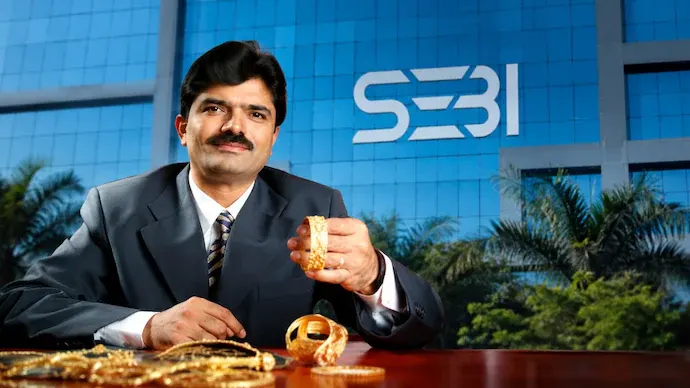
The transactions were linked to a firm called Affluence Shares and Stocks Pvt Ltd. Rajesh Exports showed enormous trades with Affluence in its books. When SEBI went to Affluence to verify, Affluence reportedly denied carrying out any such transactions. SEBI alleged these were non-genuine accounting entries linked to Rajesh Mehta's personal derivatives trading activities and were used to inflate turnover without any underlying economic substance.
Separately, the regulator alleged that REL incorrectly classified Rs 204 crore of interest income from mutual funds and fixed deposits as revenue from operations. Exchange fluctuation gains were also booked as revenue. These are not rounding errors. They are structural misstatements.
Funds Routed Through the Promoter's Personal Accounts
SEBI alleged that Rajesh Exports routed Rs 339 crore of company funds to accounts linked to promoter Rajesh Mehta, including for his personal derivative trades, without obtaining board or audit committee approvals and without making proper related-party disclosures. According to SEBI, a total of Rs 926 crore was routed through such transactions without the required approvals or disclosures.
The company failed to provide any documentary evidence, such as board approvals, supporting the routing of funds through the promoter's personal bank accounts. SEBI noted that Rajesh Exports admitted via email dated March 17, 2026, that funds were routed through Rajesh Mehta's bank account "without revealing the bank account from which the funds had come."
That admission alone speaks volumes about the corporate governance failures at the heart of this case.
Read More: Praggnanandhaa Beats Magnus Carlsen Twice at Norway Chess 2026: What Just Happened Is Historic
The Gold Mine Claim That Could Not Be Verified
Among the many allegations, one stands out for its audacity. SEBI's interim order identified a false claim of investment in a gold mine in Africa. The regulator said it was unable to corroborate the disclosures made by the company regarding "Other Non-Current Investments" allegedly representing investments in the gold mine.
A gold mine in Africa. Listed in the books. Impossible to verify. It is the kind of detail that makes you wonder what else was taken at face value for years.
What SEBI Has Done and What Happens Next
In an interim order, SEBI barred Rajesh Exports and its promoter Rajesh Mehta from accessing the securities market until the completion of its investigation. The market regulator also barred promoter Rajesh Mehta from dealing in company securities for three years and ordered a forensic audit.
The share price reflected the shock. Shares of Rajesh Exports fell 4.99 per cent to Rs 103.92 in early trade on June 4.
SEBI estimated that the alleged misrepresentation of financial statements and diversion of funds resulted in wealth erosion of Rs 12,726 crore for the company's shareholders, including retail investors.
LIC, Bridge India Fund, and 1.94 lakh retail investors are caught in the fallout of the SEBI order. These are not abstract victims. They are pension savers, small investors, and institutions that trusted a listed company's public disclosures.
Closing Thoughts
What this case really asks is a harder question than any specific allegation. It asks why, across five financial years, across multiple audits, across routine regulatory filings, a revenue figure accounting for 99.8 per cent of a company's consolidated income could go unverified. The answer, if it ever fully emerges, will say something important about the limits of disclosure-based regulation. A shareholder complaint started this. That alone is worth sitting with.
Disclaimer: This article is based on information available across the web. Parchar Manch does not take responsibility for its complete accuracy, as the content could not be fully verified.
FAQs
What is SEBI's interim order and what does it mean?
An interim order is a temporary regulatory action taken while an investigation is still ongoing. It is not a final verdict but it carries real consequences, including banning the accused from securities markets until the probe is complete.
Who is Rajesh Mehta and what is his role in this case?
Rajesh Mehta is the Executive Chairman of Rajesh Exports. SEBI alleges he personally benefited from fund diversions and that his private derivatives trading was falsely recorded as company transactions, directly inflating the company's reported revenues.
What is Valcambi SA and why does it matter here?
Valcambi SA is a Switzerland-based gold refinery that Rajesh Exports acquired in 2015 for $400 million. It was positioned as the primary revenue driver of the group. SEBI found that the revenues attributed to Valcambi and other foreign subsidiaries could not be verified through documentation.
How did this investigation start?
A shareholder filed a complaint with SEBI in March 2024, flagging large trade receivables that had remained outstanding for over two years. That complaint triggered the probe that eventually uncovered the broader allegations.
What happens to retail investors who hold Rajesh Exports shares?
Retail investors cannot recover losses through the SEBI interim order directly. SEBI's forensic audit may reveal more, and further regulatory or legal action could follow. Investors should watch for developments from the full investigation.
What does this case mean for how investors should read annual reports?
It is a strong reminder to look beyond consolidated revenue figures, especially when a large portion of that revenue comes from overseas subsidiaries whose financial statements are not independently accessible. Unverifiable revenues, large outstanding receivables, and promoter-linked transactions are red flags worth scrutinizing.