SpaceX IPO Explained: Market Debut Impact and Elon Musk’s Wealth Milestone
On June 12, 2026, a rocket company went public on the Nasdaq. That sentence sounds ordinary. It is not. SpaceX had the largest stock-market debut in history when it went public on June 12, raising $75 billion in its initial public offering and ending its first day with a market capitalisation of around $2.2 trillion. That single day also did something no IPO had ever done before: thanks to massive holdings in the now-public SpaceX and Tesla, Musk became the world's first trillionaire, with a personal wealth accumulation totalling $1.2 trillion as of mid-afternoon according to real-time tracking by Forbes.
The SpaceX IPO Numbers That Rewrote Financial History
SpaceX stock, listed on the Nasdaq under the SPCX ticker, rose 19% on its first day of trading to close at $160.95. It became one of the world's biggest listed companies on its first day on the market, valued above $2 trillion. The company raised $75 billion by selling more than 555 million shares at its offer price of $135, making it the biggest IPO in history.
To put that in perspective, Saudi Aramco's 2019 IPO held the previous record at $29 billion. SpaceX more than doubled it. By a very wide margin.
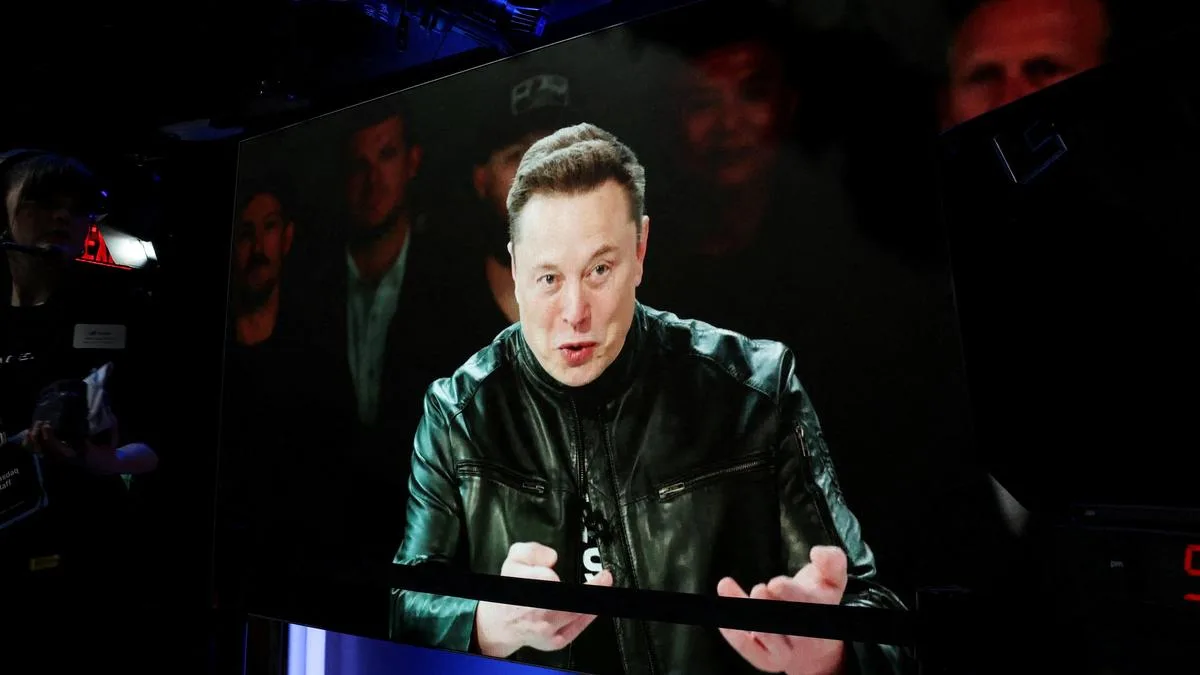
Elon Musk and SpaceX President and COO Gwynne Shotwell rang the opening bell on Friday, with Musk appearing remotely from Texas and Shotwell at the Nasdaq in New York City. Musk, speaking on a JPMorgan Chase livestream before trading began, said he wanted to take SpaceX public now to raise capital for what he called "a significant growth phase."
What Exactly Is SpaceX Now: Rockets, Satellites, and an AI Company
This is where it gets genuinely interesting, and slightly more complex.
SpaceX is no longer just a rocket company. When you look at SPCX stock, you are effectively looking at a bundle of three different businesses priced together.
The first is the core launch business. SpaceX now conducts more than half of all global orbital launches and remains NASA’s primary commercial launch partner. It is the foundation of the company’s reputation and its original mission: building reliable and reusable rockets.
The second, and currently the most commercially stable segment, is Starlink. SpaceX has deployed over 9,600 satellites in low-Earth orbit, and Starlink now serves around 10.3 million subscribers across 164 countries as of March 2026, making it a major global player in satellite internet services.
The third layer is newer and more complex, involving artificial intelligence and digital platforms. Through its broader ecosystem, SpaceX is increasingly connected to AI-driven tools, including xAI’s Grok models, data infrastructure, and the social platform X (formerly Twitter), creating a wider technology stack that extends beyond aerospace.
Taken together, SPCX is no longer just a pure-play space company. It represents a combination of rockets, satellite internet, and an expanding AI and digital communications ecosystem—an unusual structure for any single investment vehicle.
Read More: Ebola Is Back and Spreading Fast: Everything You Need to Know About the 2026 Outbreak
The Financial Reality Behind the Record-Breaking SpaceX Stock Listing
The excitement is real. The risks are also real.
SpaceX's pre-IPO filings with the US Securities and Exchange Commission reveal that while the company brought in $18.7 billion in revenues in 2025, up sharply from 2024, it still lost almost $5 billion last year. The xAI segment is the primary source of those losses. In 2025, the xAI segment posted a $6.36 billion operating loss on $3.2 billion in revenue. For the first three months of 2026, capital expenditures for the AI business came in at $7.7 billion.
The IPO valuation was roughly 94 times revenue, according to Morningstar analysts, compared with Meta at 22x and Amazon at 18x at their own IPO moments. That is an extremely elevated multiple. It reflects enormous investor confidence in future growth, particularly around Starlink and AI data centres in space, but it also means the margin for disappointment is thin.
What Indian Investors Should Know About Buying SPCX
In India, both Bharti Airtel and Reliance Jio have signed partnership agreements with SpaceX to bring Starlink's broadband services to India, pending regulatory clearance. That creates a direct connection between SpaceX's fortunes and India's telecom landscape.
For Indian retail investors interested in buying SPCX, the stock is available through international investing platforms that offer US market access. The IPO was notably structured to ensure retail participation. SpaceX wanted retail investors to receive roughly 30% of the shares being sold, which would amount to about $22.5 billion.
One technical detail worth knowing: In March 2026, Nasdaq implemented rule changes that allow any newly listed company ranking in the top 40 by market capitalisation to be fast-tracked into the Nasdaq 100. Counting from the June 12 listing, the 15-trading-day deadline falls around July 1, 2026. Once included, all funds tracking the Nasdaq 100 will be required to buy SPCX as part of index rebalancing, likely forcing approximately $7 billion in mechanically driven purchases concentrated in a stock with a public float of only about 3%. That mechanical buying pressure is something to watch.
The Weight of What Just Happened
Musk said something during his address to SpaceX employees on the day of the listing: "Whoever you are watching this, SpaceX wants to be able to take you to the moon, take you to Mars and ultimately beyond." Whether that vision justifies a $2 trillion valuation today is something every investor has to decide for themselves.
What is not in dispute is that on June 12, 2026, the financial record books were rewritten. A rocket company that started in 2002 with a stated goal of reducing the cost of space travel went public, raised more money in a single day than most countries collect in taxes in a year, and made its founder the first person in history to hold a trillion dollars in personal wealth.
That is not an ordinary sentence. And this was not an ordinary IPO.
Read More: The Hidden Walking Rule Nobody Knew Existed: Why Humans Naturally Turn Counterclockwise
Disclaimer: This article is based on information available across the web. Parchar Manch does not take responsibility for its complete accuracy, as the content could not be fully verified.
FAQs
What is the SpaceX IPO price and stock ticker?
SpaceX priced its IPO at $135 per share and listed on the Nasdaq under the ticker symbol SPCX on June 12, 2026. The stock closed up 19% at $160.95 on its first trading day.
How much did SpaceX raise in its IPO?
SpaceX raised $75 billion by selling 555,555,555 shares at $135 each, making it the largest IPO in history, surpassing Saudi Aramco's previous record of $29 billion.
Did Elon Musk become the world's first trillionaire because of the SpaceX IPO?
Yes. Elon Musk's combined stakes in SpaceX and Tesla pushed his net worth past $1 trillion on the day of the IPO, making him the first person in history to cross that threshold.
Is Starlink the only profitable part of SpaceX?
Yes. Starlink, the satellite internet division with over 10.3 million subscribers globally, is currently SpaceX's only profitable segment. The xAI division, which includes the Grok AI models and X social network, is recording significant operating losses.
Can Indian investors buy SPCX stock?
Yes. Indian investors can access SPCX through platforms that offer US stock market investments. SpaceX also has Starlink partnership agreements with Bharti Airtel and Reliance Jio in India, pending regulatory clearance.
Will SpaceX stock be included in the Nasdaq 100?
SpaceX is likely to be fast-tracked into the Nasdaq 100 around July 1, 2026, under new Nasdaq rules, which would force approximately $7 billion in automatic purchases by index-tracking funds.