Supreme Court Birthright Citizenship Ruling Deals Trump a Major Constitutional Defeat
Six to three. That is the number that decided the fate of a rule most Americans never had to think about twice, because it simply was, a baby born on U.S. soil is a U.S. citizen. Full stop. No asterisks. Until an executive order tried to add some.
This is everything worth knowing about the Supreme Court birthright citizenship ruling, what the executive order actually attempted to change, how the justices split, and what happens from here.
Why This Actually Matters
More than a quarter of a million babies are born in the United States every year to parents who are not citizens or permanent residents, according to research from the Migration Policy Institute and Penn State's Population Research Institute. That is not an abstract legal debate for those families, it is the difference between a child having citizenship from the moment they are born or not. The ruling also matters because it touches something bigger than immigration policy alone, whether a president can reinterpret a constitutional amendment through executive order rather than through Congress or a constitutional amendment process.
What It Really Is, Explained Simply
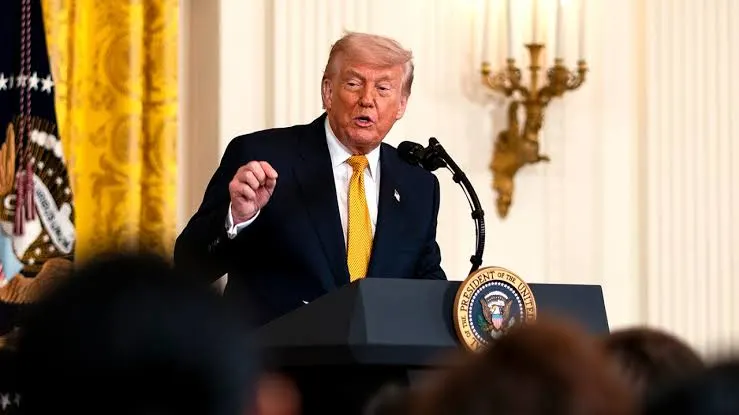
Here is the plain version. On his first day back in office, January 20, 2025, President Trump signed Executive Order 14160, which tried to redefine birthright citizenship. Under the order, a child born in the U.S. would only be a citizen at birth if at least one parent was already a citizen or permanent resident. Babies born to parents who were undocumented, or only temporarily in the country, such as students or visa holders, would not automatically become citizens.
The problem, according to the challengers and eventually the Court itself, is the 14th Amendment's Citizenship Clause, which states plainly that all persons born in the United States and subject to its jurisdiction are citizens. Think of the Constitution here like a locked door that only a very specific key can open, a constitutional amendment or an extremely narrow set of exceptions. An executive order, on its own, was never that key.
How the Case Reached the Supreme Court, Step by Step
- Multiple federal courts across the country reviewed challenges to the order after it was signed, and every single one that considered the merits ruled against the Trump administration.
- Because lower courts kept issuing nationwide injunctions blocking the order everywhere, the administration first asked the Supreme Court to weigh in on whether such broad injunctions were even allowed. In that earlier case, Trump v. CASA, the Court ruled 6-3 that nationwide injunctions generally cannot stand.
- That left individual cases to keep moving through lower courts. One, a case eventually known as Trump v. Barbara, reached the Supreme Court on the actual constitutional question, not just the injunction question.
Read More: Manoj Bajpayee Calls Ramayana and Varanasi Budget Hype a "PR Tactic" , And He Has a Point
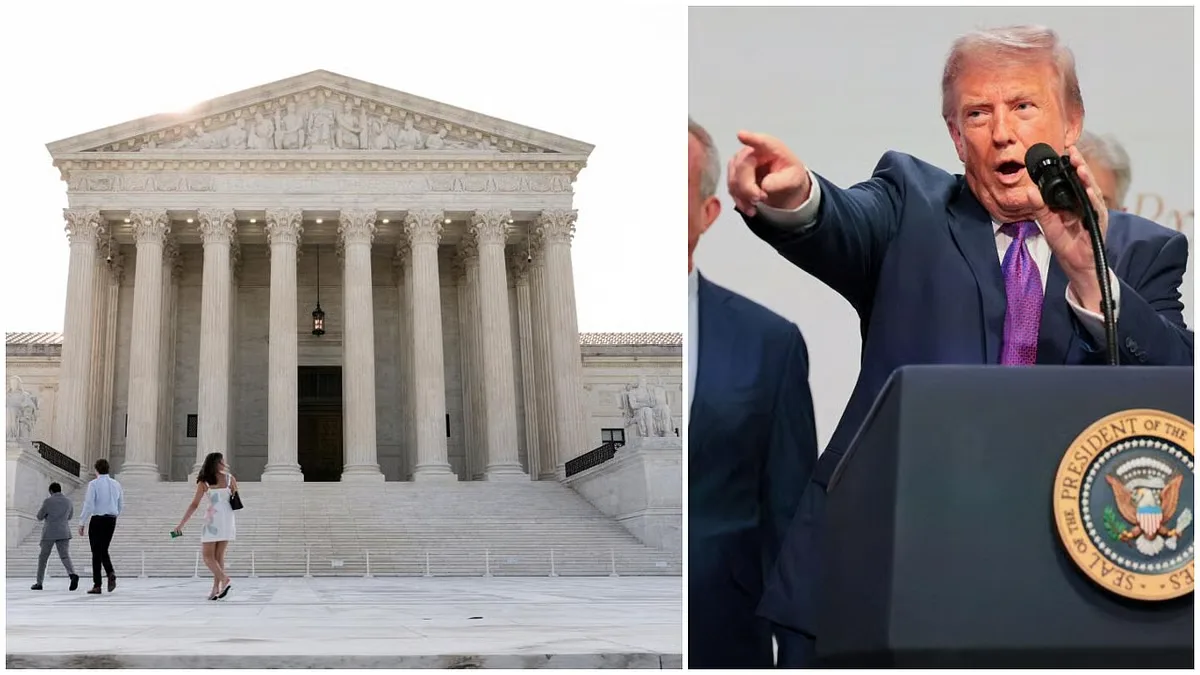
- Oral arguments were heard on April 1, 2026, with justices probing whether Executive Order 14160 could be reconciled with the 14th Amendment's text and with Wong Kim Ark, the landmark 1898 case that already settled this exact question for a man born in San Francisco to Chinese immigrant parents.
- On June 30, 2026, the Court issued its ruling. In a 194 page decision, the majority, written by Chief Justice John Roberts and joined by Justices Kagan, Sotomayor, Barrett, and Jackson, struck down the order as unconstitutional.
- Justice Kavanaugh agreed the order could not stand, though on statutory rather than constitutional grounds, effectively making it a 6-3 result against the administration.
- Justices Thomas, Alito, and Gorsuch dissented, though Gorsuch wrote separately, raising narrower questions about how domicile factors into the citizenship analysis rather than fully endorsing the executive order.
Real-World Examples of What the Ruling Actually Means
Roberts leaned heavily on Wong Kim Ark, noting that the Court's 1898 reasoning already established that children born in the U.S. to non-citizen parents are citizens at birth, with only a handful of narrow exceptions, children of accredited foreign diplomats, children born to hostile occupying forces, births aboard foreign sovereign vessels, and specific island territories like American Samoa. Trump's order, by trying to add a domicile or citizenship requirement for parents, did not fit within any of those historically recognized exceptions, which is largely why it failed.
Mistakes People Keep Making, And Why
A frequent misunderstanding is treating this ruling as brand new law, when really it reaffirmed something already settled for over a century. Another common mistake is assuming the 6-3 split means the debate is purely partisan, when in fact the reasoning inside the opinions, especially Gorsuch's separate dissent, shows real disagreement over legal interpretation, not simple political alignment. It is also easy to assume this ruling ends the conversation entirely, but Justice Kavanaugh's opinion actually left a door open.
Read More: RBI Holds Repo Rate at 5.25%: What the June 2026 MPC Decision Really Means for Your Money
Pro Tips for Understanding What Comes Next
Watch Congress closely, because Kavanaugh's opinion reportedly outlined a legislative path Congress could take if lawmakers wanted to pursue similar restrictions through statute rather than executive order. Trump himself pushed this idea after the ruling, urging Congress on social media to pass legislation rather than pursue a constitutional amendment. If you or someone you know could be affected by birthright citizenship questions, the safest approach is relying on current 14th Amendment protections as they stand now, not on the executive order, which the Supreme Court has firmly said cannot be enforced.
Closing Thoughts
There is something almost reassuring about watching a system built on checks and balances actually hold, whatever your politics. This was, after all, the third significant Supreme Court loss for the Trump administration in recent months, following an earlier ruling against sweeping tariffs. Whether Congress eventually revisits birthright citizenship through legislation is a separate question entirely, and likely a much longer, messier one than a single court ruling could ever settle.
Disclaimer: This article is based on information available across the web. Parchar Manch does not take responsibility for its complete accuracy, as the content could not be fully verified.
Read More: Kuku Technologies Files Confidential IPO: What the Rs 3,500 Crore Listing Really Means
FAQs
What did the Supreme Court actually rule?
The Court ruled 6-3 that Trump's Executive Order 14160, which sought to limit birthright citizenship, is unconstitutional and cannot be enforced.
What was Executive Order 14160 trying to do?
It attempted to deny automatic citizenship to children born in the U.S. unless at least one parent was already a citizen or permanent resident.
Does this affect children of legal immigrants too?
Yes, the order would have applied not just to undocumented immigrants but also to legal visa holders, students, and green card applicants, which is part of why the ruling drew such broad attention.
What is the 14th Amendment's Citizenship Clause?
It states that all persons born or naturalized in the United States, and subject to its jurisdiction, are citizens, a rule the Supreme Court reaffirmed applies broadly with only narrow historical exceptions.
Can Congress still change birthright citizenship rules?
Possibly through legislation, since Justice Kavanaugh's opinion suggested a statutory path Congress could explore, though any such law would still need to withstand constitutional scrutiny.
Is this the first time birthright citizenship has been legally tested?
No, the core legal question was largely settled in 1898 through United States v. Wong Kim Ark, which this ruling relied on heavily.