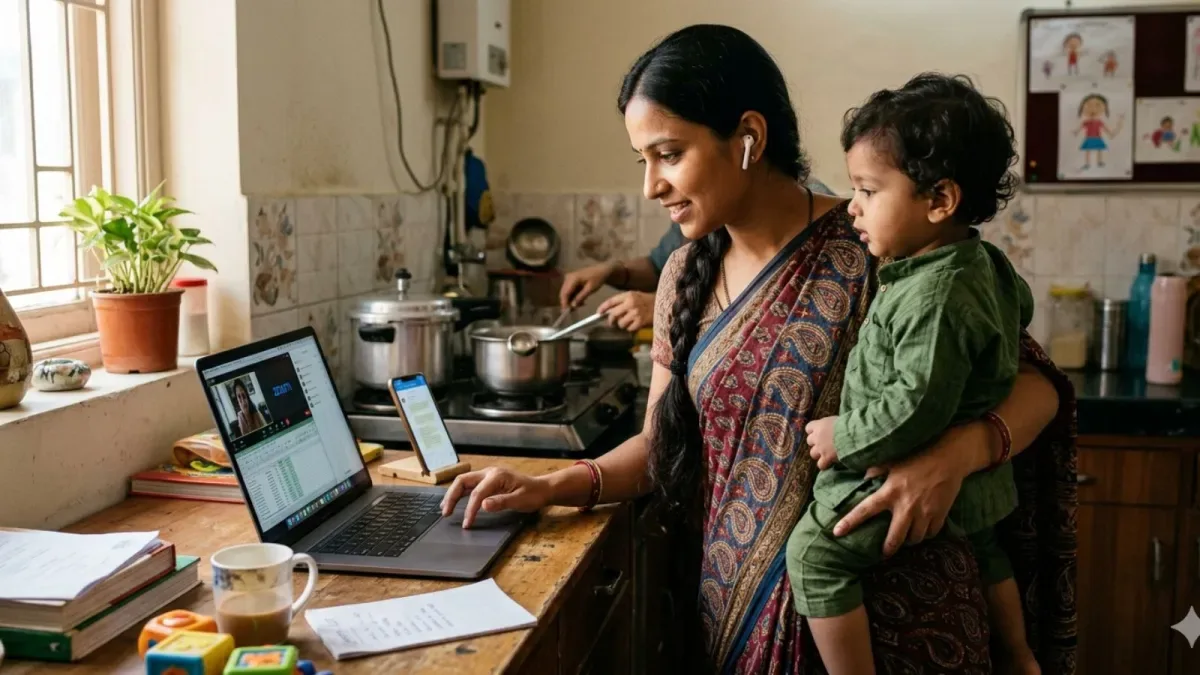
Supreme Court Calls Homemakers "Nation Builders" , Sets Rs 30,000 Notional Income for Accident Compensation
A woman dies in a road accident. Her family files for compensation. The tribunal values her life's work at a few lakh rupees , calculated on the assumption that because she never received a salary, her contribution barely counted.
That is what happened to one family from Punjab for more than two decades. It took a Special Leave Petition, multiple courts, and finally the Supreme Court of India to change the number. And in doing so, on June 11, 2026, the court said something that felt long overdue.
The Supreme Court recognised homemakers as "nation builders" and acknowledged the economic value of unpaid domestic work. In a landmark judgment, the top court held that the loss of domestic-care services must be treated as a distinct head of compensation and fixed a notional monthly income of Rs 30,000 for assessing such loss in motor accident claims.
What the Judgment Actually Says About Homemakers and Compensation
A bench comprising Justices Sanjay Karol and N. Kotiswar Singh observed that the contribution of homemakers extends far beyond routine household chores, playing a vital role in shaping families, strengthening communities, and contributing indirectly to the nation’s social and economic foundation. The court emphasised that unpaid domestic labour cannot be considered economically insignificant simply because it does not carry a formal salary. In its remarks, the bench stated that “housewives contribute to the household. They are nation builders. They build the nation.”
The court also went beyond observation and introduced a significant benchmark by fixing a minimum notional income of ₹30,000 per month for assessing such loss. This figure builds on earlier judicial practices of valuing homemakers’ work in line with minimum wages for skilled and unskilled labour.
This marks a notable shift in legal reasoning. For years, courts have used minimum wage standards as a reference point to estimate the economic value of a homemaker’s contribution. The ₹30,000 monthly benchmark represents a stronger recognition of that role, framing it not as symbolic work, but as labour with substantial and measurable economic value.
The Numbers Behind the Ruling: What India's Data Says About Unpaid Domestic Work
The bench did not arrive at this figure arbitrarily. Referring to international studies and India's Time Use Survey, the bench noted that women spend over seven hours a day on unpaid domestic tasks, perform nearly 2.6 times more unpaid caregiving work than men and contribute an estimated 15 to 17 per cent of India's GDP through unpaid care work.
Fifteen to seventeen per cent of India's GDP. That is an enormous number. And yet, in compensation law, the same contribution was being calculated using daily wage rates for unskilled workers. The judgment stressed that recognising homemakers is not merely an exercise in assigning monetary value to domestic labour but an effort to challenge entrenched gender stereotypes and redefine what society considers valuable.
The Case Behind the Ruling , A Decade of Fighting for What Was Fair
The ruling resulted from a case linked to the death of a woman in a road accident on November 25, 2001. The Supreme Court substantially increased the compensation payable to her family from Rs 8.43 lakh to Rs 62.78 lakh.
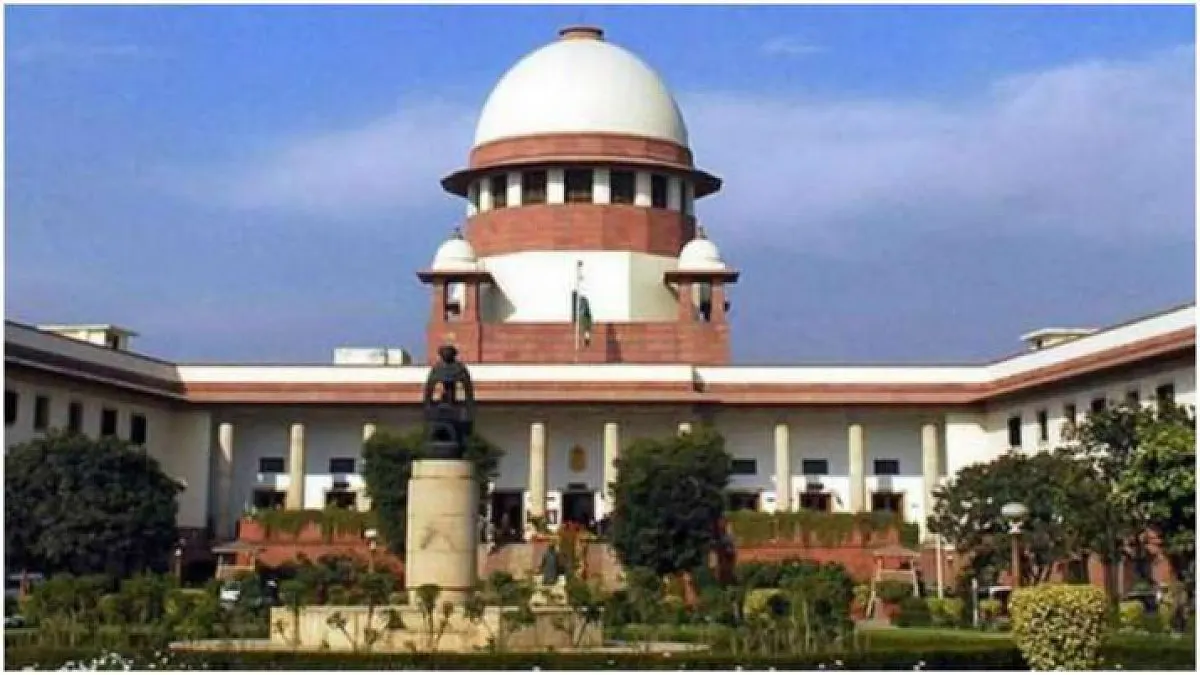
The woman's legal heirs had been awarded compensation of Rs 2.42 lakh by the Motor Accidents Claims Tribunal in December 2023. Still unsatisfied, the family pursued the matter further until it reached the Supreme Court, which gave them something closer to what the loss actually meant.
Read More: Ebola Is Back and Spreading Fast: Everything You Need to Know About the 2026 Outbreak
How This Changes Motor Accident Compensation Claims in Practice
The court held that the ₹30,000 figure, representing loss of domestic care, should be treated as a baseline minimum monthly income in cases where a homemaker has no formal earnings to include in compensation calculations.
This valuation is intended to account for three key components: the homemaker’s contribution to the smooth functioning of the household, the loss of maternal care for children, and the loss of spousal support. Together, these elements form a composite baseline for assessing non-economic loss in such cases.
The court also directed that motor accident claim cases should ordinarily be decided within one year. It noted with concern that families are often forced to wait for decades for resolution, citing delays such as the Punjab case that prompted the present judgment.
Why This Ruling Matters Beyond Courtrooms
The notional income for homemakers ruling matters not just in compensation law but in a broader cultural sense. It formally acknowledges something most Indian families already know: running a home is full-time work. It is physically demanding, emotionally intensive, and economically irreplaceable.
When a homemaker dies in a road accident, the surviving family does not lose a salary. They lose childcare, elder care, nutrition, emotional labour, household management , and all of it had to be replaced by either a family member's effort or hired help. That has real cost. The Supreme Court just put a floor on it.
Disclaimer: This article is based on information available across the web. Parchar Manch does not take responsibility for its complete accuracy, as the content could not be fully verified.
FAQs
What is notional income for homemakers in the Supreme Court ruling?
The Supreme Court fixed ₹30,000 per month as the notional income for a homemaker, which means an assumed income used to calculate compensation in cases where the homemaker does not have a formal salary. This amount is used to value their domestic contribution in motor accident compensation claims.
Does this ruling apply to all motor accident claims involving homemakers?
The ruling sets ₹30,000 per month as a baseline notional income for homemakers in motor accident compensation cases, but it is not an automatic fixed rule for every case. Courts will generally use it as a guiding standard, while still considering the specific facts and circumstances of each claim before final compensation is decided.
What was the compensation in the case that led to this ruling?
The Supreme Court increased the compensation payable to the family from Rs 8.43 lakh to Rs 62.78 lakh.
Who delivered this judgment?
A bench comprising Justices Sanjay Karol and N Kotiswar Singh delivered the ruling on June 11, 2026.
How much do homemakers contribute to India's GDP?
According to India's Time Use Survey cited in the judgment, homemakers contribute an estimated 15 to 17 per cent of India's GDP through unpaid care work.
What is "loss of domestic care" as a legal concept?
Loss of domestic care is now recognised as an additional and independent head of compensation, separate from other heads such as loss of income or consortium, acknowledging the full value of a homemaker's contribution to the household.