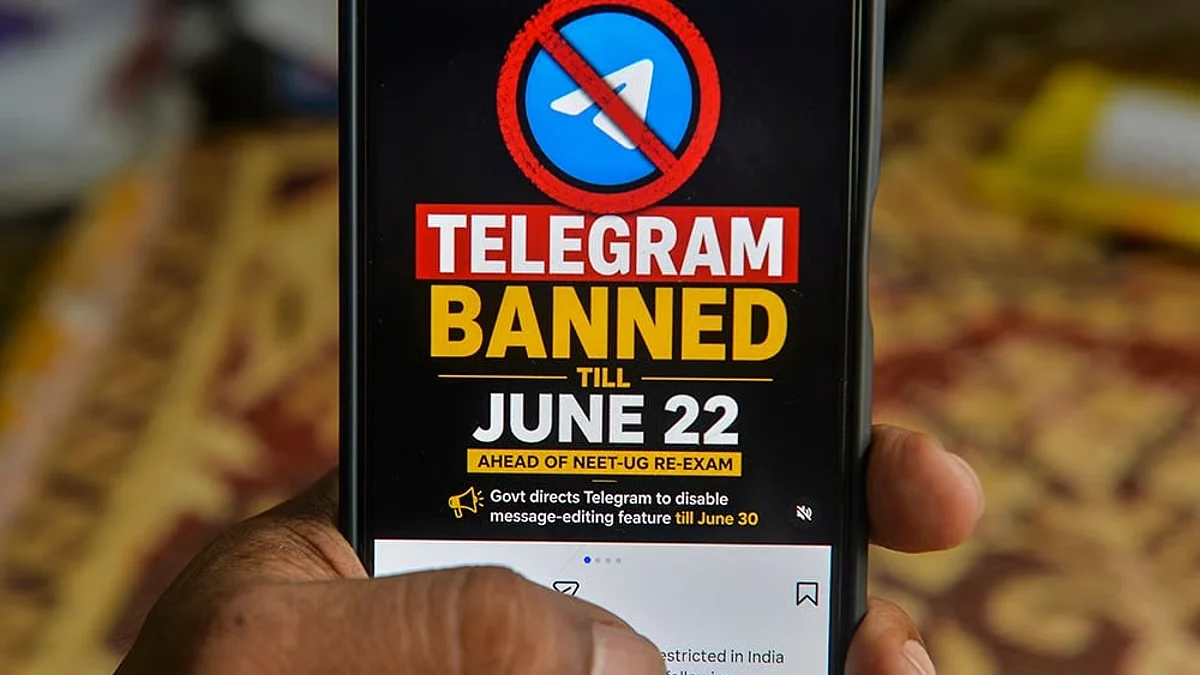
Telegram Banned in India Over NEET Paper Leak: What the Delhi High Court Battle Really Means
It is not every day that an app used by over 150 million people in India just stops working. No warning, no countdown. Just blocked.
That is what happened to Telegram in India in June 2026, when the Indian government imposed a temporary ban on Telegram ahead of the NEET-UG 2026 re-examination. The block was in place till June 22. And Telegram did not sit quietly. It moved the Delhi High Court, calling the move unconstitutional.
The Delhi HC heard arguments from both sides and ultimately upheld the Centre's ban. But the hearing itself raised questions that go far beyond one exam.
Why India Banned Telegram — The NEET Paper Leak Connection
The government's reasoning was specific. Paper leak channels on Telegram had allegedly been used to circulate NEET question papers ahead of scheduled exams. India has a painful history with exam paper leaks. The NEET-UG controversy in 2024 was a national flashpoint. This re-exam in 2026 was meant to restore confidence in the system.
The Centre argued before the Delhi HC that Telegram was the platform of choice for organised cheating networks. According to government submissions, the app was being used to run multiple bots and channels dedicated to distributing exam-related materials illegally. The government went further, calling Telegram a new dark web and describing it as a hub for criminal actors.
That last bit was striking. Comparing an app with 900 million global users to a hidden criminal network is not a casual legal argument. It was a pointed statement about how authorities view the platform.
Read More: Indian Vessel Virat 1 in Oman: Why This Maritime Visit Is Getting Attention
Telegram's Response: 150 Million Users Cannot Be Blocked Over Exams
Telegram's legal team pushed back with its own pointed question. A core argument raised before the court was: how can you stop the rights of 150 million users because of a few bad actors on the platform?
It is a reasonable concern. Banning an entire platform to prevent its misuse for one exam is a blanket action. The Delhi HC itself raised this during the hearing, asking whether such a ban was proportionate. The court specifically questioned whether a blanket Telegram ban was a justified response to prevent NEET paper leaks, or whether it went too far.
Telegram also called the ban unconstitutional, arguing that the Telegram ban India action violated user rights and set a dangerous precedent for how the government can act against digital platforms.
The HC reserved its verdict, then upheld the ban. The court found the ban was not disproportionate given the circumstances.
Read More: Twenty Rebel Trinamool Congress MPs to Merge with NCPI? The Political Buzz Raising Big Questions
Why Telegram and Not WhatsApp? The Architecture Argument
A legitimate question that surfaced widely during this episode: if leaks happen on all platforms, why single out Telegram?
The Centre offered a specific answer. Telegram's platform architecture is fundamentally different from WhatsApp's. Telegram allows large public channels, anonymous bots, and has a message editing feature that makes it easier to share and rapidly update sensitive content before authorities can act. The government said these features make Telegram uniquely suited for coordinated malpractice.

WhatsApp has tighter encryption and no large public broadcast channels of the same scale, making mass distribution of leak content structurally harder.
Telegram's founder Pavel Durov added a separate controversy to this mix by accusing Reliance Jio of blocking Telegram users even before any official government directive. Jio denied the claim. The back-and-forth added another layer of friction to an already tense situation.
What This Case Signals About Digital Governance in India
This is not the first time India has blocked a digital platform under emergency provisions of the IT Act. But banning a platform with 150 million domestic users, even temporarily, is a different scale of action.
The Delhi HC's willingness to uphold the ban is significant. It signals that Indian courts are prepared to accept temporary platform restrictions for national security or public examination integrity reasons, as long as the government presents a clear justification.
It also raises a question that will outlast this case: who is responsible when a platform is misused at scale? The platform, its users, or the regulatory system that allowed the gaps to exist in the first place?
Closing Thoughts
A single exam prompted a national ban. A court upheld it. And 150 million people found an app blank on their phones for a few days.
The real debate here is not about Telegram specifically. It is about how a democracy balances digital access with public order. That is not a question that resolves neatly, and this case has not resolved it either. What it has done is brought the tension into sharp focus.
Read More: Ram Temple Donation Fraud: How Scammers Are Exploiting Faith and What Devotees Need to Know
Disclaimer: This article is based on information available across the web. Parchar Manch does not take responsibility for its complete accuracy, as the content could not be fully verified.
FAQs
Why was Telegram banned in India?
The Indian government imposed a temporary ban on Telegram ahead of the NEET-UG 2026 re-examination, citing its use by organised networks to distribute leaked exam papers through bots and public channels.
Did Telegram challenge the ban in court?
Yes. Telegram moved the Delhi High Court against the temporary ban, calling it unconstitutional and questioning whether blocking 150 million users was a proportionate response.
What did the Delhi High Court decide?
The Delhi HC upheld the Centre's temporary ban on Telegram, ruling that the ban was not disproportionate given the context of NEET exam security concerns.
Why was Telegram banned and not WhatsApp?
The government argued that Telegram's architecture — including large public channels, anonymous bots, and message editing features — makes it uniquely suited for coordinated paper leak operations, unlike WhatsApp.
What did Pavel Durov say about the ban?
Telegram founder Pavel Durov accused Reliance Jio of blocking Telegram users even before any formal government order, a claim Jio denied.
What law did India use to block Telegram?
India acted under emergency provisions of the Information Technology Act, which allows the government to block digital platforms in the interest of public order, national security, or other specified grounds.