The $300 Billion Question: What the US-Iran Framework Deal's Reconstruction Fund Really Means
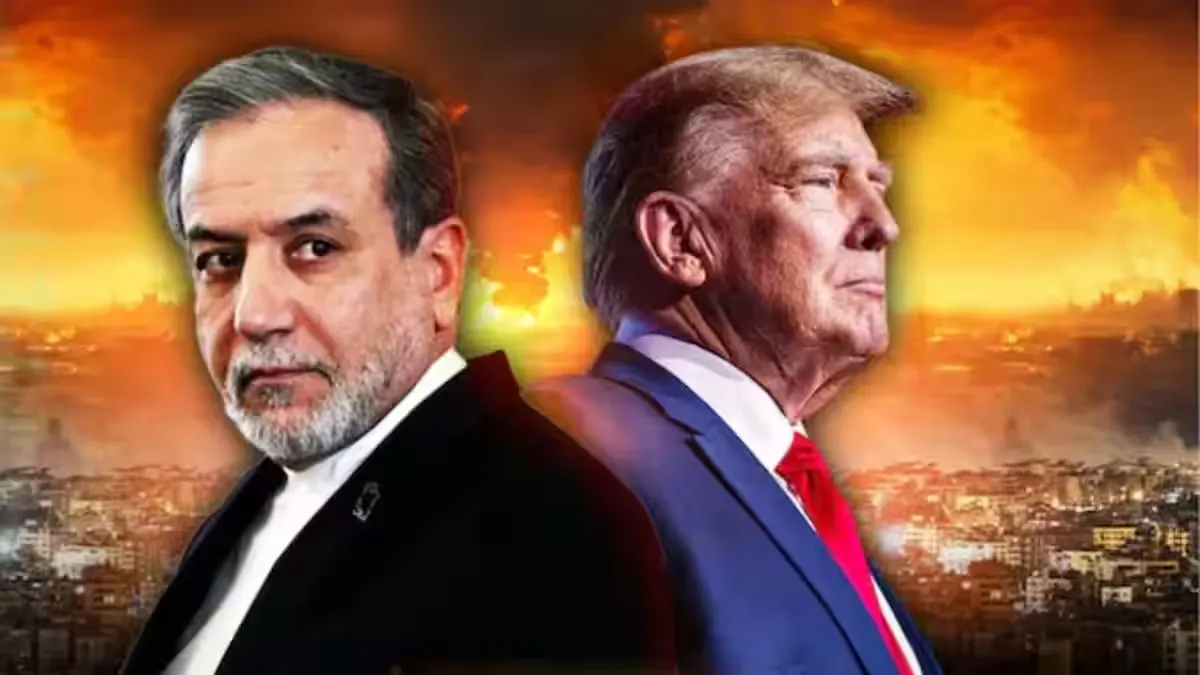
Three hundred billion dollars. That number has been circling the US-Iran peace deal since the moment it surfaced, and almost every official who mentions it immediately reaches for a qualification. Trump called reports about it "Fake News." VP JD Vance confirmed it exists but said America would not pay a single dime. Iran's Revolutionary Guards claimed it is a requirement written into the deal itself.
So what is the $300 billion Iran reconstruction fund actually about?
Why the Money Clause Is the Most Contested Part of the US-Iran Framework Deal
The ceasefire between the US and Iran, signed on June 15, 2026, ended more than three months of active war and reopened the Strait of Hormuz. That part is relatively settled. But the US-Iran framework deal also contains a provision referring to postwar economic reconstruction, and that provision has triggered a sharp and revealing political fight inside Washington.
The core of the controversy: the draft memorandum of understanding (MoU) reportedly references an international investment fund worth at least $300 billion to support Iran's postwar reconstruction and economic growth. Two diplomats briefed on the draft confirmed its existence, describing it as an instrument the US would help facilitate, not fund directly, in the event of a final deal.
Iran's Revolutionary Guards took a notably more assertive reading. Their public statement claimed the deal requires the US and its allies to present reconstruction plans worth at least this amount. That is a much stronger framing than what US officials have said.
Read More: NLC India OFS, Vodafone Idea Rally, Airtel Relief: Three Market Stories That Defined June 9, 2026
What JD Vance Actually Said, and Why It Matters
Vance addressed the fund in multiple appearances after the agreement was signed. His position evolved slightly with each telling, which itself signals the political sensitivity around the issue.
On CBS News, he confirmed that Iran "could have access" to the fund, adding that it would be "funded by the Gulf Coast Coalition, so long as they honor their end of the obligation." That framing placed the financial responsibility outside the US Treasury entirely.
On Fox News, Vance was more blunt. "The agreement says they are not getting a single dime of American money," he said directly. He framed the fund not as a payment but as a conditional invitation for Gulf countries to invest in Iran, and only if Iran ends its nuclear enrichment program, surrenders its enriched uranium stockpile, and agrees to an international inspections and enforcement regime.
The conditions are significant. The fund is not guaranteed. It is a carrot attached to requirements that have not been easy to negotiate in any prior diplomatic context.
Read More: “Our Customers Are in America”: Why Opendoor Shut Its India Operations and Fired 250 Employees
What Else Is in the US-Iran MoU
Beyond the reconstruction fund, the agreement outline that has emerged includes several specific commitments. The US will not increase its military forces in the region or impose new sanctions during a 60-day negotiation window. Iran will reaffirm its commitment under the Nuclear Non-Proliferation Treaty not to develop nuclear weapons. Around $24 billion in frozen Iranian assets would be released during that 60-day period, with half released before final negotiations begin.
A monitoring mechanism is to be established. Any final agreement would require UN Security Council approval.
That last point is not ceremonial. Getting the UN Security Council to formally endorse an Iran deal means navigating China, Russia, the UK, France, and the US itself. Each has its own interests.
Why Critics Are Pushing Back Hard on the $300 Billion Provision
Opposition to the fund is not just domestic American politics. Critics argue that Iran's government has consistently used economic resources to fund proxy groups including Hezbollah and the Houthis, and that providing reconstruction access without verifiable denuclearization creates a significant moral and strategic risk. Any fund released before full compliance, critics warn, repeats mistakes from prior nuclear agreements.
The Trump administration's stated position is that access is strictly conditional. Not a reward. A possibility, contingent on behavior.
Closing Thought
The Iran reconstruction fund debate is, underneath all the numbers and qualifications, a debate about trust. Can the US and Iran build a framework that moves simultaneously toward economic normalization and nuclear accountability? The 60-day negotiation window ahead will test whether the carrot is credible enough to change behavior, or whether it simply becomes the next argument before the next escalation.
Disclaimer: This article is based on information available across the web. Parchar Manch does not take responsibility for its complete accuracy, as the content could not be fully verified.
FAQs
What is the $300 billion Iran reconstruction fund?
It is a proposed international investment fund referenced in the US-Iran framework deal's MoU. The fund would support Iran's postwar reconstruction and economic growth, but only if Iran fulfills all conditions under a final nuclear agreement.
Will the US pay Iran $300 billion?
No. The Trump administration has been explicit that no American money would go into this fund. VP Vance said it would be funded by Gulf countries, and only if Iran complies with deal terms including ending its nuclear enrichment program.
What does Iran have to do to access the fund?
Iran would need to end its nuclear weapons program, surrender its enriched uranium stockpile, accept an international inspections regime, and comply fully with all terms of a final agreement.
What are the other key terms of the US-Iran framework deal?
The deal includes reopening the Strait of Hormuz, ending the US naval blockade, a 60-day nuclear negotiation window, a US commitment not to increase regional military presence or impose new sanctions during that period, and the release of approximately $24 billion in frozen Iranian assets.
Why is Iran's claim about the fund different from what the US says?
Iran's Revolutionary Guards stated the deal requires the US and allies to present reconstruction plans of at least $300 billion. The US frames it as a conditional possibility, not a requirement. This gap in public interpretation reflects the fact that full deal terms have not been released.
What happens if Iran does not comply with the deal?
The fund access is explicitly contingent on compliance. No compliance, no access. The US has also left open the possibility of reimposing sanctions and increasing regional military presence if Iran fails to meet its obligations.