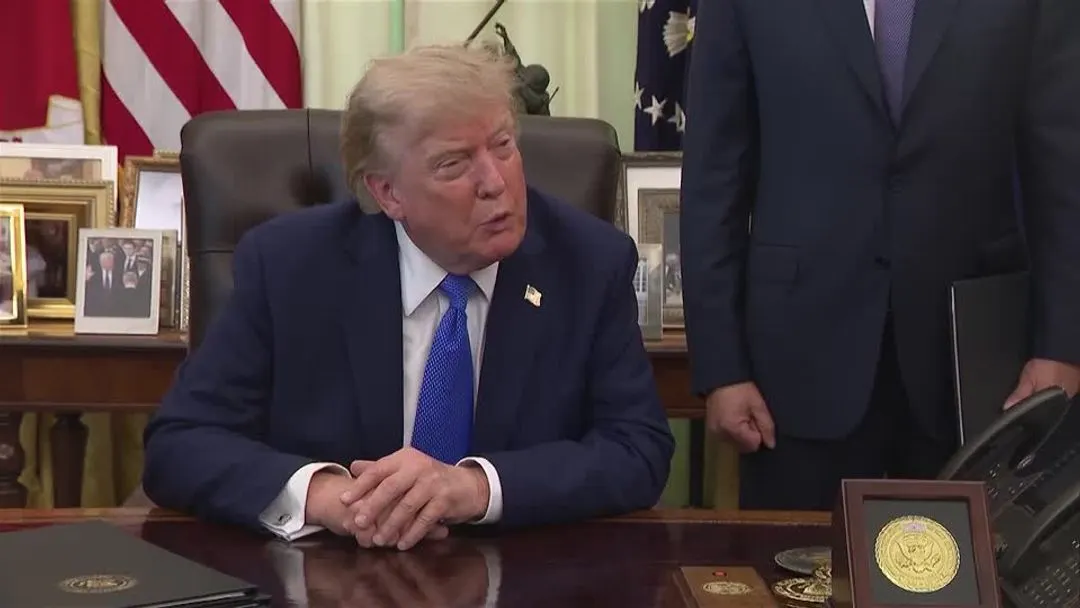
Trump Signs New Birthright Citizenship Orders, Five Weeks After the Supreme Court Told Him No
Five weeks. That's how long it took President Trump to respond to a Supreme Court ruling that struck down his original attempt to end birthright citizenship. Five weeks of quiet regrouping, and then, on Thursday, two new executive orders landed on his desk for signature. The Trump birthright citizenship executive orders signed this week aren't a repeat of last year's broader attempt. They're narrower, more targeted, and clearly built to survive the same legal scrutiny that killed their predecessor.
Here's what actually changed, and why the distinction matters more than it might first appear.
A 6-3 Ruling in June Set the Stage for This Week
To understand this week's move, you need the ruling that preceded it. On June 30, 2026, the Supreme Court decided Trump v. Barbara in a 6-3 ruling, striking down Trump's January 2025 executive order that had broadly attempted to end birthright citizenship for children of non-citizens. The Court held that the Fourteenth Amendment's Citizenship Clause extends to children born to parents in the United States for whom no extraterritorial exception applies, a legal way of confirming that being born on U.S. soil generally does guarantee citizenship, with only narrow historical exceptions.
Chief Justice Roberts, writing for the majority, described citizenship as fundamentally the right to have rights, tracing that promise back to the Fourteenth Amendment's original framers. It was a decisive defeat for the administration's original approach.
Two New Orders, Built Around the Exceptions That Survived
Trump didn't abandon the effort, he recalibrated it. Speaking during Thursday's Oval Office signing, he called the Court's ruling unfortunate but said his administration was making adjustments in response. Those adjustments came as two distinct orders.
The first targets what the White House calls commercial birth tourism, the practice of traveling to the United States specifically to give birth so a child automatically gains citizenship. The second widens the administration's definition of people considered ineligible for automatic birthright citizenship, reportedly including children born to foreign nationals registered as lobbyists or agents working on behalf of foreign governments, alongside categories carried over from the original 2025 order involving undocumented or temporarily present parents.
Legally, this is a meaningfully different strategy than before. Rather than challenging the broad constitutional guarantee directly, these orders lean on the narrow historical exceptions the Supreme Court itself acknowledged in its Barbara ruling, exceptions involving foreign government employees, diplomatic personnel, and similar categories long recognized as outside the citizenship clause's scope.
Why Legal Experts Are Still Skeptical
Here's the honest complication worth naming clearly. Legal experts have pointed out that while the president holds real authority to restrict entry into the country, that authority doesn't extend to denying citizenship once a child is actually born on U.S. soil. The Fourteenth Amendment's guarantee, as reaffirmed by the Supreme Court just five weeks earlier, doesn't leave much room for executive orders to carve out new categories of ineligibility beyond the narrow historical exceptions already recognized.
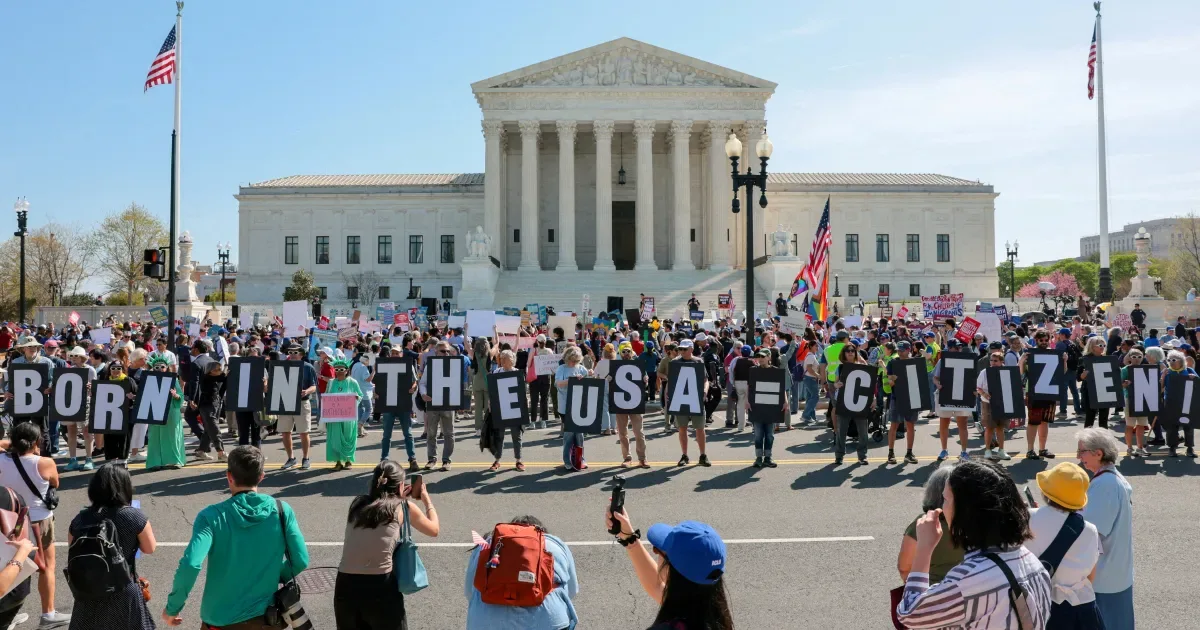
That tension, an administration testing the edges of exceptions the Court just confirmed exist, while critics argue those edges are far narrower than these new orders assume, sets up what's likely to become the next major legal battle over this issue.
A Pattern That Extends Well Beyond Birthright Citizenship
This week's orders don't exist in isolation. They're part of a broader tightening around U.S. citizenship policy throughout Trump's second term. The Department of Homeland Security has separately been considering changes to the naturalization civics test, and the numbers here are genuinely significant. The test expanded from 10 to 20 questions, with the passing threshold rising from 6 correct answers to 12, and the overall question bank growing from 100 to 128 possible questions. USCIS officers must now stop the interview once an applicant either answers 12 questions correctly or gets 9 wrong, whichever comes first.
Alongside the harder test, denaturalization efforts have also intensified. The Justice Department recently announced what it described as its largest coordinated denaturalization effort in history, seeking to revoke citizenship from 25 naturalized Americans accused of obtaining it through fraud or concealment. According to the Brennan Center for Justice, denaturalization cases averaged roughly 11 annually between 1990 and 2017, but rose to about 25 per year during Trump's first term, a trajectory that appears to be continuing.
The Families This Could Actually Touch
If you're trying to understand the practical stakes here, it comes down to this. Families falling into the newly defined ineligible categories, foreign government employees, registered lobbyists for foreign governments, and those previously covered under the 2025 order's undocumented or temporary status provisions, may find federal agencies withholding citizenship documents for children born in the U.S. going forward. Whether that withholding survives legal challenge is genuinely uncertain, given how directly it brushes against the Supreme Court's own recent ruling.
For the vast majority of people born in the United States, this doesn't change anything. The core constitutional guarantee the Supreme Court just reaffirmed remains intact. These orders are narrowly targeted, even if their long term legal survival remains an open question.
The Legal Fight That's Almost Certainly Coming
Given how directly these new orders test boundaries the Supreme Court only just clarified, expect immediate legal challenges. Civil rights organizations and immigration advocacy groups that successfully fought the original 2025 order are unlikely to sit this one out, especially given how recently and decisively the Court ruled against the administration's broader approach.
What to Watch in the Weeks Ahead
Keep an eye on which organizations file the first legal challenges against these new orders, since the identity of the plaintiffs often signals which specific provision draws the most immediate concern. Also watch how federal agencies actually implement the birth tourism provisions in practice, since enforcement details matter enormously for families potentially caught in ambiguous categories. And pay attention to whether the naturalization test changes and denaturalization efforts continue accelerating in parallel, since together they suggest a coordinated, multi front approach to citizenship policy rather than isolated executive actions.
A Fight That Isn't Over, Just Recalibrated
Five weeks between a Supreme Court defeat and a new attempt tells you something about how central this issue remains to the administration's broader agenda. The Trump birthright citizenship executive orders signed this week represent a narrower, more legally careful approach than what came before, built explicitly around exceptions the Court itself acknowledged. Whether narrower proves more durable, or simply invites the next round of litigation, is a question the coming months will almost certainly answer.
FAQs
What did the Supreme Court rule in June 2026?
In Trump v. Barbara, the Court ruled 6-3 that the Fourteenth Amendment's Citizenship Clause extends to children born to parents in the U.S., striking down Trump's broader 2025 attempt to end birthright citizenship.
What do the two new executive orders actually target?
One addresses commercial birth tourism, and the other expands categories considered ineligible for automatic citizenship, including children of foreign government lobbyists and agents.
Does this affect most people born in the United States?
No. The core constitutional guarantee remains intact for the vast majority of births on U.S. soil; these orders target narrowly defined exception categories.
Can the president legally deny citizenship to a child born in the U.S.?
Legal experts say no, once a child is born on U.S. soil, the president lacks authority to deny citizenship, even though he retains authority over entry restrictions.
What changes were made to the naturalization civics test?
The test grew from 10 to 20 questions with a larger question bank, and the passing threshold rose from 6 to 12 correct answers.
Is denaturalization becoming more common?
Yes. Denaturalization cases have risen significantly during Trump's second term, with a recent Justice Department effort targeting 25 naturalized Americans in what officials called their largest coordinated action to date.