India-US Trade Deal 2026: Trump Slashes Tariffs on India After Modi's Russian Oil Pledge
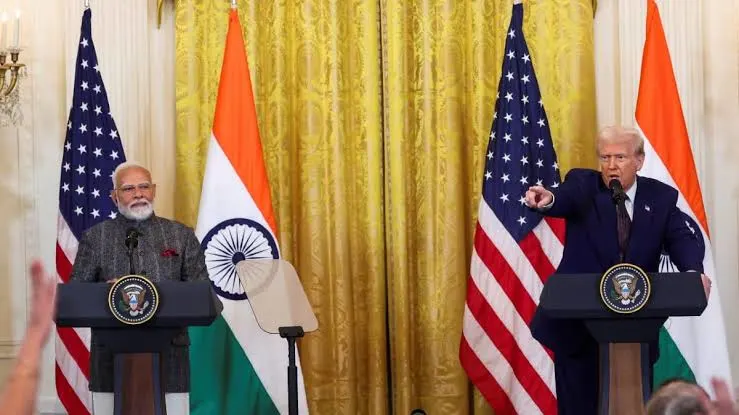
The India-US Trade Deal 2026 has become the biggest trade story of the year, marking a dramatic turnaround in relations between New Delhi and Washington. After months of tension over India's continued purchases of Russian crude oil, US President Donald Trump announced a sharp reduction in tariffs on Indian goods, bringing relief to exporters, investors, and policymakers alike.
What Happened in the India US Tariff Deal 2026
India-US Trade Deal 2026 has taken a major step forward after President Trump confirmed that tariffs on Indian goods would drop immediately from a punishing 50% to just 18%. This rollback effectively removes the additional 25% penalty that Washington had imposed earlier as pressure to stop India from buying discounted Russian oil. The announcement followed a phone call between Trump and Prime Minister Narendra Modi, during which Modi reportedly agreed to gradually shift India's crude imports away from Russia toward alternative sources, including the United States and Venezuela.
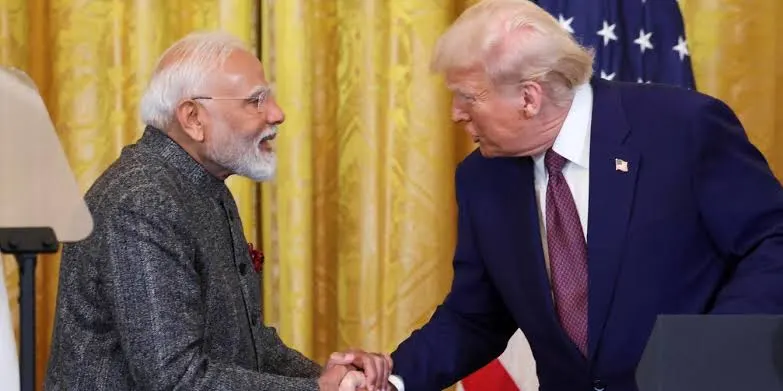
Trump described Modi as "one of my greatest friends" in a social media post confirming the India-US Trade Deal 2026. He also claimed that India had agreed to bring its tariffs on American goods down to zero and remove several non-tariff trade barriers that US businesses had long complained about. If implemented, the India-US Trade Deal 2026 could significantly strengthen bilateral trade and economic cooperation between the two countries.
Must Read: Marco Rubio India Visit: Why This Four-Day Trip Could Reshape the US-India Relationship
Why the Original Tariffs Were Imposed
To understand the significance of this news, it helps to look back. Earlier, Washington had accused India of indirectly funding the war in Ukraine by continuing to import roughly 1.5 million barrels of Russian oil per day — more than a third of India's total oil imports. The US had already imposed a 25% tariff on Indian goods, which was later doubled to 50% after Trump accused India of buying Russian crude "for big profits" and reselling it internationally.
India's Ministry of External Affairs had previously called the tariffs "unjustified and unreasonable," while continuing to defend its right to source affordable energy for its economy.
Modi's Response and India's Position
Prime Minister Modi welcomed the reduced tariffs in a post on X (formerly Twitter), calling it a positive step for bilateral trade. Interestingly, Modi's statement did not explicitly confirm a commitment to cut Russian oil imports, leaving some ambiguity about how quickly — or fully — India will pivot its energy sourcing strategy.
Analysts note that Venezuelan crude is chemically similar to Russian oil, meaning Indian refineries would not need major retooling to process it.
Must Read: US Proposes 12.5% Tariff on India: What the Forced Labor Crackdown Really Means for Trade
Impact on Indian Businesses and Markets
The tariff cut under the India-US Trade Deal 2026 is expected to benefit several export-driven sectors, including textiles, pharmaceuticals, gems and jewellery, engineering goods, and IT services. With the effective tariff rate previously hovering close to 35% due to various exemptions, Indian exporters had been struggling to remain price-competitive in the US market, their single largest trading partner.
Stock market analysts believe the news could boost investor sentiment toward India-facing ETFs and export-heavy companies. The reduction also strengthens India's position in ongoing negotiations for a broader bilateral trade agreement, something both governments have been pursuing for over a year.
What This Means Going Forward
While the tariff rollback is a major diplomatic and economic win for India, the India-US Trade Deal 2026 still faces important questions over its implementation. Will India genuinely reduce Russian oil imports, or will it continue balancing energy security with US relations? Trade experts suggest the coming months will be crucial in determining whether this is a lasting reset in India-US trade ties or a temporary truce.
For now, the India US tariff deal 2026 signals a thaw in what had become one of the most strained periods in recent India-US economic relations, and it sets the stage for deeper trade cooperation between the world's oldest and largest democracies.
FAQs
What is the new tariff rate on Indian goods after the 2026 deal?
Tariffs on Indian goods have been reduced from 50% to 18%, following Trump's announcement after his call with PM Modi.
Why did the US impose tariffs on India in the first place?
The tariffs were imposed as a penalty for India's continued imports of discounted Russian crude oil, which the US said indirectly funded Russia's war in Ukraine.
Has India agreed to stop buying Russian oil completely?
Not explicitly. Trump said Modi agreed to shift towards US and Venezuelan oil, but Modi's own statement did not confirm a full halt on Russian imports.
Which Indian industries benefit most from the tariff cut?
Export-heavy sectors such as textiles, pharmaceuticals, gems and jewellery, engineering goods, and IT services are expected to benefit the most.
Will this lead to a full India-US trade agreement?
The tariff cut is seen as a positive step, and both countries are expected to continue negotiating a broader, more comprehensive bilateral trade deal.