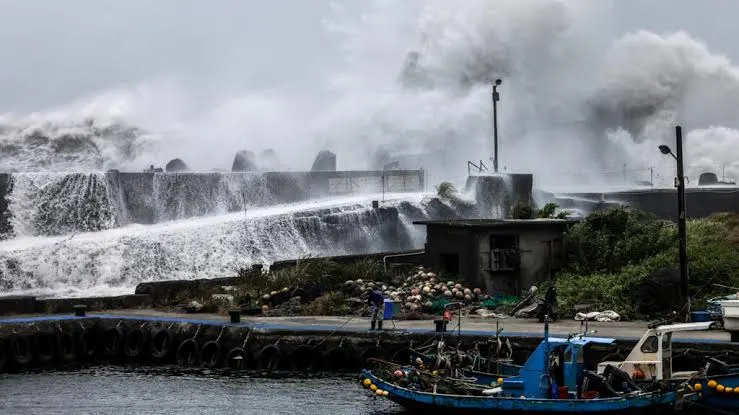
Typhoon Bavi Eastern China Landfall: Inside the Storm That Emptied Nearly 3 Million Homes
A storm the size of France. That comparison keeps showing up in report after report, and honestly, once you sit with it, it makes the whole thing click. Typhoon Bavi eastern China landfall happened late Saturday night, striking the coastal city of Yuhuan in Zhejiang province at around 11:20 p.m. local time, before slamming into Yueqing, part of Wenzhou, just after midnight. By the time it hit, more than 2.8 million people across the region had already been evacuated. Not thousands. Millions.
Bavi arrived with maximum sustained winds of about 144 kilometers per hour, roughly 90 mph, putting it around Category 1 strength on the scale most people would recognize from hurricane coverage. It is, by most measures, the most powerful storm to strike mainland China so far this year.
Why This Typhoon Bavi Landfall Actually Matters
Here's the part that struck me. Zhejiang isn't some remote coastal outpost, it's one of China's genuine economic engines, dense with manufacturing, ports, and technology industries. When over 2.2 million people in that single province get evacuated, you are not just talking about a weather event, you are talking about a temporary shutdown of a meaningful chunk of the world's second largest economy. Factor in the transport chaos, hundreds of cancelled flights, suspended train services, and you start to see why Typhoon Bavi in eastern China carries weight well beyond the storm itself.
And this wasn't even Bavi's first stop. It had already lashed Japan's southern Okinawa islands and brushed past northern Taiwan before reaching the mainland, leaving injuries and travel disruption in its wake at every point along the way.
Read More: NASA Swift Telescope Rescue Mission: The Wild Plan to Grab a Falling Observatory Before It Burns Up
What Actually Happened: The Storm Explained Simply
Think of Bavi less like a single punch and more like a slow moving wall of water and wind, one wide enough that its rain bands stretched roughly the width of an entire country. It weakened to a tropical storm by Sunday morning as it pushed further inland, but weakening doesn't mean harmless. Forecasters warned its enormous circulation could still generate destructive weather hundreds of kilometers from where it made landfall, dumping rain across both eastern and northern China for days afterward.
In Yueqing alone, more than 1,300 trees were reportedly felled, about half of them uprooted entirely, and floodwaters rose to roughly half the height of a car tyre in some streets. One resident described hearing roof tiles and tree branches crashing down as the storm passed overhead.
Read More: Japanese Yen Falls to Weakest Level Against Dollar Since 1986, Here's What That Actually Means
How China Prepared and Responded, Step by Step
- China's National Meteorological Center issued an orange typhoon alert, the second highest on a four tier warning scale, as Bavi approached the coast.
- Authorities evacuated more than 1.7 million people in Zhejiang alone by Saturday morning, a number that climbed past 2.2 million by Sunday.

- Shanghai relocated around 34,000 residents from high risk coastal zones, while Fujian province moved thousands more and placed over 17,000 emergency rescue workers on standby.
- Bavi made its first landfall in Yuhuan, followed by a second landfall in Yueqing within Wenzhou just after midnight.
- Transport networks absorbed heavy disruption, with hundreds of flights cancelled at Hangzhou's Xiaoshan airport and thousands of train services suspended in Shanghai.
- Emergency crews used chainsaws and excavators to clear fallen trees and waterlogged streets in the storm's immediate aftermath.
- By Sunday afternoon, Bavi had crossed into Anhui province, with forecasters expecting it to continue moving toward the Yellow Sea in the following days.
That evacuation number alone, nearly three million people moved out of harm's way, tells you how seriously Chinese authorities treated this storm's approach.
Read More: HDFC Bank Appoints Rajiv Kumar as Part-Time Chairman, Ending a Months-Long Governance Search
Real World Toll Across the Region
Before reaching China, Bavi's outer bands intensified seasonal monsoon rains over the southern Philippines, triggering landslides that killed at least 17 people. In Taiwan, where the storm passed by without making direct landfall, over 130 people were injured, mostly from motorcycle falls and slips on rain slicked roads, and nearly a thousand flights were cancelled, effectively shutting down the island's main international airport for a stretch. Remarkably, as of the latest reports from mainland China, there have been no official reports of deaths or injuries there, a genuinely notable outcome given the scale of the storm and the sheer number of people evacuated.
This also wasn't an isolated event for China this year. It came barely a week after Typhoon Maysak struck the country's south, where a breached dam in Nanning sent floodwaters through the streets and killed at least 39 people.
Mistakes People Keep Making When Typhoons Approach
It's tempting, especially for residents who've weathered storms before, to assume experience means safety, and to downplay evacuation orders. One Wenzhou resident admitted she wasn't overly worried given the government's preparations, even while still taking practical steps like securing loose items at her elderly parents' home. That balance, respecting a storm without panicking over it, is exactly the mindset that seems to have kept the mainland China death toll at zero this time.
Pro Tips for Staying Safe During Typhoon Season
If you're in a coastal region under an orange or red typhoon alert, treat evacuation orders as non negotiable, not optional advice, since storms of Bavi's scale can flood streets and topple trees far faster than expected. Secure loose outdoor items, balcony plants, furniture, anything that can become a projectile, well before winds pick up. And keep an eye on transport disruptions in advance, since flight and train cancellations tend to hit hardest right as a typhoon nears landfall, not after.
Closing Thoughts
There's a quiet kind of relief in reading that mainland China, despite everything, recorded no deaths from a storm this size. It doesn't erase the losses elsewhere, the Philippines, Taiwan, or the memory of Maysak's toll just days earlier. But it does say something about preparation actually working, about millions of evacuations executed with enough urgency to matter. Typhoon Bavi will fade from headlines as it weakens further over the Yellow Sea, yet the pattern it fits into, a season of unusually powerful storms hitting China back to back, feels like the part worth remembering.
Read More: NASA Swift Telescope Rescue Mission: The Wild Plan to Grab a Falling Observatory Before It Burns Up
Disclaimer: This article is based on information available across the web. Parchar Manch does not take responsibility for its complete accuracy, as the content could not be fully verified.
FAQs
Where did Typhoon Bavi make landfall?
It struck Yuhuan in Zhejiang province late Saturday night, followed by a second landfall in Yueqing, part of Wenzhou, shortly after midnight.
How many people were evacuated for Typhoon Bavi?
Over 2.8 million people were evacuated across China, with more than 2.2 million of them in Zhejiang province alone.
How strong was Typhoon Bavi at landfall?
It had maximum sustained winds of about 144 kph, roughly 90 mph, comparable to a Category 1 hurricane, before weakening to a tropical storm.
Did Typhoon Bavi affect other countries too?
Yes, it earlier caused landslide deaths in the Philippines and injuries in Taiwan and Japan's Okinawa islands before reaching China.
What happens next as Bavi weakens?
It has moved into Anhui province and is expected to continue toward the Yellow Sea, still capable of bringing heavy rain hundreds of kilometers inland.