
West Bengal Election 2026: Exit Polls, EVM Row & Why May 4 Matters
Something interesting happens in the days before an election result. The polls come out. Everyone reads them. Half the people trust them. The other half point at 2021 and say the polls got it completely wrong last time. Both sides are, in their own way, right.
The West Bengal Assembly election 2026 has entered that tense, electric in-between phase — voting is done, the results are locked in ballot boxes and EVM machines, and the country is watching. Counting is scheduled for May 4. Between now and then, we have exit poll numbers that disagree sharply with each other, a late-night drama at a Kolkata counting centre, and Mamata Banerjee doing what she does best: making sure nobody stops talking about her.
Here is a clear-headed breakdown of what has happened, what the polls are saying, and what actually matters on counting day.
West Bengal Election 2026 Exit Poll Results: Why No One Agrees
The 294-seat West Bengal Legislative Assembly requires 148 seats to form a government. That number is the only thing all the exit polls agree on. Everything else is contested.
Matrize and P-Marq put the BJP ahead, projecting it between 146 and 175 seats. Poll Diary gives a similar picture to the BJP at 142 to 171. On the other side, People's Pulse hands the Trinamool Congress a strong win at 177 to 187 seats. Janmat Poll goes even further, projecting a TMC landslide at 195 to 205 seats. And then Praja Poll swings the other way completely, predicting a decisive BJP win at 178 to 208 seats.
So one set of polls says the BJP is winning. Another says TMC is winning comfortably. A third says TMC is winning by a lot. No consensus. No clarity.
This is not unusual for West Bengal. The 2021 assembly election is the reference point everyone keeps returning to. Exit polls that year predicted a tight race. The actual result was anything but: TMC won 215 seats, BJP managed 77. The gap between projection and reality was staggering. Nobody who lived through 2021 is placing heavy bets based on polls alone.
The EVM Controversy That Lit Up the Night Before the Results
Hours after voting concluded, drama erupted at a Kolkata counting centre. TMC workers staged a sit-in outside the strongroom, alleging that ballot papers were being moved and that EVM tampering was underway. Mamata Banerjee herself reportedly visited the strongroom, turning the episode into a national story overnight.
The Election Commission of India dismissed the tampering charge. Officials stated that the EVMs were secure, all protocols were being followed, and there was no substance to the allegations.
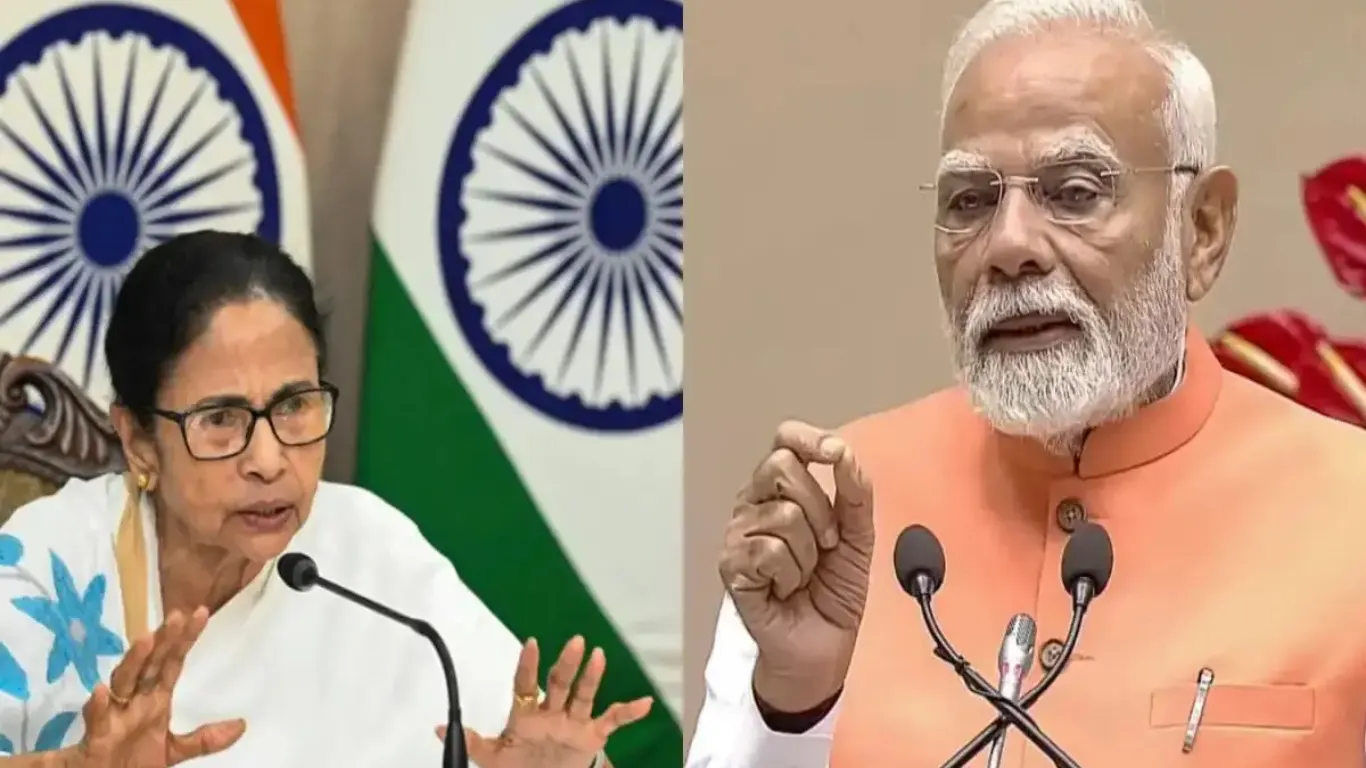
This is familiar territory in Indian electoral politics. Allegations of EVM tampering — no, that is not quite the right framing. The better way to say it is this: EVM controversy tends to emerge with particular intensity in closely contested or high-stakes elections. When a party believes it has won, it rarely questions the machines. When it fears it may lose, the machines become suspect.
The Election Commission's response was immediate and firm. That does not settle the political debate, but it does establish where the official record stands.
What This Election Was Actually About
The 2026 West Bengal election campaign was shaped by several deeply contested issues, and understanding them helps explain why the result matters beyond just seats and numbers.
Citizenship and migration were central. The BJP tied its campaign to border security, undocumented migration through Bangladesh, and the Citizenship Amendment Act, arguing that a BJP government in Bengal would accelerate citizenship processing for eligible communities, including Matuas. TMC called these arguments communally charged and politically motivated.
Corruption and governance were the opposition's sharpest weapon. The school recruitment scam and central agency investigations into TMC-linked figures gave the BJP a credible line of attack on 15 years of AITC rule. Anti-incumbency is real in Bengal after that long. The question is whether it was strong enough.
Women's safety emerged as a visible campaign theme following the 2024 R.G. Kar hospital case, which shook the state. TMC's response was scrutinised closely.
Bengali identity and asmita — the sense of a distinct Bengali self — was a theme TMC leaned into hard, positioning itself as the defender of the state against central interference.
The voter turnout tells its own story. At 92.93%, it is the highest ever recorded in the state, surpassing even the landmark 2011 election. That number suggests intensity, not apathy.
Why the Exit Poll Divergence Is Actually Meaningful
When exit polls point in completely different directions, it is not just noise. It usually signals one of two things: either the race is genuinely close, and the margin of error matters, or one polling agency has a methodology flaw. In Bengal's case, history suggests that the state's political dynamics are notoriously difficult to capture accurately.
Ground-level mobilisation, last-minute voter influence, and booth-level organisation — which TMC is famous for — tend to show up in actual results more than in surveys. BJP's strength in certain regions, particularly the Jungle Mahal and North Bengal, is consistently underestimated by some pollsters.
The honest answer is that until the Returning Officers begin announcing constituency results on May 4, nobody knows.
What to Watch on Counting Day, May 4
The early leads in Bengal counting tend to shift, often dramatically, in the first three hours. Early postal ballot tallies can briefly favour one party before EVMs start being counted. Do not read too much into the first hour.
Watch North Bengal and Jungle Mahal first. These are the bellwether regions where the BJP has historically run strong. If early trends show BJP underperforming its 2021 tally of 77 in these belts, the overall picture likely favours TMC. If the BJP holds or extends in those constituencies, a competitive finish becomes plausible.
A 148-seat majority is the number. Everything before that is a trend.
Closing Thoughts
West Bengal votes with a ferocity that most other states do not match. A 92.93% turnout is not just a statistic. It is a statement. Millions of people decided this election was worth standing in line for.
The exit polls will be right, or they will be wrong. May 4 will answer that. What will not change is that Bengal just ran one of the most watched, most contested state elections in years, and its result will be studied for what it says about the national political picture, about the BJP's expansion ambitions, and about whether 15 years of Mamata governance still has democratic support.
The result is already decided. It is just sitting in sealed boxes waiting to be counted.
Disclaimer: This article is based on information available across the web. Parchar Manch does not take responsibility for its complete accuracy, as the content could not be fully verified.
FAQs
When will the West Bengal election 2026 results be declared?
The counting day is May 4, 2026. Results are expected to be announced throughout the day, with a clear picture typically emerging by afternoon or early evening, depending on constituency-wise counting pace.
What do the exit polls predict for Bengal 2026?
Exit polls show sharply divided projections. Some agencies predict a BJP win with 146 to 208 seats. Others forecast a TMC win with 177 to 205 seats. The wide divergence makes these projections unreliable until counting begins.
What is the EVM controversy in West Bengal 2026?
After voting concluded, TMC workers staged a sit-in at a Kolkata counting centre, alleging ballot paper movement and EVM tampering. The Election Commission dismissed the allegations, stating that all EVMs were secure and protocols were being followed.
How many seats does a party need to win West Bengal?
West Bengal's legislative assembly has 294 seats. A party or alliance needs 148 seats to achieve a simple majority and form the government.
Were exit polls accurate in West Bengal 2021?
No. Most 2021 exit polls predicted a close race. The actual result was a TMC landslide with 215 seats. BJP won 77. This history is why 2026 exit polls are being treated with significant caution.