World Bank Rooftop Solar India Funding: Inside the $890 Million Bet on Your Roof
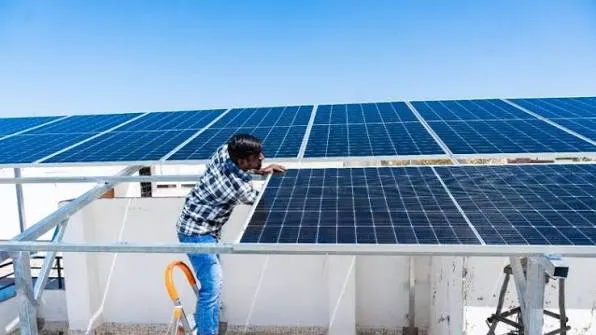
Almost 900 million dollars. That's what the World Bank just approved to help ordinary Indian households put solar panels on their roofs, and honestly, the number alone doesn't quite capture why this matters. The World Bank rooftop solar India package, cleared by the Board of Executive Directors on Friday, isn't just another climate finance headline that fades by Monday. It's aimed squarely at a problem that's been quietly stalling India's clean energy story for years, the gap between big, flashy solar farms and the much slower, messier business of getting panels onto actual homes.
Large scale solar in India has grown fast. Genuinely fast. But rooftop solar, the kind installed directly on your house, has lagged well behind. This funding is meant to close that gap, and the mechanics behind how it's structured are worth actually understanding rather than skimming past.
Why This Actually Matters
If you've ever looked at your monthly electricity bill and wondered whether solar panels were worth the upfront cost, this is directly relevant to you. The core problem with residential solar in India hasn't really been interest, it's been financing. Installing rooftop panels requires money upfront, and for many households, that upfront barrier alone has been enough to keep the idea permanently on the "someday" list.
This rooftop solar funding is specifically designed to remove that barrier. Part of the package includes collateral-free financing, meaning households won't need to put up property or other assets as security just to get a loan for solar installation. That single detail could be the difference between millions of families continuing to pay high electricity bills or finally making the switch.
What This Funding Really Is, Explained Simply
Think of it like a large, layered support structure rather than a single check being handed over. The World Bank isn't just writing India government one big number and walking away. The package breaks down into several distinct pieces, an 820 million dollar loan from the International Bank for Reconstruction and Development, a smaller 60 million dollar concessional loan from the Clean Technology Fund specifically meant to make financing cheaper and more accessible, and a 10 million dollar grant from IBRD's Livable Planet Fund.
On top of all that, the World Bank plans to mobilize an additional 4.2 billion dollars in private financing, structured as commercial loans that banks and vendors can offer directly to households. So the actual public funding acts almost like a foundation, designed to unlock a much larger wave of private lending that wouldn't have flowed as easily without it.
Read More: Mountain Lions in California Preserve: How One Predator Quietly Rewired an Entire Ecosystem
How This Program Works, Step by Step
Here's the practical breakdown of how this funding is meant to translate into actual panels on actual roofs.
- The financing supports India's existing PM Surya Ghar: Muft Bijli Yojana program, a government initiative aimed at bringing rooftop solar to 10 million rural and urban households nationwide.
- Households gain access to collateral-free financing, meaning they can install a solar rooftop system without needing to pledge property or other assets as security.
- Part of the funding is directed toward building capacity among distribution companies, banks, and solar vendors, essentially strengthening the entire delivery chain so installations happen faster and more reliably.
- The program also aims to encourage local manufacturing of solar rooftop equipment, tying clean energy expansion directly to domestic industrial growth rather than relying entirely on imported components.
- Officials expect the combined effort to generate around 1.7 million job opportunities spanning manufacturing, installation, and ongoing service work across the renewable energy value chain.
Each layer here is designed to solve a different piece of the puzzle, financing barriers, delivery capacity, and long term manufacturing capability, rather than tackling just one bottleneck in isolation.
Read More: WhatsApp Usernames Are Coming, And Your Phone Number Might Finally Get Some Privacy
Real-World Examples That Ground This
Consider the scale of what's already happened under this program before this new funding even arrived. As of March 2026, India had installed roughly 9.56 gigawatts of rooftop solar capacity under the existing scheme, with more than 2.62 million systems deployed since its 2024 launch, benefiting around 3.24 million households. That's meaningful progress, but it's still a fraction of the 10 million household target the government has set.
Or look at the government's own numbers on demand. India's Renewable Energy Minister said last month that more than 6.5 million applications were already in the pipeline, with a target of reaching 7.5 million homes by December 2026. That's a genuinely ambitious near-term goal, and this World Bank rooftop solar India package is essentially the financial engine meant to help close that gap faster.
Mistakes People Keep Making When Reading This News
A common mistake is assuming this funding alone guarantees millions of installations happen quickly. It doesn't, not automatically. Industry reporting has already noted that while the underlying government scheme has boosted demand through subsidies and simplified application processes, uneven execution at the state level has made it harder to convert applications into actual completed installations. Money solves financing barriers, not necessarily every logistical or administrative bottleneck standing between an application and a finished rooftop system.
Another mistake is treating this as a one time event rather than part of a longer pattern. The World Bank has actually been involved in India's solar rooftop sector for over a decade, helping the market grow from roughly 500 megawatts to more than 27 gigawatts of installed capacity through more than 2 billion dollars in prior investment. This new package builds on that history rather than starting from scratch.
Pro Tips That Actually Help
If you're a homeowner considering rooftop solar, it's worth checking whether collateral-free financing options tied to this program are becoming available through your local bank or distribution company, since that removes what's historically been the single biggest obstacle for many families.
If you're watching this from an industry or investment angle, keep an eye on how effectively the 4.2 billion dollars in mobilized private financing actually reaches households, since that private capital, not the public loans themselves, represents the larger and arguably more telling test of whether this program succeeds at scale.
Closing Thoughts
There's something quietly hopeful about watching an institution as large as the World Bank direct this much attention toward something as personal as a family's own roof. The World Bank rooftop solar India initiative isn't chasing a dramatic headline moment, it's chasing millions of small, individual decisions, a household finally deciding the math works, a bank finally offering a loan without demanding collateral. Whether that quiet momentum reaches the government's ambitious targets on time is the real story still unfolding here, one rooftop at a time.
Disclaimer: This article is based on information available across the web. Parchar Manch does not take responsibility for its complete accuracy, as the content could not be fully verified.
FAQs
How much funding did the World Bank approve for India's rooftop solar program?
The World Bank approved an $890 million financing package, alongside plans to mobilize an additional $4.2 billion in private commercial financing.
What government program does this funding support?
It supports India's PM Surya Ghar: Muft Bijli Yojana, which aims to bring rooftop solar installations to 10 million rural and urban households.
What makes this financing different from previous solar funding?
A key feature is collateral-free financing for households, removing the need to pledge property or assets as security to install rooftop solar systems.
How many jobs is this program expected to create?
Officials estimate the program will generate around 1.7 million job opportunities across renewable energy manufacturing, installation, and services.
How much rooftop solar capacity has India installed so far?
As of March 2026, India had installed approximately 9.56 gigawatts of rooftop solar capacity, with more than 2.62 million systems benefiting around 3.24 million households.
Has the World Bank funded India's solar sector before?
Yes, the World Bank has supported India's rooftop solar sector for over a decade, mobilizing more than $2 billion previously to help grow capacity from 500 megawatts to over 27 gigawatts.