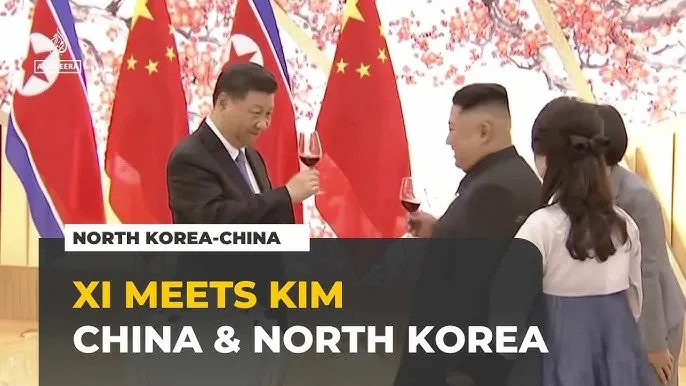
Xi Jinping's First Visit to North Korea in Seven Years: What It Signals and Why the World Is Watching
Seven years is a long time in geopolitics. Alliances shift, arsenals grow, and old friendships can quietly turn complicated. So when Xi Jinping stepped off his plane in Pyongyang on June 8, 2026, landing in North Korea for the first time since 2019, it was not simply a courtesy call between two neighbors. It was a statement.
The two-day state visit marks Xi's first overseas trip of 2026 and comes as China works to reassert influence over its traditional ally amid deepening North Korea-Russia ties. The timing, the sequence, and the messaging all tell a story worth understanding.
Why Xi Jinping's North Korea Visit Is Far More Than a Diplomatic Formality
Most people hear "state visit" and picture photo opportunities and polite handshakes. This one carries more weight than that.
China is extending a summitry streak. Having met with both President Trump and Russia's President Putin last month, Xi is now in North Korea , and experts say he is positioning himself as an indispensable hub of Eurasian security. That sequence is deliberate. Washington first. Moscow second. Pyongyang third. Beijing is signaling that it intends to be present in every conversation that shapes this part of the world.
The trip comes weeks after Xi hosted both Vladimir Putin and Donald Trump in Beijing, and the visit aims to reassert China's role as North Korea's most critical economic and diplomatic partner amid growing Russia-North Korea ties.
Read More: Nvidia RTX Spark Superchip: The Bold Move That Could Reinvent Your Next PC Forever
The China-North Korea Relationship: Older Than Most People Realise
Think of the China-North Korea alliance as a relationship built on mutual need, held together by geography, ideology, and a shared interest in keeping the United States at a distance. China has historically been North Korea's largest trading partner, primary source of aid, and its most reliable diplomatic shield at the United Nations.
The summit coincides with the 65th anniversary of their mutual defense treaty , a detail that is not accidental. Beijing chose this moment intentionally, layering historic symbolism onto a visit that already carries significant strategic meaning.
What Changed in Seven Years , and Why Beijing Is Nervous
Here is the part that does not always make headlines but really should. While Xi stayed home, Kim Jong Un found a new patron.
North Korean leader Kim Jong Un has reached out to Russia in recent years, notably by sending troops and conventional weapons to support Russia's war against Ukraine. But in the past year, Kim has likewise been trying to improve ties with China, the North's biggest trading partner and provider of aid.
For Beijing, that North Korea-Russia military cooperation is uncomfortable. China does not want North Korea fully absorbed into Russia's orbit. It does not want a destabilized Korean Peninsula on its border. And it does not want to be sidelined from any eventual diplomatic settlement involving Pyongyang and Washington.
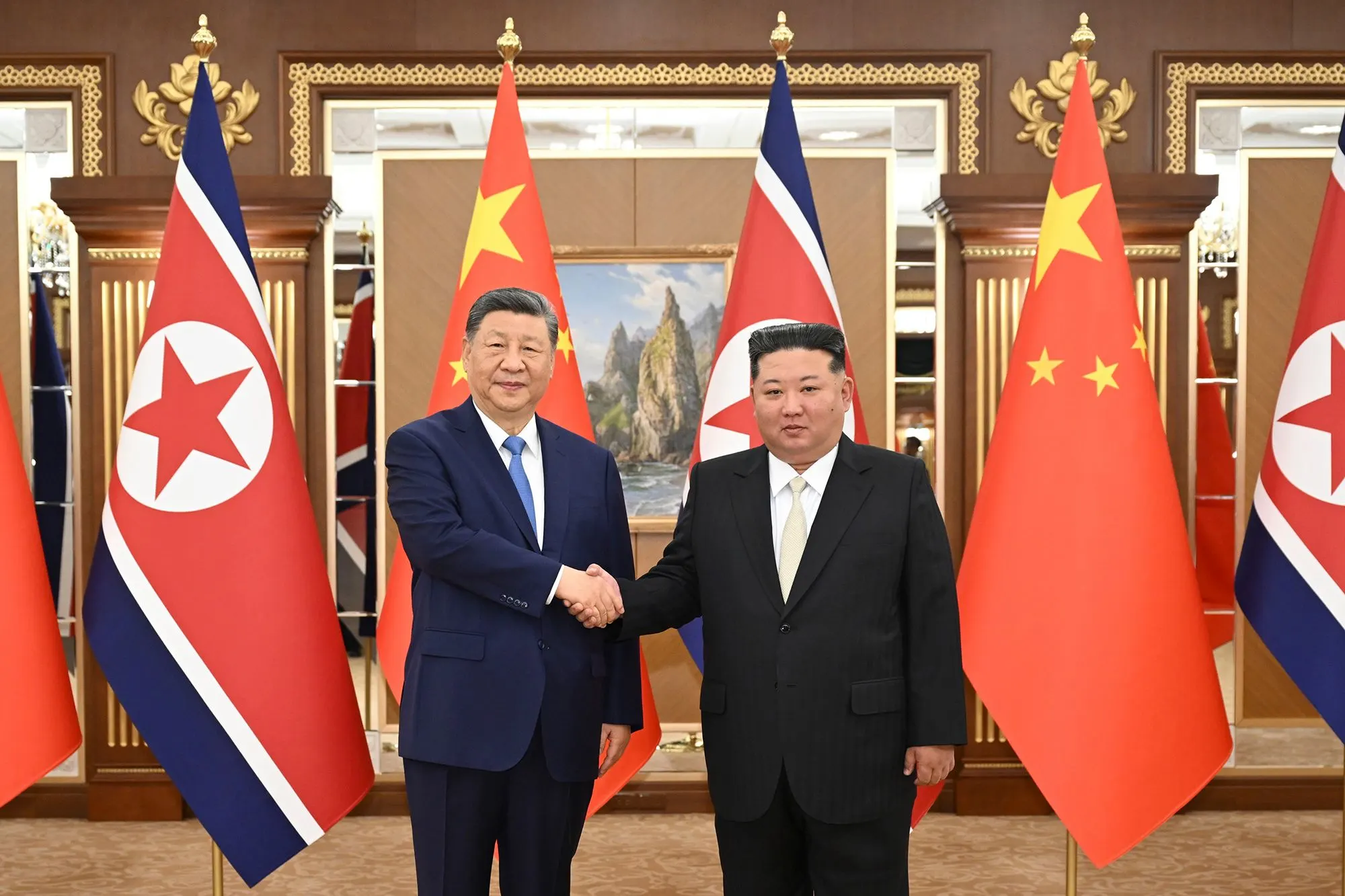
Some analysts believe Xi may also be carrying a message from U.S. President Donald Trump, who has signaled willingness to resume diplomacy with Kim. North Korea, however, has insisted Washington drop its denuclearization precondition before any talks begin.
What Xi Actually Said , and What He Did Not
Ahead of his arrival, Xi published a commentary in North Korea's state newspaper pledging "unwavering" friendship and vowing to deepen bilateral cooperation across multiple areas, including the military.
What he notably did not say much about: denuclearization. Xi mentioned North Korea's nuclear program many times during his 2019 visit, but he has not mentioned it recently , leading some experts to conclude that Xi now tacitly accepts North Korea's nuclear status, not because he likes it, but because pushing on it has produced nothing.
That silence speaks volumes.
Read More: Manoj Bajpayee Calls Ramayana and Varanasi Budget Hype a "PR Tactic" , And He Has a Point
What South Korea and the US Are Watching
South Korea's Ministry of Foreign Affairs said it hopes Xi's visit will "play a constructive role in addressing issues related to the Korean Peninsula." South Korea's minister of unification suggested a possible Pyongyang-Washington summit could be on the agenda.
Xi called for deepening "strategic coordination and cooperation" with North Korea shortly after receiving a pomp-filled welcome in Pyongyang. That phrase, "strategic coordination," is the kind of diplomatic language that sounds polite but carries a hard edge. It means Beijing wants to be consulted, and involved, in whatever comes next.
The world's most closely watched peninsula just got a little more complicated to read.
Disclaimer: This article is based on information available across the web. Parchar Manch does not take responsibility for its complete accuracy, as the content could not be fully verified.
FAQs
When was Xi Jinping's last visit to North Korea before this one?
Xi's previous visit was in June 2019, making the June 2026 trip his first return in seven years.
Why is Xi visiting North Korea right now specifically?
The visit is driven by China's concern over deepening North Korea-Russia military ties, and Beijing's desire to reassert its influence as Pyongyang's primary strategic partner ahead of any potential US-North Korea diplomatic talks.
What did Xi and Kim Jong Un discuss?
Xi called for deeper "strategic coordination and cooperation." The visit also covered bilateral military, economic, and diplomatic ties, coinciding with the 65th anniversary of the China-North Korea mutual defense treaty.
Is North Korea's nuclear program on the table?
Analysts suggest Xi has largely stepped back from pressing the denuclearization agenda, a significant shift from his 2019 visit where he raised it repeatedly. Many experts believe Beijing has quietly accepted North Korea's nuclear reality.
Could this visit lead to a Trump-Kim summit?
Possibly. Some analysts believe Xi may have carried signals from the Trump administration regarding renewed diplomacy with Pyongyang. North Korea has said any talks with Washington require the US to drop its denuclearization precondition first.
Why does this visit matter for the rest of the world?
It reflects a broader reshaping of the East Asian security landscape , with China, Russia, and North Korea drawing closer on one side, and the US and its allies recalibrating on the other. Any shift in that triangle has ripple effects from Seoul to Washington to Moscow.