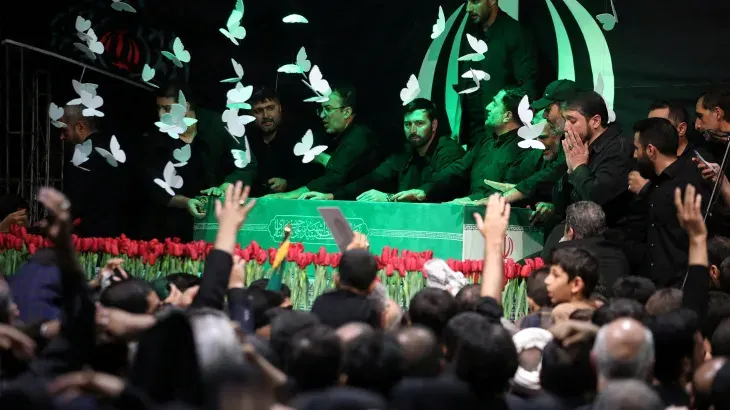
Ayatollah Ali Khamenei Funeral: Inside Iran's Seven Day Farewell to a Slain Supreme Leader
Four months. That's how long Iran waited to bury a man who ruled it for thirty seven years. The Ayatollah Ali Khamenei funeral finally began this week, and nothing about it looks like a quiet goodbye. It looks like a message, a loud one.
Khamenei was killed on February 28, 2026, the first day of the war between the United States, Israel, and Iran. A strike hit his compound in central Tehran. He was 86. His wife and several relatives, including a daughter and a grandchild, died in the same strikes or from injuries soon after. People forget that part, but this story really starts with the war, not the ceremony.
Why This Ayatollah Ali Khamenei Funeral Is Different From Anything Iran Has Held Before
This is not just a religious ritual. The Iran supreme leader funeral is being treated as a political statement aimed at Washington and Tel Aviv. Officials called it the most important event of the century, dramatic sounding, until you realize they mean it literally. An Iran supreme leader funeral on this scale has only happened twice since 1979.
Iran has staged funerals of this scale only twice before, for Ayatollah Ruhollah Khomeini in 1989 and General Qassem Soleimani in 2020. Both ended badly. Khomeini's coffin was damaged when the crowd surged forward, the shroud torn, the body flown out by helicopter and returned the next day. That memory is exactly why this Ayatollah Ali Khamenei funeral was postponed again and again, from March, to a possible summer date, and finally settled on July.
A Quick Ayatollah Ali Khamenei Funeral Timeline
February 28: the strike kills Khamenei and family members. March 8: the Assembly of Experts confirms his son, Mojtaba Khamenei, as the new supreme leader. The body sat in cold storage for months while officials worked out how, and where, to hold the burial safely.
Inside the Seven Day Funeral Procession
The Khamenei funeral procession runs across five cities in two countries, July 3 to July 9. It opens at Tehran's Imam Khomeini Mosalla, the same complex used for Khomeini's own farewell, where his body and the coffins of relatives lie in state. Every stage of the Khamenei funeral procession has been mapped out months in advance.
The rough schedule looks like this:
- July 4 to 5: Public viewing continues in Tehran, giant portraits hung across the city
- July 6: A funeral procession moves through Tehran, expected to draw somewhere between 15 and 35 million people
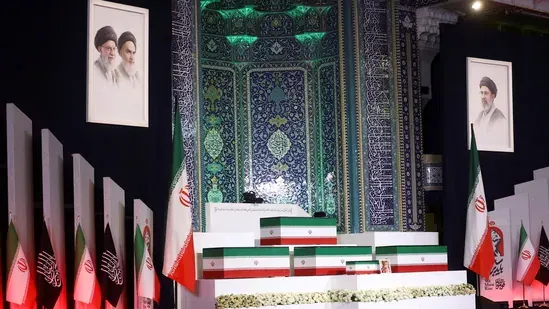
- July 7: The procession shifts to Qom, Iran's center of Shia religious scholarship
- July 8: Ceremonies cross into Iraq, with processions through Najaf and Karbala
- July 9: Final burial at the Imam Reza shrine in Mashhad
That last stop, the Imam Reza shrine burial, is being called the true ending point of the whole spectacle. It's one of the most sacred sites in Shia Islam, and picking the Imam Reza shrine burial as the finale says something deliberate about how Iran wants Khamenei remembered.
Who's Actually Showing Up
Officials from more than 30 countries requested to attend this Iran supreme leader funeral, and scholars from over 90 nations expressed intent to join. Pakistan, India, and Georgia have all confirmed delegations. This has turned into a global diplomatic moment rather than a domestic funeral, whether Iran's neighbors are entirely comfortable with that or not.
The Question Nobody in Tehran Wants to Answer
Will Mojtaba Khamenei actually appear in public during the Tehran funeral ceremony? That's the quiet tension under all of this. He skipped his own mother's farewell recently. If he's absent from the Tehran funeral ceremony too, on top of Israel's defense minister calling him "marked for death," it raises real questions about his safety and who's steering the country right now.
Mistakes People Make Reading This Story
A common mistake is treating the Tehran funeral ceremony as purely religious. It isn't. Another is assuming his death weakened Iran's hardline establishment. Analysts argue the opposite, that the assassination turned him into more of a symbol than he ever was alive, framed almost as a martyr in the tradition of revered Shia figures.
Read More: United States and Iran Agree to Reopen Strait of Hormuz: Why the World Is Watching Closely
Pro Tips for Following This Story
Watch three things. First, whether Mojtaba Khamenei appears at any stage of the Khamenei funeral procession, that alone signals a lot about the new leadership's confidence. Second, watch crowd control, since Iran is deploying the Basij militia and IRGC to avoid a repeat of the 1989 crush. Third, watch the fragile ceasefire, since any provocation during these seven days could unravel it fast.
Closing Thoughts
There's something strange about a government spending this much energy on a funeral while its economy still reels from war. Maybe that's the point though. The Ayatollah Ali Khamenei funeral was never only about grief. It's about proving the Islamic Republic is still standing. Long after the world moves on, people will still talk about the Ayatollah Ali Khamenei funeral as the moment Iran chose to be loud instead of quiet.
Read More: Indian Vessel Virat 1 in Oman: Why This Maritime Visit Is Getting Attention
Disclaimer: This article is based on information available across the web. Parchar Manch does not take responsibility for its complete accuracy, as the content could not be fully verified.
FAQs
When did Ayatollah Ali Khamenei die?
He was killed on February 28, 2026, in a US-Israeli strike on his compound in Tehran, the first day of the war.
Why was the Ayatollah Ali Khamenei funeral delayed for four months?
Iran postponed the burial repeatedly due to the war and security concerns, wanting to avoid the deadly crowd chaos seen at past funerals.
Who is the new supreme leader of Iran?
Mojtaba Khamenei, his son, was named by the Assembly of Experts on March 8, 2026.
Where is Khamenei being buried?
The Imam Reza shrine burial takes place in Mashhad on July 9, 2026, after ceremonies across Tehran, Qom, Najaf, and Karbala.
How many people are expected at the Ayatollah Ali Khamenei funeral?
Estimates range from 15 million to 35 million people across the various cities and processions.
Is the funeral connected to the Iran-US ceasefire?
Yes, it's happening under a fragile ceasefire, and officials have warned against provocations during the ceremonies.