DRC Ebola Outbreak 2026: Everything You Need to Know About the Bundibugyo Virus Spreading Across Central Africa
Something unusual started happening in a remote corner of northeastern Congo in early May 2026. People were getting sick fast. Health workers were dying. And the illness did not match anything the local teams had seen recently.
By May 5, the World Health Organization had been alerted about a high-mortality outbreak of unknown illness in Mongbwalu Health Zone, Ituri Province. Within ten days, laboratory tests confirmed the cause: Bundibugyo virus disease, a rare and deadly strain of Ebola. On May 15, 2026, the DRC's Ministry of Health officially declared this the country's 17th Ebola outbreak since the virus was first identified in 1976.
Two days later, WHO declared it a Public Health Emergency of International Concern (PHEIC) — the highest level of global health alarm.
Why This Ebola Outbreak Is Different From the Others
Most people who hear "Ebola" think of the 2014-16 West Africa crisis and that strain was bad enough. But this one involves a different, arguably scarier variant.
The Bundibugyo virus was first identified in Uganda in 2007, and its case fatality rate in past outbreaks has ranged from 30% to 50%. What makes this particularly alarming is this: unlike the more familiar Ebola virus disease, there is currently no licensed vaccine or specific treatment for Bundibugyo virus. The tools that contained previous outbreaks — ring vaccination, experimental antivirals — simply do not exist here.
Early supportive care can save lives. But without a vaccine, containment depends almost entirely on isolation, contact tracing, and community cooperation.
Read More: INDIA Bloc's High-Stakes Delhi Meeting: Fault Lines, Five Decisions, and the Long Road to 2029
How Bad Is It Right Now?
As of June 10, 2026, the numbers are significant and still climbing. The DRC Ministry of Health reported a total of 676 confirmed cases, including 136 confirmed deaths, and 262 individuals hospitalised in isolation. Ituri remains the most affected province, with 629 confirmed cases across 19 health zones. North Kivu has reported 44 cases, and South Kivu has 3.
Cases have also been confirmed across the border, with two laboratory-confirmed cases in Kampala, Uganda, identified within 24 hours of each other both linked to individuals who had travelled from DRC.
The outbreak has spread faster than many anticipated. Since the last update on June 11, 41 new confirmed cases and 9 new deaths were added, along with 3 newly affected health zones.
The Ground Reality: Why Containing This Is So Difficult
The numbers alone do not tell the full story. The region where this outbreak began is not just remote it is deeply fractured.
Over 120 armed groups operate in eastern DRC, competing for mineral resources while civilians are repeatedly forced to flee. Health facilities have been attacked. Humanitarian workers cannot always reach affected zones. Nearly 10 million people across Ituri, North Kivu, South Kivu and Tanganyika are facing acute hunger between January and June 2026.
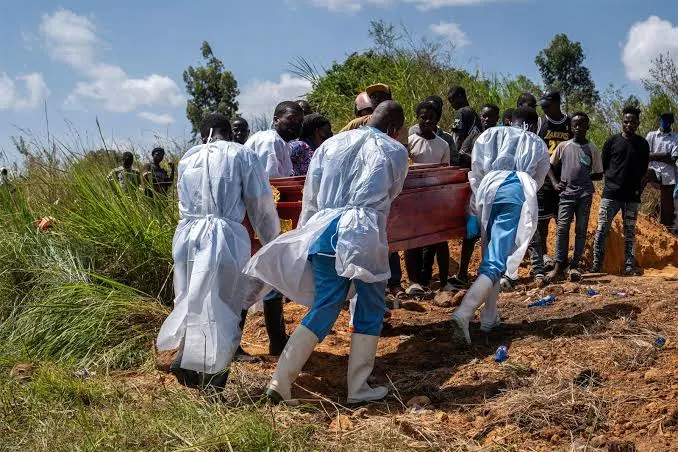
An outbreak of hemorrhagic fever with no vaccine, spreading through a population that is malnourished, displaced, and living in conflict zones. That is the full picture.
Community engagement — health workers building trust with locals — may be the single most important factor in whether this outbreak is controlled or not. WHO has said as much directly.
What Bundibugyo Virus Actually Does to the Body
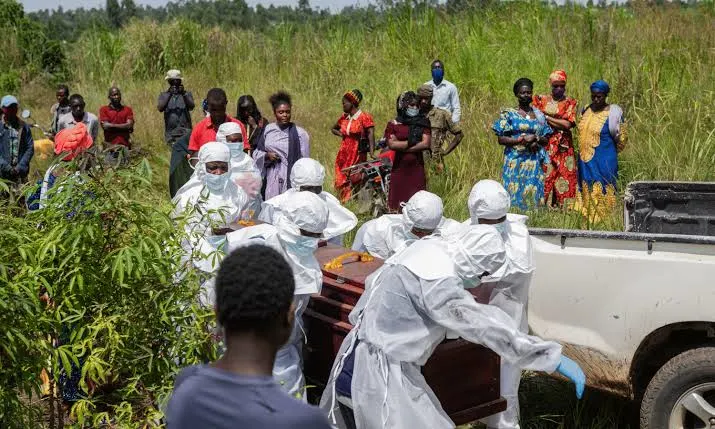
Bundibugyo virus disease causes a severe hemorrhagic fever. It spreads through direct contact with body fluids of a person who is infected or has died from the disease. That is why health workers are especially vulnerable they are closest to patients at their most contagious.
Symptoms typically include fever, severe headache, body aches, vomiting, and in advanced cases, internal and external bleeding. Without early medical intervention, the body goes into shock.
The incubation period ranges from 2 to 21 days, which means a person can travel across borders before knowing they are infected. That is exactly how cases reached Kampala.
Read More: India's Current Account Surplus Hit $7.1 Billion in Q4 FY26: What the Numbers Are Really Saying
What the World Is Doing
WHO is scaling up support to DRC and Uganda, strengthening surveillance, contact tracing, clinical preparedness, supply delivery, and cross-border preparedness. The CDC issued a Health Alert to clinicians and travellers, though the current risk of Bundibugyo virus spreading to the United States is considered very low.
Vaccine candidates are under investigation, but none are ready for deployment. Until then, isolation facilities and contact tracing networks carry the full weight of containment.
Closing Thoughts
Seventeen outbreaks since 1976 that is the quiet, sobering reality of life in DRC. Each one contained eventually, but at enormous human cost. This one arrives with a virus that has no vaccine, in a region where the health system is already overwhelmed by conflict and hunger.
The world is watching. The question is not whether the outbreak can be stopped it can. The question is how quickly, and at what cost to the people already living at the edge.
Read More: When Missiles Move Markets: Why Indian Stocks Fell as US-Iran Tensions Reignited
Disclaimer: This article is based on information available across the web. Parchar Manch does not take responsibility for its complete accuracy, as the content could not be fully verified.
FAQs
What is the Bundibugyo virus and how is it different from regular Ebola?
Bundibugyo virus is one of three Ebola strains known to cause outbreaks in humans. Unlike the more familiar Ebola Zaire strain, there is currently no licensed vaccine or specific treatment for Bundibugyo. Its fatality rate in past outbreaks has ranged between 30% and 50%.
Can this Ebola outbreak spread globally?
The risk of global spread is currently considered low. However, cases have already crossed from DRC into Uganda via travellers. WHO has declared it a Public Health Emergency of International Concern, which triggers international monitoring and border preparedness.
How does someone catch Bundibugyo virus disease?
It spreads only through direct contact with body fluids of an infected or deceased person. It does not spread through the air. Healthcare workers and family members caring for the sick are at highest risk.
Is there a vaccine available for this outbreak?
No. Unlike previous Ebola outbreaks where ring vaccination was possible, there is currently no licensed vaccine for Bundibugyo virus. This makes the current outbreak significantly harder to contain.
What is India's risk?
India's direct risk is very low at this time. No cases have been reported outside of DRC and Uganda. Indian travellers returning from affected regions should monitor for symptoms and seek immediate medical attention if unwell.
How long does an Ebola outbreak typically last?
It varies. Outbreaks with strong containment measures have been controlled in weeks; others have lasted months. The 2014-16 West Africa outbreak lasted nearly two years. The DRC's previous outbreak in 2025 ended in October of that year.