
Europe Heatwave Records Just Got Rewritten, And The Numbers Are Genuinely Alarming
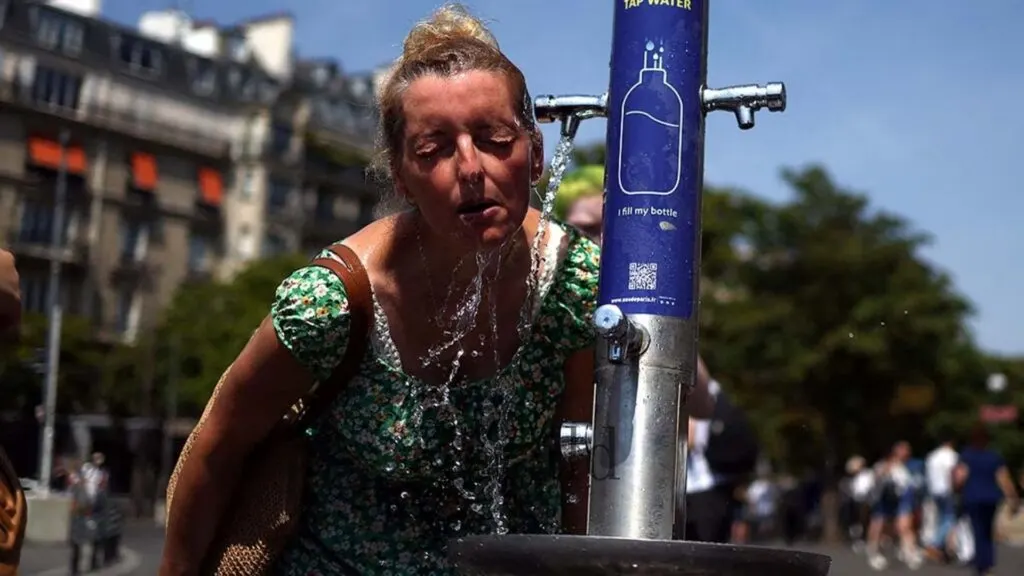
France just recorded its hottest June day ever, twice in two days. Not once. Twice. That's the kind of detail that tells you the Europe heatwave records story happening right now isn't ordinary summer weather. This is something else entirely.
Why This Actually Matters To You
Even if you're nowhere near Europe, this matters. What's happening there right now is a preview of what extreme heat looks like when infrastructure built for cooler climates suddenly can't cope. Homes without air conditioning, hospitals overwhelmed, power grids strained. It's a stress test for the rest of the world, and honestly, it's failing in some places.
What's Actually Happening Across Europe Right Now
Starting from late May 2026, a relentless heat dome, technically called an omega block, settled over the continent and refused to move. Temperatures ran 10 to 15 degrees Celsius above normal in the first wave alone. Then things escalated fast through June.
France hit an average national temperature of 30 degrees Celsius on June 24, its hottest day on record, breaking a record set just one day earlier. The town of Pulluau reached a scorching 43.8 degrees Celsius. Spain recorded its hottest June days ever on June 23 and 24. The UK broke its June temperature record three days running, eventually hitting 37.3 degrees Celsius, a mark that stood since 1976. Germany broke national records for three consecutive days too, peaking near 41.7 degrees Celsius near the Polish border.
Read More: Twenty Rebel Trinamool Congress MPs to Merge with NCPI? The Political Buzz Raising Big Questions
What A Heat Dome Actually Is, Explained Simply
Think of a heat dome like a giant lid clamped over a pot. Hot air gets trapped underneath, unable to rise or escape, and just keeps cooking everything below it. That's what an omega block does, named because the jet stream bends into a shape resembling the Greek letter omega, locking hot air in place for days or even weeks instead of letting it pass through normally.
How This Heatwave Actually Unfolded, Step By Step
- Late May brought the first wave, setting spring temperature records across Belgium, France, Germany, Ireland, Italy, and several other countries.
- Mid June saw a second, more intense wave build, with countries like Austria and Slovakia issuing repeated high temperature warnings.
- By June 23, the heat turned deadly, with France's night between the 22nd and 23rd being its hottest since 1947.
- Late June pushed the heat eastward into Germany, Poland, Hungary, and the Czech Republic, each setting fresh all time or June records.
- By June 29 and 30, cooler Atlantic air finally began pushing in from the west, easing conditions in Spain, France, and the Benelux countries first.
The Real Human Cost Behind These Numbers
This is where it stops being just weather trivia. The World Health Organization estimated more than 1,300 excess deaths across Europe since June 21 alone, with roughly 1,000 of those in France, mostly people over 65. Spain recorded 327 heat attributed deaths.
Two children were found dead in a car in France. Around 40 people drowned nationwide seeking relief in rivers and lakes.
Mistakes People Keep Making When Reading Heat Stories
A common mistake is focusing only on the daytime peak temperature. Don't. Nighttime lows matter just as much, sometimes more. A day that hits 38 degrees but drops to 18 overnight is far safer than one that stays above 25 all night, since the body needs that overnight window to actually cool down and recover.
Read More: Keir Starmer to Announce Social Media Ban for Under-16s: What It Could Mean for Millions of Families
Pro Tips For Understanding And Staying Safe
If you're tracking heatwave news anywhere, watch for the phrase tropical nights, meaning temperatures never drop below 20 degrees Celsius overnight. That single detail predicts hospitalization spikes better than the daytime high does. And if you're in an affected area, checking on elderly neighbors matters more than any thermostat reading.
A Quiet Closing Thought
UN Secretary General António Guterres put it plainly at London Climate Week, saying humanity has just lived through the eleven hottest years ever recorded. That's not a headline exaggeration anymore. It's becoming the baseline, and that shift in what counts as "normal" is worth sitting with, quietly, longer than a single news cycle usually allows.
Disclaimer: This article is based on information available across the web. Parchar Manch does not take responsibility for its complete accuracy, as the content could not be fully verified.
FAQs
What caused this year's extreme heatwave in Europe?
A stubborn weather pattern called an omega block trapped hot air over the continent for weeks, driving temperatures far above seasonal norms.
Which countries broke temperature records?
France, Germany, the UK, Spain, Switzerland, Austria, Poland, Hungary, and the Czech Republic all recorded new June or all time highs.
How many people have died from the heat?
The WHO estimated more than 1,300 excess deaths across Europe since June 21, with the heaviest toll in France and Spain.
When is the heatwave expected to end?
Cooler Atlantic air began arriving around June 29 and 30, easing conditions first in Spain, France, and the Benelux, with eastern Europe clearing shortly after.
Why are nighttime temperatures so important during a heatwave?
Overnight cooling gives the body a chance to recover. When nights stay hot too, called tropical nights, health risks rise significantly.