
When a "Love Story" Becomes a Trap: The Dark Reality of Forced Conversion Through Online Grooming in India
Forced religious conversion through online grooming is not a headline. It is someone's life. A 23-year-old woman recently came forward to say that the man she met online years ago didn't just break her trust. He allegedly abused her, manipulated her faith, and forced her into a marriage she never freely chose. Her story, reported by Times of India, is disturbing on its own. But it is far from isolated.
This is happening across India. And most people do not fully understand how it works, what laws exist, or what a victim can actually do.
Why This Case Cuts Deeper Than a Crime Report
Cases like this sit at a complicated intersection: online safety, religious coercion, domestic abuse, and the slow erosion of a person's sense of self that happens over years, not days.
The woman in this case reportedly met the accused online. A relationship formed. Then came pressure, manipulation, abuse, and eventually, a forced conversion and marriage. Years passed before she could speak out.
That timeline matters. This is not spontaneous violence. It is calculated, patient, and deeply psychological. And yet, many people around the victim, including family and friends, may not have seen it coming.
Read More: PM Modi's 3 Urgent Messages to Ministers as India Battles US-Iran War Fallout and Rising Fuel Prices
What "Forced Conversion Through Marriage" Actually Means
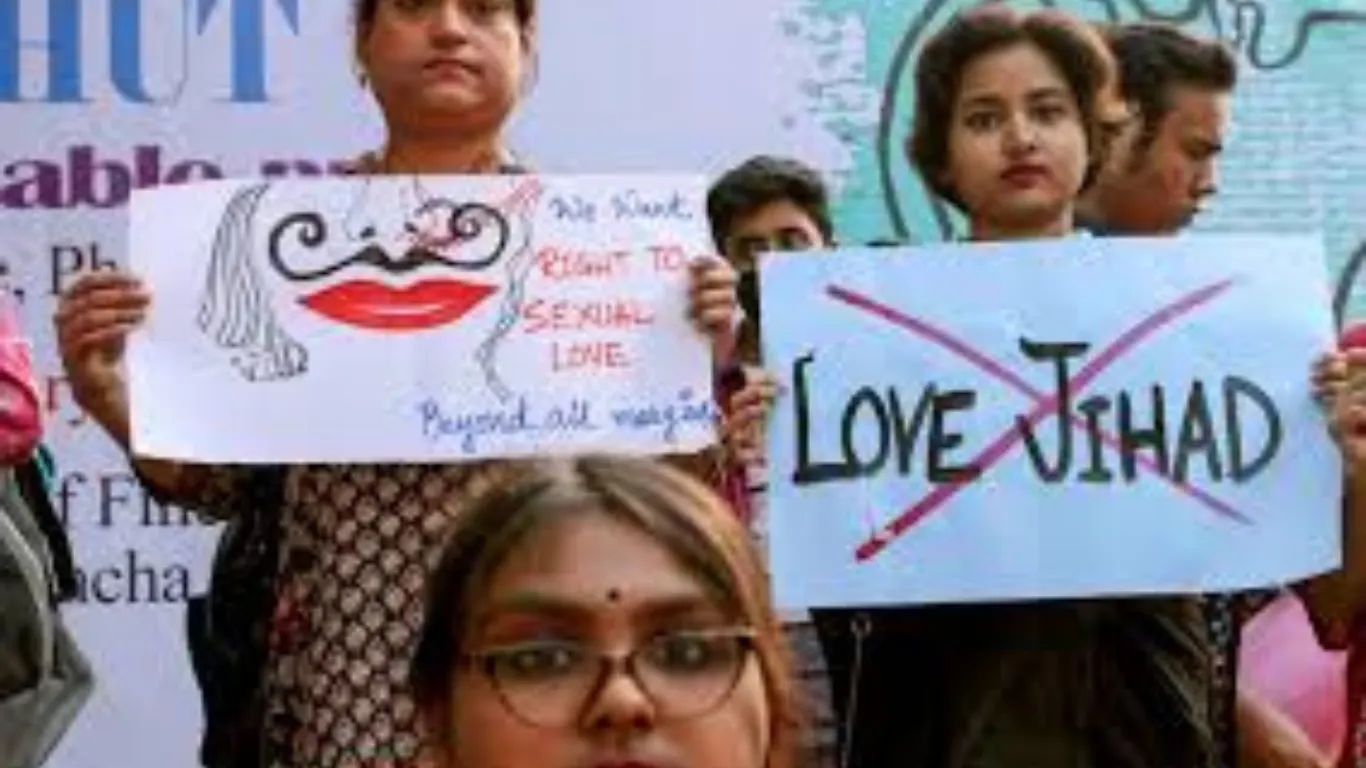
Forced religious conversion, in the legal sense, refers to when a person is compelled, through coercion, fraud, blackmail, or undue influence, to renounce their religion and adopt another. When it is tied to marriage, often involving concealment of the accused's real identity, it becomes what is commonly discussed in India under the phrase love jihad. However, that term carries significant political baggage and is contested.
What is not contested is the pattern. Reports over the past several years describe a consistent arc:
A man hides his religious identity. He builds a relationship, often through social media or dating platforms. Once emotional dependence is established, pressure begins. Private photographs or videos are used as blackmail. Threats follow. By the time marriage happens, the woman has often been isolated from her support system.
Legally, this pattern has been recognised. Uttar Pradesh, in late 2024, passed an amendment that harshened punishment to life imprisonment for those found guilty of marrying a woman by deceiving her and illegally converting her religion. Several other states have similar provisions.
How the Grooming Actually Unfolds: Stage by Stage
Understanding the pattern is what protects people. This is not about paranoia toward any religion or community. This is about recognising manipulation tactics.
Stage 1: False identity. In many documented cases, the accused concealed his religious identity from the outset, often presenting himself with a different name to avoid early suspicion. The relationship feels genuine because the victim has no reason to doubt.
Stage 2: Trust and dependency. Over months or years, emotional closeness deepens. This is not unusual in any relationship. But in these cases, it is deliberate. The victim becomes dependent on the accused for emotional support, sometimes financially, sometimes socially.
Stage 3: Isolation. Contact with family and old friends slowly reduces. The victim may not notice it as it happens.
Stage 4: Blackmail. In several reported cases, the accused was found to have had the victim's private photographs or videos, which were used to threaten her into complying with demands for religious conversion and marriage.
Stage 5: Coercion into conversion and marriage. By this point, the victim may feel she has no way out.
The Legal Framework: What Indian Law Actually Says
Twelve states in India have anti-conversion legislation as of recent counts, including Uttar Pradesh, Madhya Pradesh, Gujarat, Haryana, Uttarakhand, and Karnataka. The laws vary in their severity, but their core structure is similar.
Under Rajasthan's 2025 law, religious conversions by force, coercion, misrepresentation, undue influence, allurement, or fraudulent means are prohibited. Both the person converting and the converter must make declarations before the District Magistrate, and anyone related to the victim by blood, marriage, or adoption can file an FIR.
Victims can also approach:
- The National Commission for Women for formal complaints
- The local Women's Cell of the police
- Courts for protection orders under the Protection of Women from Domestic Violence Act
The Delhi High Court has affirmed that the right to choose one's life partner is a fundamental right, an integral part of the right to life. Forced marriages, in other words, have no legal standing.
Read More: Mummy, I Can't Handle This Anymore": The Twisha Sharma Dowry Death Case That Has Shaken Bhopal
Mistakes Victims and Families Keep Making
Not out of weakness. Out of not knowing. The most common mistake is waiting. Many victims endure abuse for years before speaking out because they fear no one will believe them, or they feel responsible. This is a direct result of the psychological conditioning that happens during grooming.
Families, on the other hand, sometimes dismiss early signs: a daughter spending more time on her phone, pulling away slightly, seeming distracted. These can be adolescent behaviour. They can also be early signs of isolation by someone with bad intent.
Another mistake: assuming the law will sort it out quickly. Legal processes in India are slow. Filing early, with documentation, matters enormously.
Read More: Trump Called Off the Iran Strike , But the World Is Still Holding Its Breath
What to Do If You or Someone You Know Is in This Situation
Document everything first. Screenshots, voice messages, texts. Even things that seem minor.
Contact the Women's Cell at the nearest police station. Most major cities have dedicated desks for such complaints.
If immediate danger exists, the Rashtriya Mahila Helpline (number: 181) operates nationally. Shelters and legal aid are available through the state Women and Child Development departments.
Do not confront the accused alone. Do not assume that family pressure will resolve it. And do not let shame keep a person silent. These crimes are committed by the accused, not caused by the victim.
Closing Thoughts
A 23-year-old woman had to gather years of courage to file a complaint about something that began with what felt like an ordinary online conversation. The system, with all its imperfections, now has to respond.
But the larger truth is this: online grooming leading to forced conversion and marriage is a crime that unfolds quietly, in private, over a long time. It does not announce itself. That is precisely what makes it dangerous.
Awareness is not just helpful here. For many young women, it is the difference between recognising a trap before it closes and spending years trying to escape one.
Disclaimer: This article is based on information available across the web. Parchar Manch does not take responsibility for its complete accuracy, as the content could not be fully verified.
Read More: Trump Calls Off Iran Strike: What Really Happened and Why the Whole World Is Watching
FAQs
What is forced religious conversion in marriage under Indian law?
It refers to compelling a person, through deception, blackmail, or coercion, to convert their religion as a condition of marriage. Several states have specific laws criminalising this, with penalties ranging from imprisonment to life sentences in the most severe cases.
Can a victim file a complaint years after the abuse began?
Yes. There is no blanket time bar on such complaints under most applicable laws, including the PWDV Act and anti-conversion statutes. Courts have accepted complaints filed long after the incidents occurred, especially in cases involving ongoing abuse.
What should someone do if they suspect a loved one is being groomed online?
Open a calm, non-judgmental conversation. Avoid ultimatums. Try to gradually re-establish contact between the person and their wider support network. If the situation appears dangerous, contact the Women's Cell or call 181.
Is the term "love jihad" legally recognised in India?
No. It is a colloquial and politically charged term. The legal framework refers to "unlawful conversion" or "fraudulent conversion for marriage." Courts deal with the specific facts of each case, not the label.
What evidence should a victim preserve?
Screenshots of conversations, call logs, photographs showing injuries, records of financial transactions if money was involved, and any messages containing threats. All of this strengthens a legal case considerably.