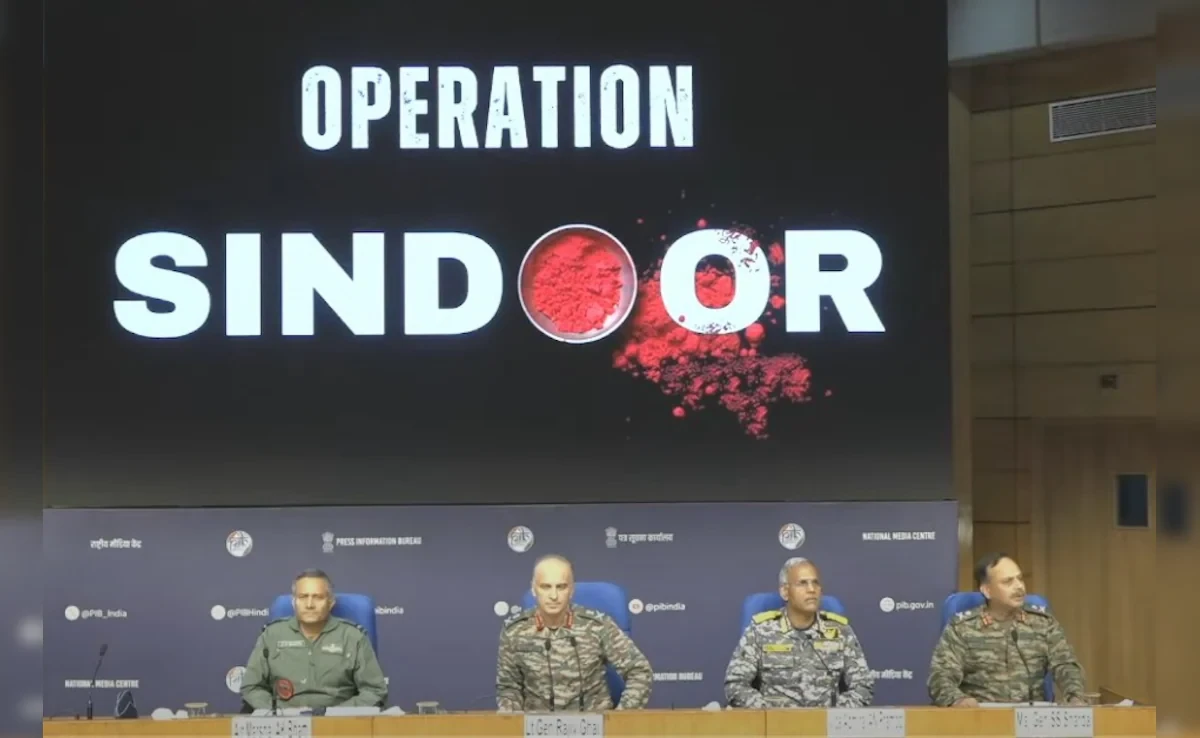
India-Pakistan Dialogue: After Operation Sindoor and a Year of Silence, Is Talking Now Back on the Table?
A year ago, the two countries were at war. A four-day military conflict in May 2025, triggered by a terror attack in Pahalgam that killed 26 tourists, ended in a ceasefire that still feels fragile at the edges. Both sides insist they won. Neither side has said much to the other since.
And then, in May 2026, a voice most people did not expect broke the quiet.
Dattatreya Hosabale, general secretary of the Rashtriya Swayamsevak Sangh, the ideological parent organisation of the ruling BJP, gave an interview to a national news agency and said something that surprised virtually everyone: that New Delhi should not shut the doors on India-Pakistan dialogue. That India should persist with attempts to talk. That the channels of communication must stay open.
The India-Pakistan peace talks debate, which had been essentially buried under the political rubble of Operation Sindoor, was suddenly alive again.
Why This Moment Is Different from the Last Time Talks Were Discussed
The RSS position matters because of where it sits in India's political architecture. The BJP does not publicly deviate from RSS ideology on matters this sensitive. So when the RSS general secretary calls for dialogue, it is not simply one opinion among many. Analysts were quick to note that for the Modi government, which has long maintained that terror and talks cannot go together, having the call come from the RSS provides political cover. It can respond to dialogue as if it is responding to society rather than making a unilateral concession.
At the same time, the geopolitical environment has genuinely shifted. Pakistan's Field Marshal Asim Munir brokered the ceasefire between the United States and Iran in Islamabad talks held in April 2026 , the first direct high-level US-Iran engagement since 1979. President Donald Trump praised Munir and Prime Minister Shehbaz Sharif publicly and repeatedly. Pakistan's global standing has risen sharply in the aftermath of that mediation.
India's position in Washington, by contrast, has complicated. Strained India-US relations over trade tariffs and immigration restrictions have narrowed the space in which New Delhi could count on Washington to automatically side with its regional preferences on Pakistan.
Read More: Twenty Rebel Trinamool Congress MPs to Merge with NCPI? The Political Buzz Raising Big Questions
What Back-Channel Diplomacy Has Already Been Happening
Here is something that has largely stayed out of prime-time debate: the two countries have already been quietly talking. A former Pakistani diplomat told analysts that roughly four meetings involving former officials, retired generals, intelligence figures, and parliamentarians from both sides had taken place over the past year , since the May 2025 ceasefire. These meetings were held in Muscat, Doha, Thailand, and London.
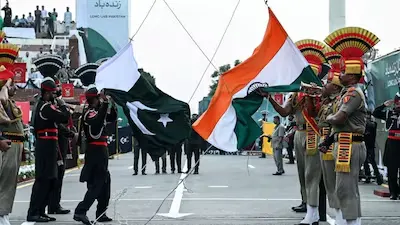
These are what diplomats call Track 2 and Track 1.5 formats. They are not official negotiations. But they are not accidental either. Governments use these mechanisms to test the waters and lower the temperature before anything formal begins. The fact that they have been happening across four different countries across twelve months tells you something about the seriousness of both sides' interest in avoiding another conflict.
Former Indian Army Chief General Manoj Naravane publicly backed the RSS leader's position, saying ordinary people on both sides have nothing to do with politics and that greater people-to-people contact between India and Pakistan should resume.
What Stands Between the Two Countries and Formal Talks
The Modi government has not formally responded to Hosabale's call. The stated position remains: terrorism and talks cannot go together. India continues to hold Pakistan responsible for sponsoring armed groups that have attacked Indian-administered Kashmir and Indian cities. That accusation does not disappear because one conversation happens in Doha.
But analysts point to a hard truth: military signalling alone cannot produce a political settlement. Operation Sindoor may have demonstrated India's willingness to impose costs, just as Pakistan's response demonstrated its own deterrent capability. Neither changed the other side's fundamental strategic behaviour.
The Indus Waters Treaty adds another pressure point. On June 11, Pakistan's Foreign Ministry warned that any attempt by India to restrict water flows under the treaty would endanger regional stability , this after India's Water Minister stated publicly that New Delhi was working to ensure "not a single drop of water" would flow into Pakistan. That kind of rhetoric, alongside back-channel diplomacy, captures exactly how complicated this relationship is right now. Both escalation and de-escalation are happening simultaneously.
Read More: Keir Starmer to Announce Social Media Ban for Under-16s: What It Could Mean for Millions of Families
Closing Thoughts
The India-Pakistan ceasefire of May 2025 did not resolve anything. It paused something. What happens in the year ahead depends on whether both sides find it less costly to talk than to keep this frozen hostility in place. The quiet meetings in Muscat and London suggest both governments already understand the answer. Whether their public positions will ever catch up is the real question.
History shows that India and Pakistan have resumed dialogue precisely after periods of severe confrontation. The present moment has all the ingredients for that pattern to repeat. Whether it does depends on decisions still being made behind closed doors.
Read More: India's AI Problem: Why the World's Fastest-Growing Digital Nation Is Struggling to Keep Up
Disclaimer: This article is based on information available across the web. Parchar Manch does not take responsibility for its complete accuracy, as the content could not be fully verified.
FAQs
What triggered the current India-Pakistan tensions?
The most recent flashpoint was the April 2025 Pahalgam attack in Indian-administered Kashmir, where gunmen killed 26 tourists. India launched Operation Sindoor in response, striking sites in Pakistan. A ceasefire followed in May 2025, but formal diplomatic relations have remained frozen since.
What is the RSS saying about India-Pakistan dialogue?
RSS general secretary Dattatreya Hosabale stated in May 2026 that India should not shut the doors on dialogue with Pakistan and should persist with diplomatic engagement. This was significant because it came from the ideological parent body of the ruling BJP.
Has India officially responded to calls for dialogue with Pakistan?
No. As of June 2026, the Modi government has not formally responded to Hosabale's call. The government's stated position remains that terrorism and talks cannot go together.
What is Track 2 diplomacy between India and Pakistan?
Track 2 refers to back-channel meetings between retired officials, former military officers, academics, and civil society figures from both countries, held with the implicit backing of governments but without official status. These meetings have reportedly been held in Muscat, Doha, Thailand, and London over the past year.
What is the Indus Waters Treaty and why is it relevant?
The Indus Waters Treaty is a water-sharing agreement between India and Pakistan brokered in 1960. India's recent statements about restricting water flows and Pakistan's warnings that such action would endanger regional stability have added another layer of tension to an already fragile situation.
Why has Pakistan's international standing risen since the 2025 war?
Field Marshal Asim Munir played a key role in brokering the first direct US-Iran engagement since 1979, held in Islamabad in April 2026. President Trump praised both Munir and PM Shehbaz Sharif publicly, significantly raising Pakistan's diplomatic profile at a time when India-US relations are under strain.