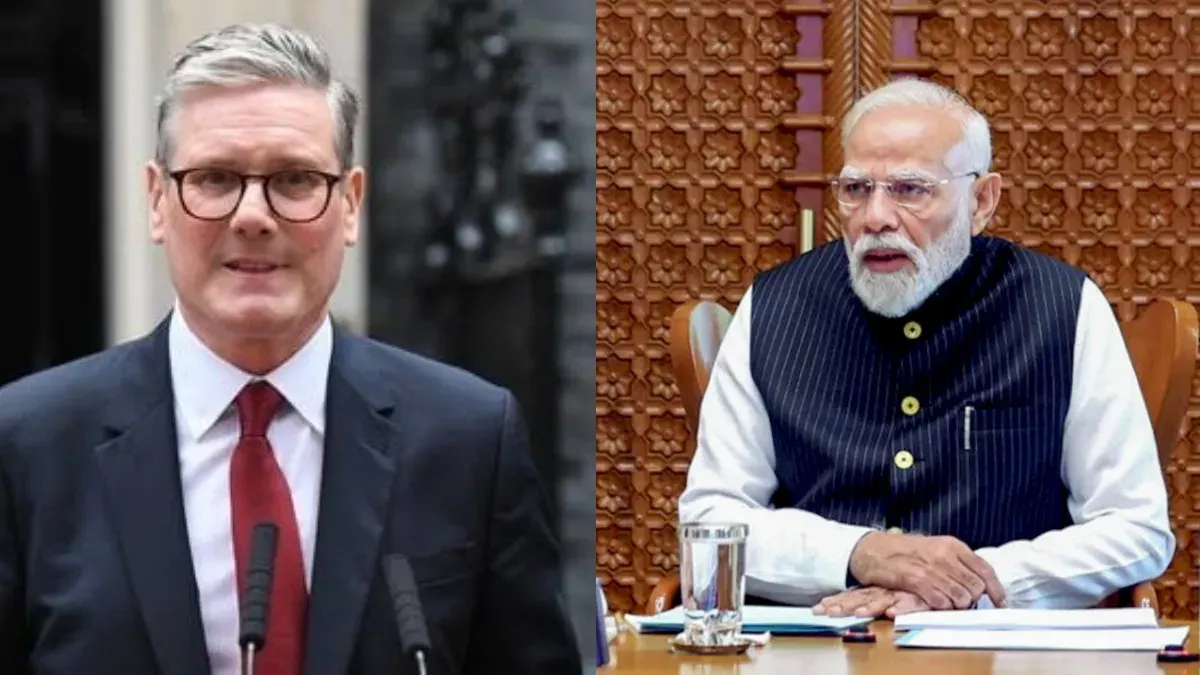
India-UK Trade Deal Goes Live: What Changes Starting July 15, and Who Actually Wins
Somewhere in a customs office in Mumbai this week, a shipment of textiles is clearing faster than it would have a month ago. Nobody's throwing a party over it. But that small, unglamorous moment is exactly what four years of negotiation were building toward.
The India-UK trade deal officially took effect on July 15, 2026, and honestly, that date almost snuck up on people. Trade agreements tend to get announced with fanfare, signed with photo-ops, and then the actual "coming into force" part happens quietly, months later, while everyone's attention has moved on. Not this time, though. Businesses on both sides have been preparing for this exact day.
Why This Actually Matters to You, Not Just Exporters
You might think, fine, that's a government thing, why should I care. Here's why. If you run a small business selling anything from spices to software, or you're a UK consumer who buys Indian textiles or pharmaceuticals, this deal touches your wallet, eventually. Government estimates put the long-term boost to bilateral trade at £25.5 billion a year, with a projected £4.8 billion annual lift to UK GDP and £5.1 billion to India's. Those aren't small numbers, and they don't stay locked inside spreadsheets. Cheaper imports, easier exports, more jobs tied to cross-border trade, it filters down.
And there's a human layer too. UK-India bilateral trade was already worth £48 billion in 2025. This deal, formally called the Comprehensive Economic and Trade Agreement, or CETA, is meant to nearly double that flow over the next several years.
Read More: INDIA Bloc's High-Stakes Delhi Meeting: Fault Lines, Five Decisions, and the Long Road to 2029
What the India-UK Trade Deal Really Is, Explained Simply
Think of two countries that have been trading through a door with a lot of small locks on it, extra paperwork here, tariffs there, delays at the border. This deal removes most of those locks. Not all, some sensitive sectors like sugar, milled rice, pork, chicken, and eggs stay protected on both sides because domestic producers asked for it. But broadly, the India-UK trade deal liberalises around 90% of India's tariff lines and 99% of the UK's, according to official figures.
For UK exporters, 64% of products become duty-free immediately under this UK-India FTA, covering close to £1.9 billion in current exports, with 85% eventually becoming duty-free over time. For Indian exporters sending goods the other way, it's even more direct: 99% of Indian exports to the UK get duty-free access starting the very first day.
How the Trade Deal Works, Step by Step
- Businesses that want the lower tariff rates aren't automatically enrolled. UK exporters need to complete a one-time registration with HMRC through something called the Origin Registration portal, and the advice from officials is to do this soon rather than wait.
- Goods have to satisfy rules of origin requirements, meaning a product has to genuinely be made or substantially transformed in the exporting country. A shirt assembled in the UK from fabric shipped in from elsewhere doesn't automatically qualify just because it left a UK port.
- Customs procedures are being streamlined, with both governments targeting a 48 hour clearance window for most goods, prioritising perishable items like fresh produce.
- Alongside CETA, a companion agreement called the Double Contribution Convention kicks in the same day, which affects social security contributions for workers moving between the two countries, a detail that matters a lot to Indian professionals on UK assignments and vice versa.
- A dedicated chapter for small and medium enterprises sets up contact points and information sharing, essentially trying to make sure this deal doesn't just benefit large corporations with existing legal teams.
Real-World Examples That Make This Click
Take a UK exporter of medical devices. Reduced import duties on high-value medical technology could make joint research and development between UK and Indian companies noticeably cheaper, which is the kind of thing that sounds abstract until a hospital in Pune gets equipment at a lower cost. Or take an Indian software or textile exporter, someone who previously priced in UK tariffs as a cost of doing business. That cost mostly disappears now.
Freight forwarders are already flagging a real-world complication, though. The deal takes effect right as India-UK ocean freight moves into a seasonally busy period, with vessel waiting times stretching close to two weeks at some Indian ports like Kochi and Mangalore. So the tariff win and the shipping logistics reality are colliding at the same moment, which is worth knowing if you're planning a shipment soon.
Mistakes People Keep Making, and Why
The biggest one is assuming preferential tariffs apply automatically just because the deal exists. They don't. Without proper origin documentation and HMRC registration, a business can miss out entirely, and that mistake usually gets discovered only after a shipment is already stuck at customs.
Pro Tips That Actually Help
Register early. Don't wait until a shipment is queued up to sort out HMRC's Origin Registration portal. Also, keep a close eye on which of the 26 chapters in this agreement actually apply to your specific sector, because the India-UK trade deal isn't uniform across industries, services, goods, and investment rules each carry their own conditions.
Read More: “Our Customers Are in America”: Why Opendoor Shut Its India Operations and Fired 250 Employees
Closing Thoughts
Four years of negotiation, several near collapses, a change of government in the UK along the way, and it still landed on a Wednesday in July with fairly little noise. That's usually how the biggest economic shifts arrive, quietly, in customs software updates and registration portals, long before anyone feels it in a shop.
Disclaimer: This article is based on information available across the web. Parchar Manch does not take responsibility for its complete accuracy, as the content could not be fully verified.
FAQs
When did the India-UK trade deal take effect?
July 15, 2026.
What is CETA?
The Comprehensive Economic and Trade Agreement, the formal name for the India-UK trade deal.
How much will bilateral trade grow because of this deal?
Official estimates project a £25.5 billion annual increase in the long run.
Do all products get tariff cuts?
No, sensitive sectors like sugar, milled rice, pork, chicken, and eggs are excluded on both sides.
What do UK businesses need to do to benefit?
Register with HMRC through the Origin Registration portal to access preferential tariff rates.
What is the Double Contribution Convention?
A companion agreement addressing social security contributions for workers moving between India and the UK.