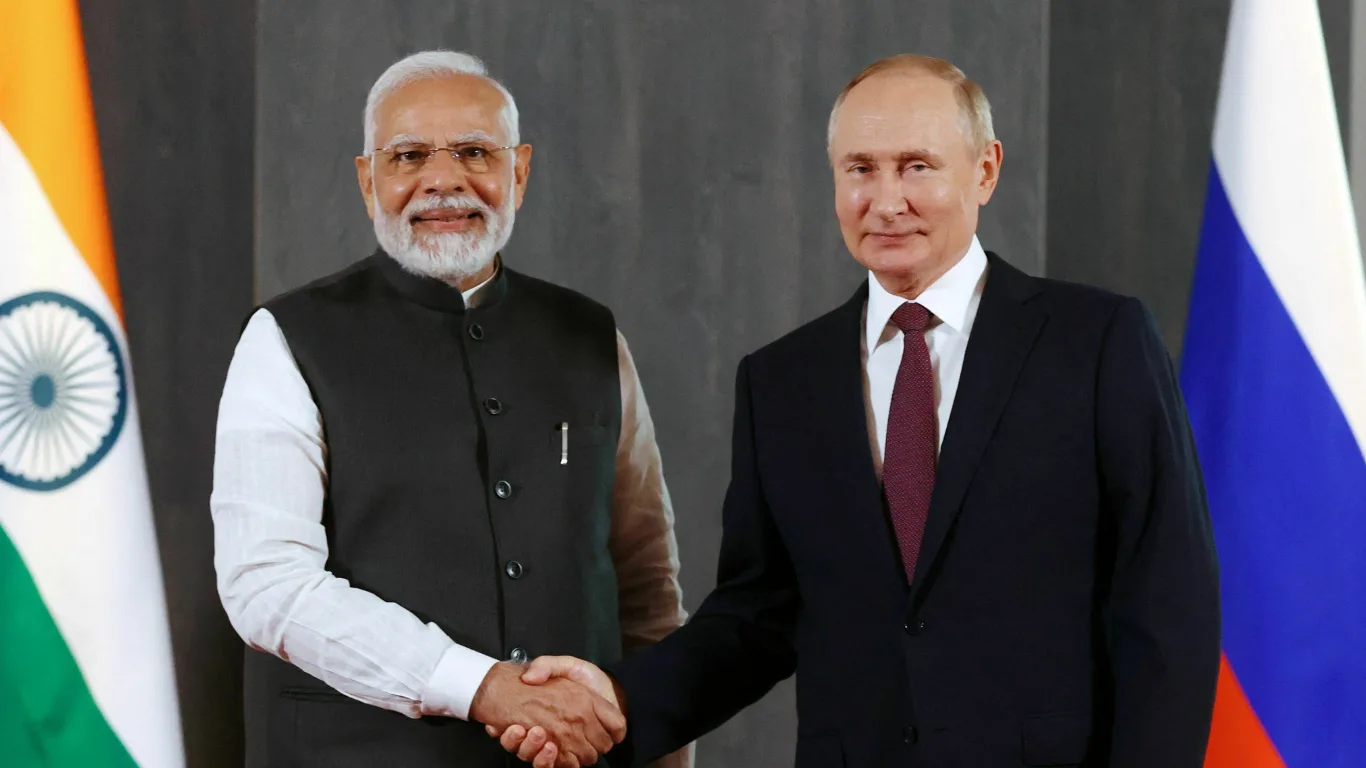
India Won't Stop Buying Russian Oil , And the Numbers Explain Exactly Why
The Trump administration quietly let a key sanctions waiver lapse over the weekend. Global energy markets noticed. Brent crude climbed. Analysts braced for a shift. And then, on Monday morning in New Delhi, a senior Indian official walked up to a media briefing and said something that cut through all the noise in about three sentences.
India's Russian crude oil imports are not stopping. Not because of the waiver. Not without it. Not ever, as long as the math works.
"We have been purchasing from Russia before the waiver, also during the waiver, and now also," said Sujata Sharma, Joint Secretary at the Ministry of Petroleum and Natural Gas. "It is basically the commercial sense which should be there for us to purchase."
That sentence deserves a second reading. Because it is not diplomatic language. It is not a hedge. It is a direct statement of national energy policy from a country that imports nearly 87 percent of its crude oil and has 1.4 billion people depending on affordable fuel to keep an economy running.
Why India's Stand on Russian Oil Is More Than Just Politics
There is a version of this story that frames it purely as geopolitics , India defying the West, aligning with Moscow, navigating a tightrope between Washington and the Kremlin. That version is not wrong, but it is incomplete.
The real story is simpler and more durable: India's energy security depends on price, availability, and supply stability. Russian crude, whatever its political complications, consistently delivers on all three.
Between June and July 2024, India imported more than 2 million barrels per day of Russian crude, accounting for around 43 to 44 percent of India's total crude imports, reflecting a sharp increase driven by refiners seeking to capitalise on discounted supplies. That number has since moderated, but the direction of travel tells a clear story.
Russian crude has consistently accounted for around one third of India's total imports since January 2024, with 2025 seeing Russian oil imports averaging around 1.7 million barrels per day, allowing Indian refiners to maintain strong margins and diversify away from suppliers in the Middle East and Americas.
A $2 discount per barrel sounds small. Multiply it by millions of barrels a day and it becomes billions of dollars saved over a year. India's oil import bill dropped by nearly 19 percent in the first quarter of FY26 compared to the same period the year before, and discounted Russian barrels were a central reason why.
What the US Sanctions Waiver Actually Was , And What Happens Now
Here is the part that tends to get lost in the coverage.
The US Treasury Department issued licenses to inject millions of barrels of Russian and Iranian oil into global markets while Iranian restrictions on the Strait of Hormuz curtailed Middle Eastern crude exports. The intent was to meet global demand and ease upward pressure on crude prices.
In other words, the United States itself, facing a tight global market and rising prices, had quietly allowed Russian oil to flow more freely. The waiver was not a favour to India or Russia. It was a practical response to an energy market under severe pressure.
The waiver's lapse triggered concern in global energy markets, with Brent crude trading at $110.28 per barrel and US West Texas Intermediate rising to $106.32 per barrel, as tensions in West Asia and concerns over disruptions in the Strait of Hormuz continue to keep oil prices elevated.
Against that backdrop, India's position is not recklessness. It is arithmetic.
How India's Russian Oil Relationship Actually Works
It did not start with Ukraine. It started with opportunity, and then it became something harder to unwind , infrastructure, contracts, payment mechanisms, refinery calibration.
Since Russia's war with Ukraine began in early 2022 and Western buyers stepped away from Russian crude, India stepped in. The Russian crude is not sanctioned outright, only the supply from two Russian oil majors , Rosneft and Lukoil. As long as refiners stick to compliant, non-designated suppliers, purchases can continue through third-party trading entities that can credibly show they are not connected to sanctioned firms.
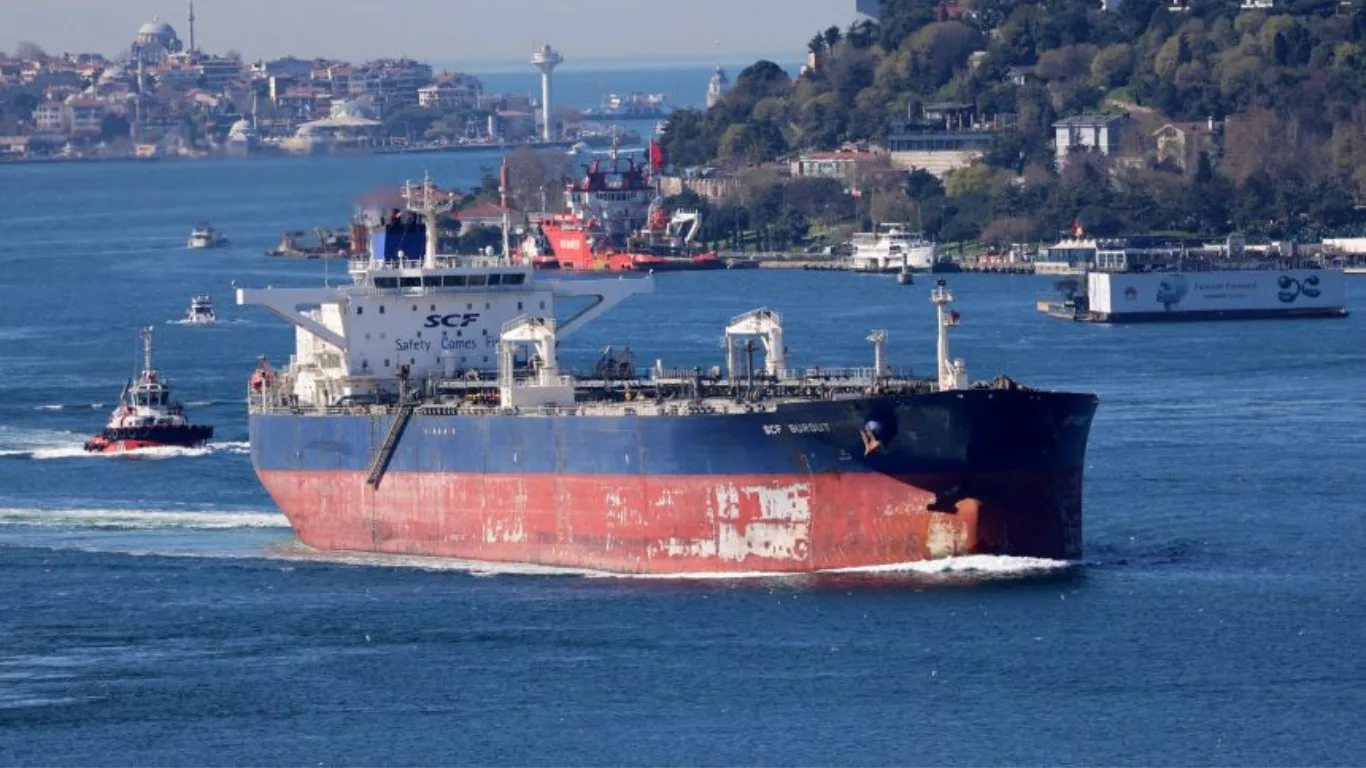
That workaround is already well-tested and widely used. India's refiners know how to buy Russian crude without touching sanctioned supply chains. The logistics adapted. The payment systems adapted. Even after US sanctions on Rosneft and Lukoil kicked in from November 2025, causing India's Russian crude share to briefly dip below 25 percent for the first time in two years, the overall relationship held. New intermediaries filled the gap.
India's position, as stated by the Ministry of External Affairs, has remained consistent: ensuring the energy security of 1.4 billion Indians is the supreme priority, and diversifying energy sourcing in keeping with objective market conditions and evolving international dynamics is at the core of that strategy.
Read More: Russia Launches Progress MS-34 Cargo Ship to the ISS, Delivering Over 2.5 Tonnes of Vital Supplies
What This Means for Global Energy Markets
India is not a passive actor here. It is the world's third-largest oil consumer, and its buying decisions move markets. When New Delhi signals that no waiver, no sanction shift, and no diplomatic pressure will override commercial logic, that is a statement the entire global energy supply chain absorbs.
Russian crude has transformed into a cornerstone of India's diversified oil import strategy primarily because it is frequently secured at competitive discounted rates relative to alternative global benchmarks, and officials have indicated that India will continue to prioritise cost-effectiveness and supply stability regardless of shifts in the Western regulatory landscape.
Russia, for its part, needs the revenue. India needs the supply. The market has already priced this relationship in. Any outside attempt to break it requires offering India something the market currently does not: a comparable volume of oil at a comparable price from a source that does not come with a freight and insurance premium.
No one is currently offering that.
The Mistake Observers Keep Making
Most coverage treats India's Russian oil relationship as a temporary convenience , something that will eventually give way to geopolitical realignment or Western pressure. That assumption has been wrong every year since 2022.
Since 2017, India has transformed Russia into a cornerstone energy and fertilizer partner, lifting imports eightfold by 2024, with crude oil alone accounting for over 73 percent of India's imports from Russia. This is not a transaction. It is structural dependency, deliberately built and carefully maintained.
Treating it as a political choice that can be reversed with enough diplomatic pressure misunderstands what is actually happening. It is an economic architecture. You do not dismantle those with a phone call.
One Thing Worth Watching
The real variable going forward is not whether India buys Russian oil. It almost certainly will. The question is at what price, through which channels, and with what payment mechanisms , especially as global oil prices remain elevated and the Russia-Ukraine conflict continues to shape the sanctions landscape.
India achieved 20 percent ethanol blending in petrol in 2025, five years ahead of schedule. Renewable energy investments are accelerating. The country is building diversification into its energy mix, slowly and deliberately. But crude oil still runs the economy, and for now, Russian crude runs a significant part of it.
The math has not changed. And until it does, neither will India's answer.
Disclaimer: This article is based on information available across the web. Parchar Manch does not take responsibility for its complete accuracy, as the content could not be fully verified.
Read More: Narendra Modi Addresses Vijay Sankalp Sabha in Mathurapur: Impact on West Bengal Election 2026
FAQs
Why is India still buying Russian oil despite US sanctions?
India imports roughly 87 percent of its crude oil and treats energy security as its top national priority. Russian crude is consistently available at a discount compared to other global benchmarks, making it commercially attractive. India's official position is that its buying decisions are driven entirely by market logic and supply availability, not external political pressure.
Did the US sanctions waiver affect India's oil supply?
No. India's petroleum ministry confirmed that adequate crude has already been contracted and that the waiver's lapse will not affect supply. India was buying Russian crude before the waiver existed, continued buying during it, and plans to continue regardless.
How much Russian oil does India actually import?
At its peak in mid-2024, Russian crude accounted for nearly 44 percent of India's total crude imports. After new US sanctions on Rosneft and Lukoil in late 2025, the share dipped below 25 percent briefly before stabilising. Russia remains India's largest single source of crude oil.
Is buying Russian oil legal for India?
India is not subject to secondary sanctions in the same way that Western companies are. As long as Indian refiners buy through compliant, non-sanctioned suppliers and intermediaries, the purchases are considered legally permissible under India's own laws. India has navigated these channels carefully and has existing payment and logistics systems in place.
Can Western countries pressure India to stop buying Russian oil?
Diplomatically, yes. Practically, it is far more complicated. India has consistently stated that energy security is non-negotiable and has resisted pressure on this front for over three years. Without a viable alternative at a comparable price, external pressure has not shifted India's buying decisions and is unlikely to in the near term.