India's Quad Foreign Ministers' Meeting 2026: What Really Happened at Hyderabad House
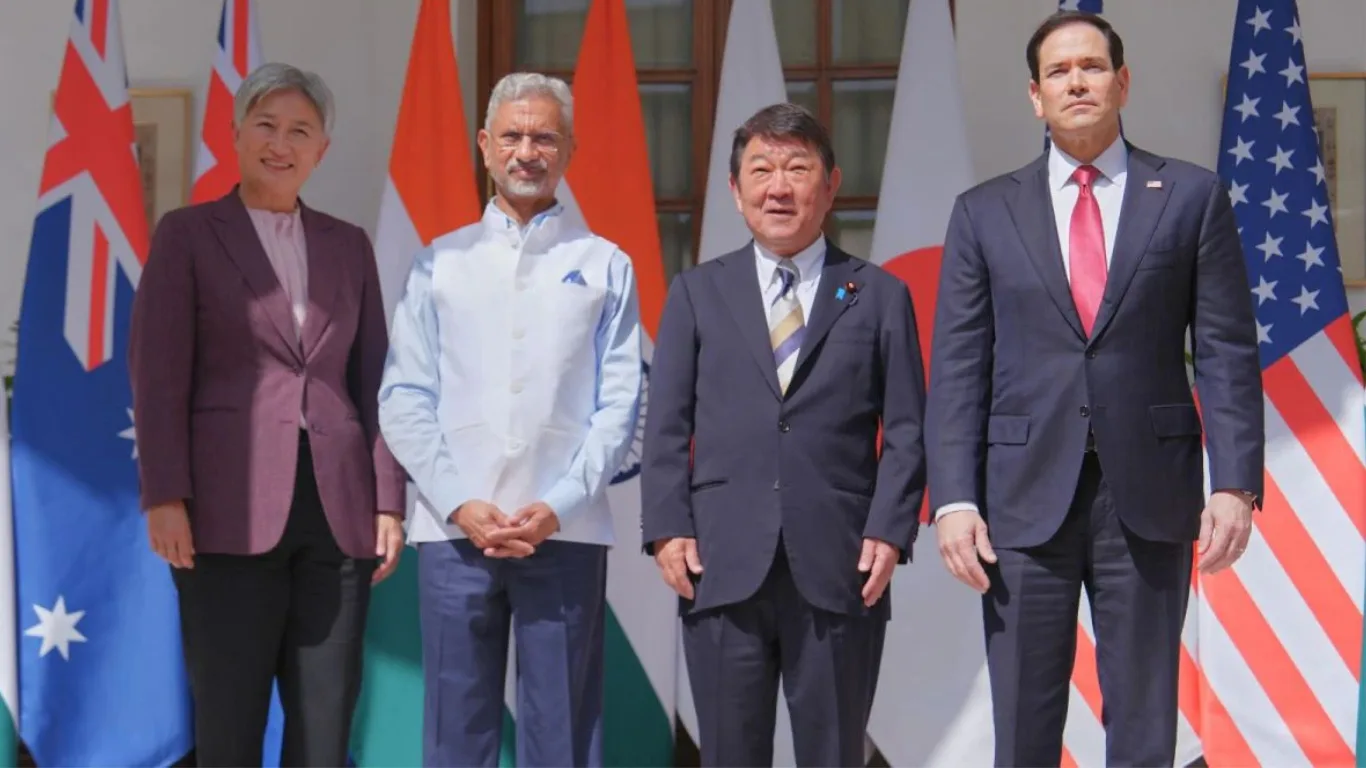
Something significant happened at Hyderabad House in New Delhi on May 26, 2026. Four countries , India, the United States, Australia, and Japan , sat together at the 11th Quad Foreign Ministers' Meeting, and walked out with agreements that could quietly reshape how the Indo-Pacific region handles everything from ocean surveillance to mineral supply chains.
This was not just another diplomatic photo-op. It was the third such meeting in 18 months. That frequency alone tells you something about how seriously these four nations are treating this grouping right now.
Why the Quad Foreign Ministers' Meeting in New Delhi Actually Matters
Most people hear "foreign ministers' meeting" and immediately think: politicians shaking hands, vague statements, nothing changes.
This one was different. And understanding why requires knowing what the Quad alliance actually is and what it has been building toward.
The Quad , short for the Quadrilateral Security Dialogue , brings together India, the United States, Japan, and Australia. Its stated purpose is a "free and open Indo-Pacific," a phrase that sounds diplomatic but carries real weight. It essentially means: no single nation should be able to dominate the sea lanes, trade routes, and critical infrastructure of the region through force or coercion.
China has not been named directly. But China's growing presence in the South China Sea, its control over critical minerals supply chains, and its recent pushback against this meeting , calling Quad an "exclusive clique" , tells you exactly who is being watched.
Who Was in the Room at Hyderabad House
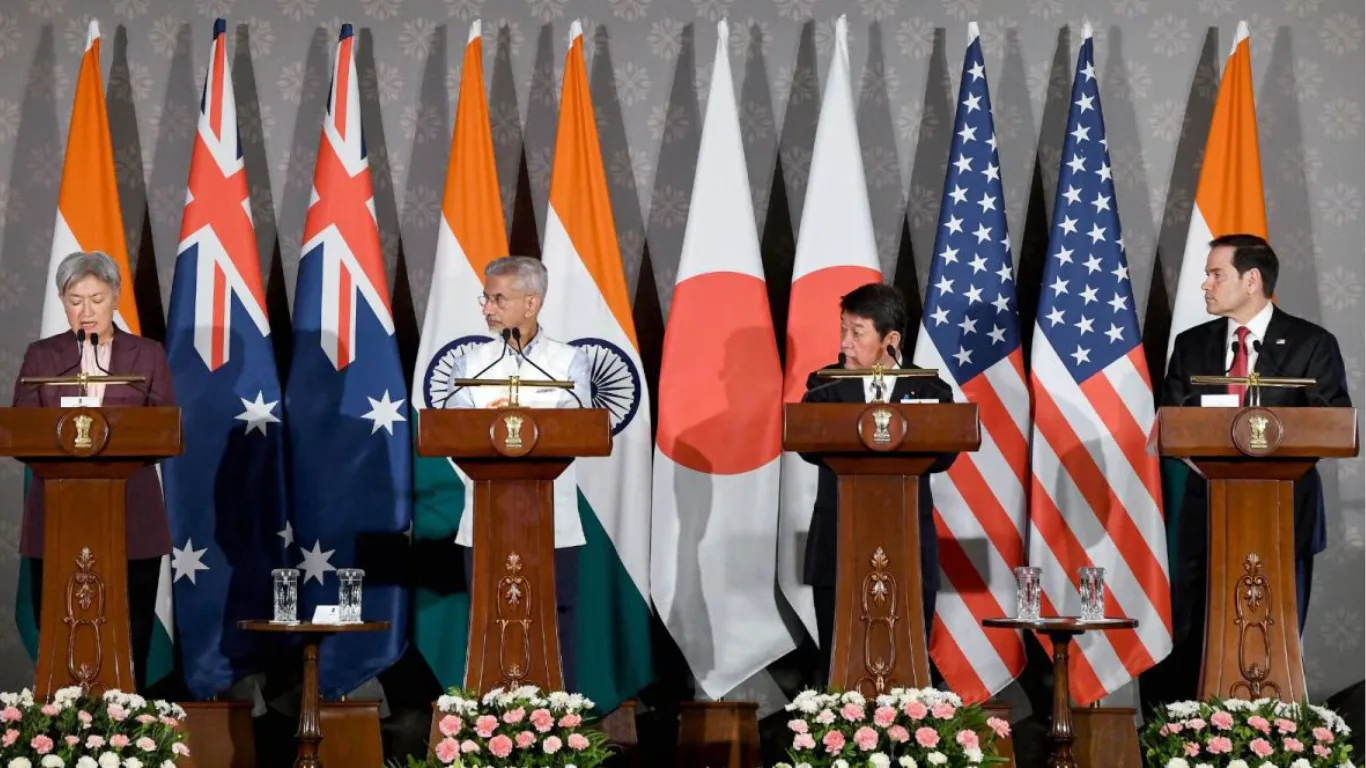
External Affairs Minister S. Jaishankar hosted the meeting. On the other side of the table sat Australian Foreign Minister Penny Wong, Japanese Foreign Minister Takeshi Iwaya, and US Secretary of State Marco Rubio.
The joint statement they signed reaffirmed a commitment to international law, sovereignty, and the peaceful resolution of disputes. But the concrete outcomes are what deserve attention.
The Three Big Announcements: What the Quad Actually Decided
1. Indo-Pacific Maritime Surveillance Collaboration (IPMSC)
This is the headline. The four nations launched the Indo-Pacific Maritime Surveillance Collaboration Initiative, known as IPMSC , the first-ever initiative of its kind.
It builds on an older framework called the Indo-Pacific Maritime Domain Awareness Initiative (IPMDA), which already shared near real-time commercial shipping data across the region. The new IPMSC goes further. It integrates more advanced technologies to provide clearer, enhanced operational maritime data. Think of it as upgrading from a basic radar to a full tracking system across the Indian Ocean Region.
Why does this matter? Because knowing what ships are moving, where, and why is foundational to both trade security and countering illegal activity. The Indo-Pacific maritime security conversation has been growing louder , especially with the Strait of Hormuz crisis hanging over global energy flows right now.
2. The Quad Critical Minerals Initiative Framework
The second major announcement: a Quad Critical Minerals Initiative Framework.
Critical minerals , lithium, cobalt, rare earths , are the raw materials that power electric vehicles, semiconductors, and defense systems. Right now, China controls a disproportionate share of their processing globally. That is a vulnerability all four Quad nations have been quietly worried about.
This framework commits the four countries to coordinating investment and economic policy tools to strengthen critical minerals supply chains, covering mining, processing, and recycling. Reports suggest the combined push targets a $20 billion investment mobilization. India and the United States also separately signed a Strategic Critical Minerals Cooperation Framework on the sidelines of this meeting.
Read More: Trump's "Mandatory" Demand: Why Saudi Arabia and Qatar Must Now Choose Between Iran and Israel
3. Quad's First-Ever Joint Infrastructure Project: A Port in Fiji
This one surprised many observers. The Quad nations announced their first-ever joint infrastructure project , the construction of a port in Fiji. This is not just a development gesture. Fiji sits in the Pacific, a region where China has been actively building influence through infrastructure investment. The Quad stepping in with a port project is a direct, practical counter.
The Quad Fuel Security Forum and Energy Concerns
The meeting also launched the Quad Initiative on Indo-Pacific Energy Security. With the Strait of Hormuz facing disruptions , a crisis that sat, somewhat quietly, beneath every conversation in the room , protecting fuel supply routes for the Indo-Pacific became urgent business.
The Quad Fuel Security Forum will focus on helping countries across the region maintain energy resilience. Each member nation has committed to contribute. Japan and India separately discussed steps to address energy supply disruptions, given their significant dependence on Gulf oil.
Counter-Terrorism and the Pahalgam Attack
The joint statement also condemned the Pahalgam terror attack , the deadly strike in Kashmir earlier this year that killed tourists and shook India. The Quad's explicit condemnation was significant. It signals political solidarity at a moment when India has been navigating a difficult security situation.
The ministers also advanced counter-terrorism cooperation, with a planned Quad Counterterrorism Tabletop Exercise to be held in Australia in June 2026, focused specifically on state-sponsored terrorism threats and the use of drones.
The Unresolved Question: No Quad Leaders' Summit Yet
One question hangs in the air after all of this. Despite India holding the rotating Quad chairmanship throughout 2025, no date for a Quad Leaders' Summit has been confirmed. That gap is drawing attention.
The Hindu described it plainly: no clarity on the next leaders' summit is "sparking questions about the group's future." Others , including analysts at The Diplomat , pushed back, arguing that this week's meeting proves the Quad is far from dead. A grouping that meets three times in 18 months and produces concrete frameworks is not a grouping that is fading.
Still, a foreign ministers' meeting and a leaders' summit are two different things. The absence of the latter is a signal worth watching.
What This Means for India
India hosted this meeting. That positioning is deliberate. As the Quad's current chair, New Delhi is actively shaping the group's agenda , from maritime surveillance to minerals to energy. EAM Jaishankar called the meeting "productive," and the range of frameworks signed suggests that was not just diplomatic language.
For India specifically, the critical minerals deal with the US and the maritime surveillance upgrade directly strengthen its strategic footprint in the Indian Ocean Region , a space India has long considered its primary sphere of influence.
FAQs
What is the Quad and who are its members?
The Quad, or Quadrilateral Security Dialogue, is a strategic grouping of India, the United States, Japan, and Australia. It focuses on maintaining a free and open Indo-Pacific through security, economic, and technology cooperation.
When and where did the 11th Quad Foreign Ministers' Meeting take place?
It was held on May 26, 2026, at Hyderabad House in New Delhi, hosted by India's External Affairs Minister S. Jaishankar.
What was the most significant outcome of the meeting?
The launch of the Indo-Pacific Maritime Surveillance Collaboration (IPMSC) initiative and the Quad Critical Minerals Initiative Framework were the most concrete outcomes, alongside the announcement of the Quad's first-ever joint infrastructure project , a port in Fiji.
Why did China react negatively to the meeting?
China officially stated it opposes "exclusive cliques," a phrase directed at the Quad. Beijing has consistently viewed the grouping as an attempt to contain its influence in the Indo-Pacific, particularly given the maritime surveillance and critical minerals decisions.
Is there a Quad Leaders' Summit planned?
As of May 2026, no date for a Quad Leaders' Summit has been confirmed, which some analysts have flagged as a notable gap despite the active foreign ministers' track.
What is the Quad Critical Minerals Initiative Framework?
It is a new agreement among the four Quad nations to coordinate investment and economic policy to strengthen supply chains for critical minerals , lithium, cobalt, and rare earths , reducing dependence on Chinese processing dominance.