India's Silent Alarm: Why the Government Formed a High-Level Committee to Investigate Unnatural Demographic Change
Something shifted quietly in the air when Prime Minister Narendra Modi stood at the Red Fort on August 15, 2025, and said something most Independence Day speeches never say: India's demography is being changed. Deliberately. And it will not be tolerated.
That one statement , made before the entire nation , set a clock ticking. Nine months later, the clock struck.
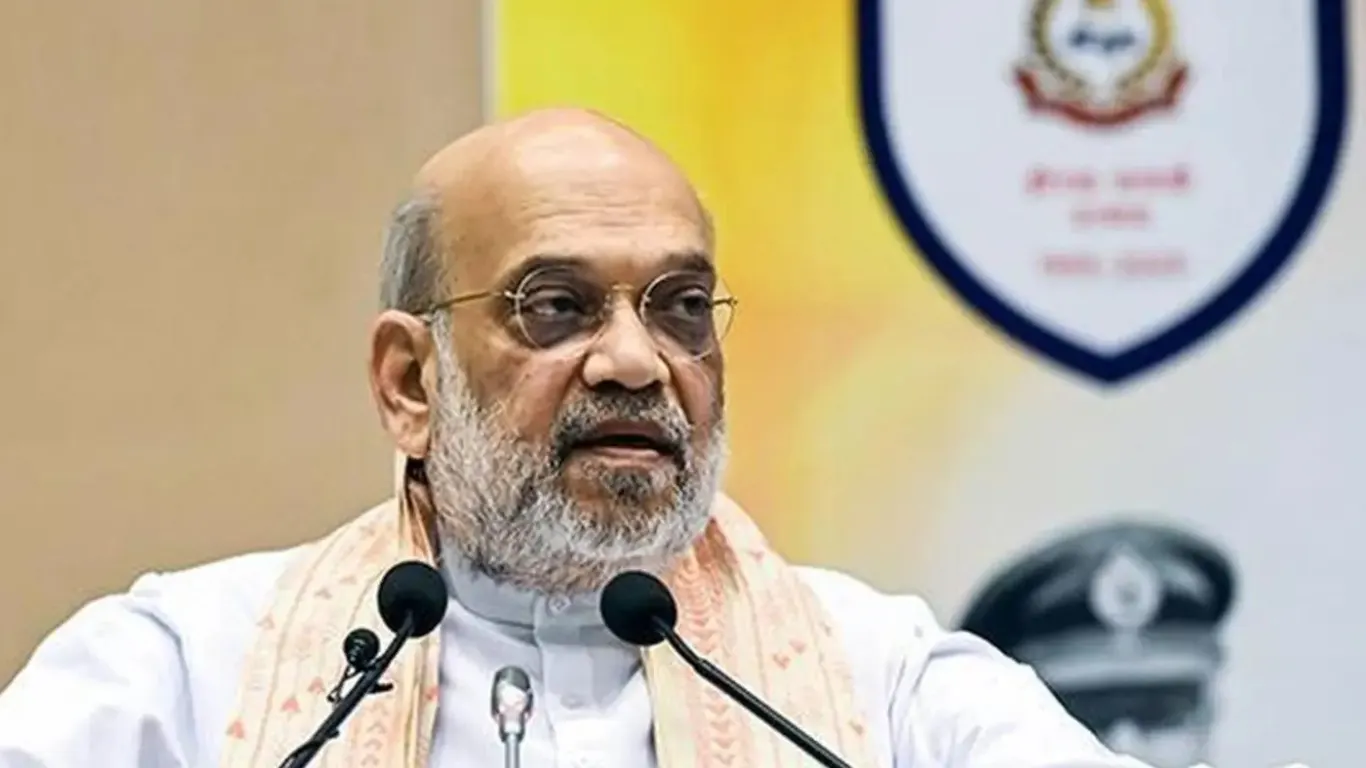
On May 27, 2026, Union Home Minister Amit Shah announced that the government has formally constituted the High-Level Committee on Demographic Change , a panel with a sharp mandate: find out what is happening to India's population fabric, where it is happening, and recommend concrete solutions.
What Triggered This Move? The August 15 Promise That Started It All
On Independence Day 2025, Prime Minister Modi warned that under a "well-thought-out conspiracy," the country's demography is being changed, and that infiltrators are snatching the livelihood of Indian youth, targeting women, misleading tribal communities, and grabbing their lands.
That was the announcement. The committee is its formal fulfilment.
Home Minister Amit Shah confirmed this on May 27, saying, "To address this challenge, Prime Minister Narendra Modi had announced the formation of a high-level committee on demographic change on August 15, 2025. I am happy to inform that the government has now constituted this committee."
What Is "Unnatural Demographic Change" , And Why Does It Matter?
Let's break this down simply. A country's demography is basically its population portrait , who lives where, in what numbers, belonging to what religion, community, or background. Natural demographic change is normal: people are born, they migrate for work, cities grow, villages shrink. That happens everywhere.
Unnatural demographic change is something different. It refers to sudden, sharp, unexplained shifts in population composition , particularly in border districts and sensitive regions , that cannot be explained by birth rates or economic migration alone.
The government's concern is that illegal immigration, especially from Bangladesh and potentially other neighbouring countries, is altering the religious and social composition of specific regions , border belts in West Bengal, Assam, and parts of Northeast India being cited the most frequently.
Home Minister Shah described this as not just a law-and-order issue, but one linked directly to India's sovereignty and national security.
Who Is on This Committee? The Full Member List
The committee will be chaired by retired Supreme Court Justice Prakash Prabhakar Naolekar, and will include the Census Commissioner, retired IAS officer Durga Shankar Mishra, retired IPS officer Balaji Srivastava, and economist Dr. Shamika Ravi. The Joint Secretary (Foreigners-I) in the Ministry of Home Affairs will serve as Member Secretary.
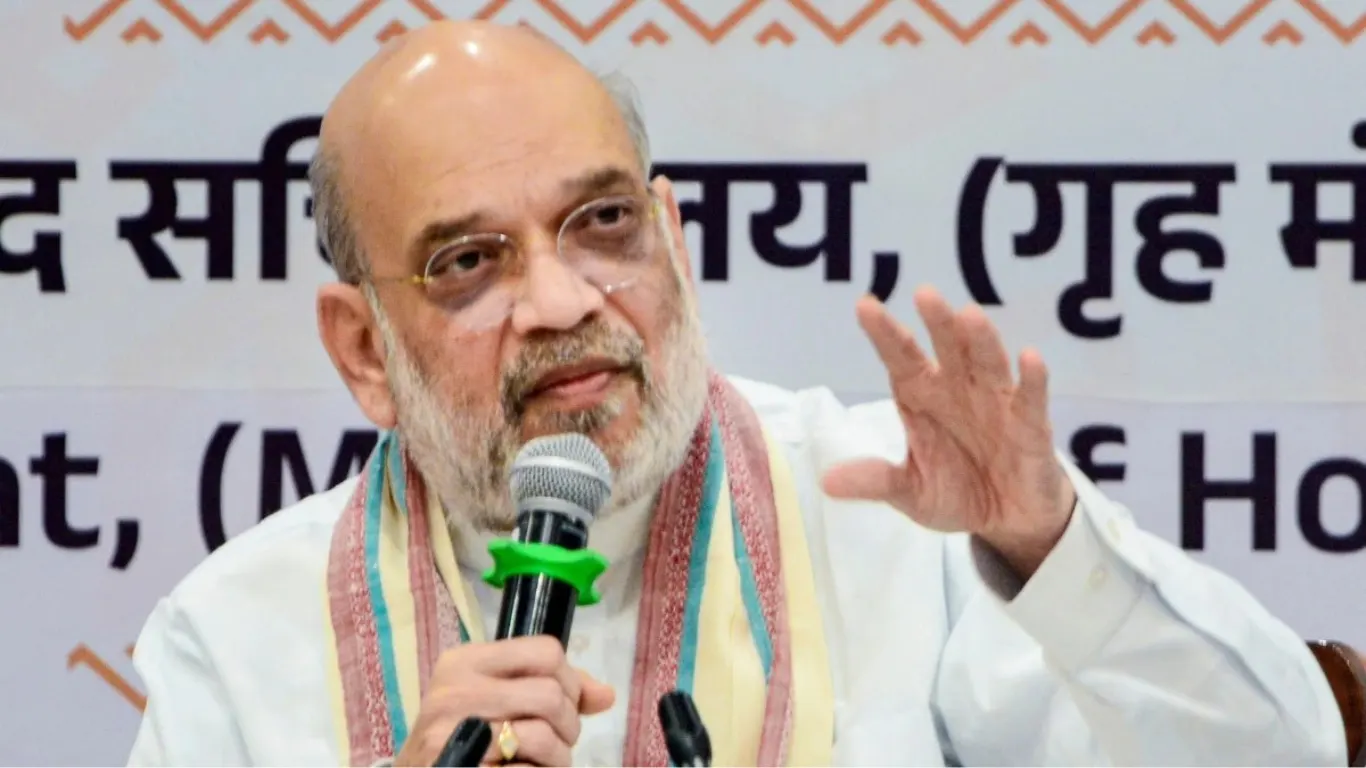
This is a notably diverse panel , a judicial mind, a census expert, a security professional, and an economist. That combination signals that the government is approaching this as a multi-dimensional problem: legal, statistical, strategic, and economic.
Read More: Trump's "Mandatory" Demand: Why Saudi Arabia and Qatar Must Now Choose Between Iran and Israel
What Exactly Will This Committee Do?
According to Shah, the committee will conduct a detailed assessment of abnormal population shifts across religious and social communities and recommend planned, time-bound solutions.
It will conduct a "comprehensive assessment of demographic changes occurring across India due to illegal immigration and other unnatural causes" and analyse "patterns of abnormal population shifts."
The government's stated approach for dealing with illegal immigrants follows a three-word formula that Shah has used repeatedly in Parliament: detect, delete, and deport. Shah told the Lok Sabha that the NDA's policy is clear , detect, delete, and deport illegal immigrants , and that no illegal immigrant would remain in voter lists.
Border Areas Are at the Centre of Concern
Shah has cautioned that demographic changes in border districts are not due to geographical conditions , they are part of a "deliberate design." He urged chief secretaries of states and Central Armed Police Forces to treat the issue with seriousness.
He has previously stated that demographic changes in border areas directly impact the security of the country and its borders.
States like Assam and Manipur have welcomed the move. Assam Chief Minister Himanta Biswa Sarma called it a "visionary and decisive step," while Manipur CM Biren Singh noted that the Northeast has faced the impact of illegal immigration for decades.
Is There Opposition to This Committee?
The announcement has drawn a politically divided response. Congress and several Opposition parties have questioned whether the committee's scope and framing is being used to target specific minority communities rather than address genuine immigration concerns.
However, even some Opposition voices have not entirely rejected the idea. Congress MP Shashi Tharoor was quoted supporting the need to understand immigration data, saying India must first understand the numbers it is dealing with.
The central tension here is real: immigration is a genuine national security concern, but how a government defines and acts upon "demographic change" has enormous implications for civil liberties, minority rights, and communal harmony. This committee's final report will likely be one of the most scrutinised documents in Indian policy in recent years.
What Happens Next?
The committee has not yet been given a fixed deadline publicly, but the language around it , "planned and time-bound solutions" , suggests the government wants results, not just a report that gathers dust.
India's next census, delayed since 2021, is also expected soon. That data will likely become foundational evidence for whatever the committee concludes.
The stakes are high. The question of who lives where , and in what numbers , touches something deep in any diverse nation. India is not the first country to grapple with this. It will not be the last.
What matters is whether the answers that emerge protect all its citizens equally.
Read More:Pope Leo XIV's "Magnifica Humanitas": The Church's Bold Stand Against AI Dehumanization
Disclaimer: This article is based on information available across the web. Parchar Manch does not take responsibility for its complete accuracy, as the content could not be fully verified.
FAQs
What is the High-Level Committee on Demographic Change?
It is a government-constituted expert panel announced by Home Minister Amit Shah on May 27, 2026, formed to investigate unnatural demographic shifts in India linked to illegal immigration and other causes, fulfilling a promise PM Modi made on Independence Day 2025.
Who heads this committee?
Retired Supreme Court Justice Prakash Prabhakar Naolekar chairs the committee. Other members include the Census Commissioner, retired IAS officer Durga Shankar Mishra, retired IPS officer Balaji Srivastava, and economist Dr. Shamika Ravi.
What will the committee investigate?
The committee will study abnormal population shifts across religious and social communities, particularly in border areas, and link these to illegal immigration and other unnatural causes. It will then recommend time-bound solutions.
What does "unnatural demographic change" mean?
It refers to sudden, unexplained shifts in population composition , especially in border regions , that go beyond natural migration or birth-rate patterns, and are attributed by the government to illegal infiltration from neighbouring countries.
Why are border areas the main focus?
Border districts in states like Assam, West Bengal, and parts of Northeast India have seen rapid changes in religious and community composition that the government links to cross-border illegal immigration, particularly from Bangladesh.
Has any opposition supported this move?
Responses have been divided. While most Opposition parties have raised concerns about communal targeting, some individuals, including Congress MP Shashi Tharoor, acknowledged the importance of understanding immigration numbers accurately before drawing conclusions.