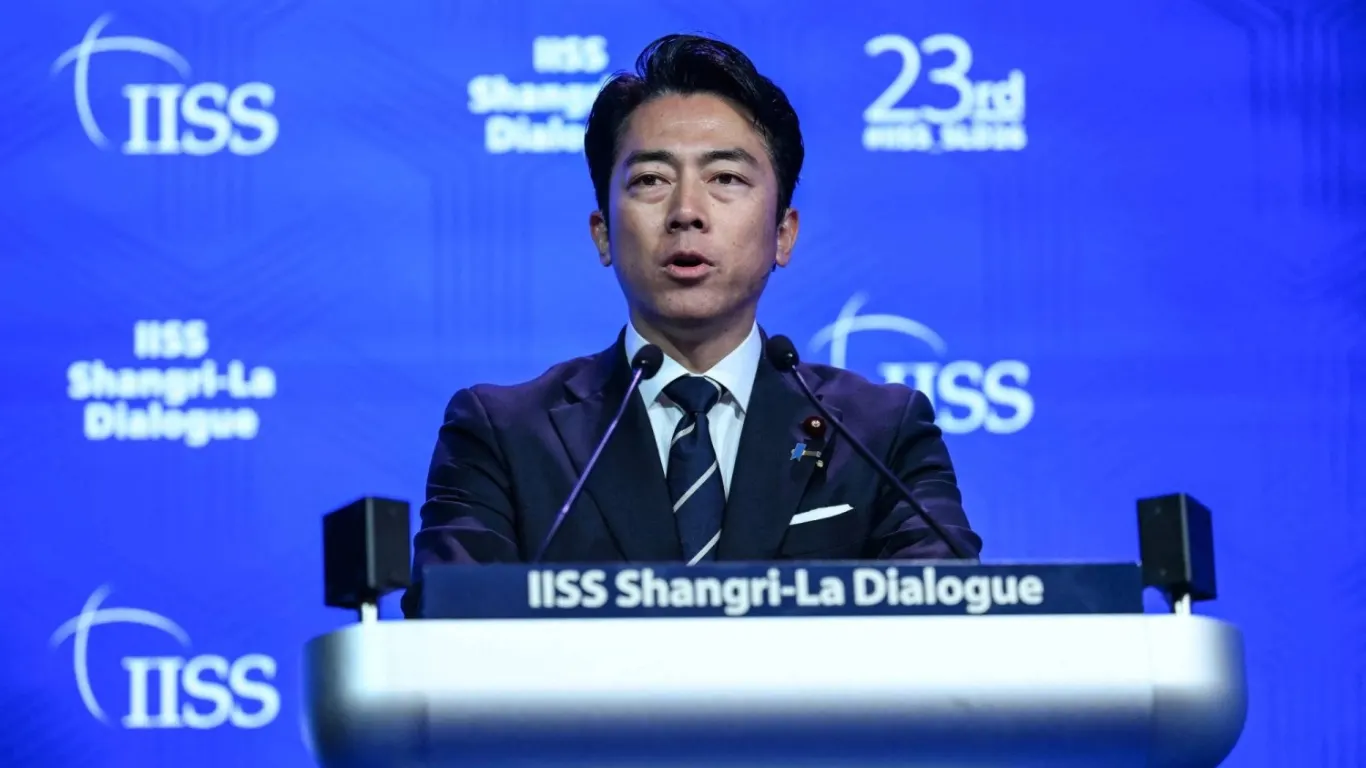
Japan's Koizumi Fires Back at China's "New Militarism" Label — And Points the Finger Straight at Beijing
Japan has never been comfortable with the word "militarism." Given its history, that makes sense. So when China started using the phrase Japanese neo-militarism to describe Tokyo's defence buildup, the response was always going to be pointed. What happened at the Shangri-La Dialogue in Singapore on May 31, 2026, was more than a diplomatic rebuttal. It was Japan drawing a line.
Shinjiro Koizumi, Japan's Defence Minister, stood before an audience of global security officials and analysts, and said something few people expected in those words: "Nothing could be further from the truth."
Why Koizumi's Rejection of "New Militarism" Matters Right Now
This is not an abstract debate between governments. It touches directly on how Asia's security order is being reshaped, who gets to define the rules, and whether a country's past forever determines how its present is interpreted.
Koizumi directly addressed a label increasingly used by Chinese officials and state-run media to describe Japan's largest military buildup since World War II, which includes the revision of key strategic documents and a historic increase in defence spending.
That is the context. Japan has been spending more on defence, overhauling its export rules, and repositioning itself as a more active security player in the Indo-Pacific. China calls it a revival of wartime aggression. Japan calls it a necessary response to a shifting threat environment.
What China Actually Said — and Why Japan Responded Publicly
In May, China's foreign ministry called on Asia-Pacific countries to be vigilant and "jointly resist the reckless actions of Japan's neo-militarism."
That is strong language. Invoking neo-militarism in Asia carries enormous historical weight. World War II wounds are still felt across the region. China knows this, and Japan knows that China knows this.
At the Singapore forum, Chinese delegate Major General Meng Xiangqing also criticised Japan, extending Beijing's pushback beyond diplomatic communiques into a high-profile international security stage.
Koizumi chose not to deflect. He turned the argument around entirely.
Koizumi's Counterargument: "Look at Who Actually Has Nuclear Weapons"
The sharpest moment of Koizumi's address came when he shifted from defence to offence, rhetorically speaking.
"Think about it. There's a country that has a huge arsenal of nuclear weapons and strategic bombers. I deeply doubt whether a country that has not thoroughly eradicated the toxic legacy of militarism is qualified to talk extensively about defence cooperation on international occasions and whether it can win the trust of the international community, especially the Asian countries it once invaded," he said.
He did not name China directly. He did not need to. The room understood.
Koizumi said that "Japan has neither of such weapons, and yet Japan is labeled neo-militarist. Isn't it strange?"
Read More:Pope Leo XIV's "Magnifica Humanitas": The Church's Bold Stand Against AI Dehumanization
Japan's Defence Posture: What Has Actually Changed
To understand why this matters, you need to know what Japan has actually been doing.
In April, Tokyo unveiled its biggest overhaul of defence export rules in decades, scrapping restrictions on overseas arms sales and opening the way for exports of warships, missiles and other weapons.
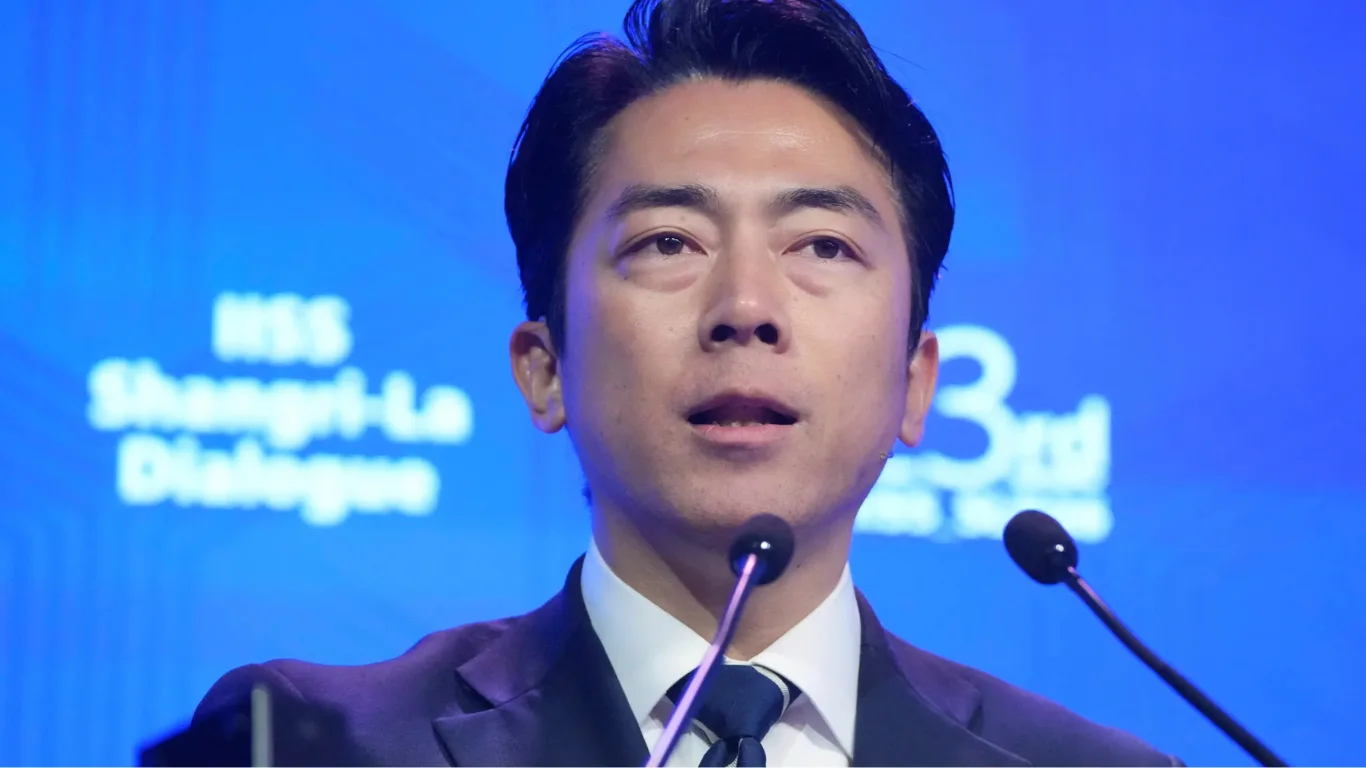
Koizumi said Japan is "determined" to play a new role in defence equipment cooperation in the Asia-Pacific and aims to tangibly strengthen deterrence in the region. "We seek a region that can stand against coercion. We seek a region that is not misled by falsehoods. We seek a region that is not influenced by pressure," he said.
That language is deliberate. Every word there is aimed at Beijing without saying Beijing.
The Taiwan Factor and Bilateral Tensions
Ties between Japan and China sank to their worst level in years after Japanese Prime Minister Sanae Takaichi warned in November that a hypothetical Chinese attack on Taiwan could draw a Japanese military response.
That statement in November was a genuine escalation. It crossed a line that previous Japanese administrations had carefully avoided. China's subsequent neo-militarism framing was, in part, a response to that moment.
Read More: Iran Reveals Mojtaba Khamenei's Injuries: What Really Happened the Day Tehran Was Struck
Dialogue as Koizumi's Quiet Insistence
Even while delivering sharp criticism, Koizumi kept one door open.
Koizumi said that "Japan's door to dialog is always open" to the international community, and that "Japan's path as a peace-loving nation has been valued by the region and by the international community. This fact will not be shaken by false claims because it is a fact."
Koizumi lamented that China had not sent its defence minister to the conference, framing Beijing's absence as a transparency deficit. Transparency, he argued, comes from showing up.
Closing Thoughts
There is something quietly significant about this moment. Japan is asserting itself in ways it did not a decade ago. Whether that is called rearmament, deterrence, or neo-militarism depends entirely on who is doing the labeling. Koizumi's speech at the Shangri-La Dialogue was an attempt to reclaim that narrative.
Whether it works will depend not on the speech itself, but on what Japan does next — and how the rest of Asia chooses to read it.
Disclaimer: This article is based on information available across the web. Parchar Manch does not take responsibility for its complete accuracy, as the content could not be fully verified.
FAQs
What is the Shangri-La Dialogue?
It is an annual defence summit held in Singapore, organised by the International Institute for Strategic Studies (IISS). Senior defence officials and ministers from across the world attend to discuss regional and global security issues.
Why does China call Japan's military expansion "neo-militarism"?
China uses this term to draw parallels between Japan's current defence buildup and its aggressive wartime behaviour in the 20th century, particularly during World War II, when Japan invaded several Asian nations including China.
Has Japan officially changed its pacifist stance?
Japan has not abandoned its pacifist constitution, but it has significantly revised its defence posture through new strategic documents, increased defence spending, and revised arms export rules that allow weapons sales abroad for the first time in decades.
What did Koizumi mean by pointing to nuclear weapons?
He was referring indirectly to China, which possesses nuclear warheads and strategic bombers. His point was that Japan has neither, yet is being called militarist by a country with far greater offensive military capabilities.
What is the Taiwan connection to this dispute?
Japanese Prime Minister Sanae Takaichi stated that a Chinese attack on Taiwan could trigger a Japanese military response, pushing Japan-China relations to their worst level in years and intensifying China's criticism of Japanese defence policy.
Is Japan's military buildup a threat to regional stability?
Japan argues it is a stabilising force, aimed at deterring coercion and upholding international law. China argues the opposite. Most independent analysts see it as a response to China's own military expansion rather than unprovoked aggression.