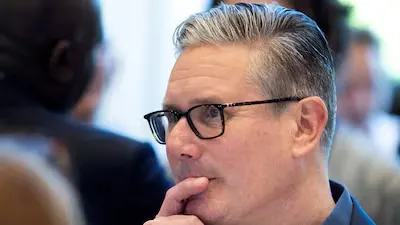
Keir Starmer Resignation: Why Britain's Prime Minister Is on the Verge of Leaving Downing Street
Keir Starmer spent the weekend at Chequers, the prime ministerial country retreat, with family, friends, and aides. That detail says something. You do not retreat to Chequers for routine reflection. You go there when a decision of real weight is being made.
As of Sunday, June 22, 2026, Keir Starmer's resignation was widely expected to be announced as early as Monday, the same day his Labour rival Andy Burnham is due to be sworn into Parliament after winning a by-election by a decisive margin. The Observer ran the story on its front page. The Sunday Telegraph cited allies. And then Donald Trump posted on Truth Social that Starmer "will resign," adding his own commentary about immigration and North Sea oil.
Britain may be about to get its seventh prime minister in a decade.
How a Labour Landslide Winner Became a Leader Under Siege
Starmer led Labour to a commanding general election victory in 2024. The contrast between that moment and this one is difficult to explain quickly, but worth trying. In less than two years, Starmer's approval ratings have collapsed to levels that drew comparisons to Liz Truss, the prime minister who lasted 45 days in office. Over 95 Labour MPs had called for him to resign or set a departure timetable by mid-May 2026. The Labour Party leadership crisis that has been building for months has now reached its visible breaking point.
The causes stack up. Labour lost over 1,200 local councillors in the May local elections. The party lost control of the Welsh Senedd. Reform UK, Nigel Farage's right-wing party, gained over 300 seats. Domestically, the government struggled with a persistent cost-of-living crisis, broke several election pledges, reversed course on the winter fuel payment, and failed to deliver visible economic growth. To Starmer's left, Labour members were furious about welfare reform and his handling of Gaza. To his right, critics hammered him on immigration.
Then came the resignations. Health Secretary Wes Streeting quit in May, posting a letter on X describing it as "dishonourable and unprincipled" to remain. Defence Secretary John Healey went next, along with junior ministers in the Ministry of Defence. Four junior ministers resigned on a single day in May. The appointment of Peter Mandelson as UK Ambassador to the United States generated scandal. Foreign Secretary Yvette Cooper dismissed the Foreign Office's most senior civil servant under contested circumstances. Senior Labour members of the House of Lords began calling publicly for an agreed handover.
Read More: Ram Temple Donation Fraud: How Scammers Are Exploiting Faith and What Devotees Need to Know
Andy Burnham's By-Election Win Changed the Arithmetic
The trigger for this week's crisis is specific. Andy Burnham, who stepped down as the popular mayor of Greater Manchester to contest the Makerfield by-election, won it with nearly 55 per cent of the vote, more than 9,000 votes ahead of the Reform UK candidate in second place. That result was emphatic. It was not merely a victory; it was a statement.
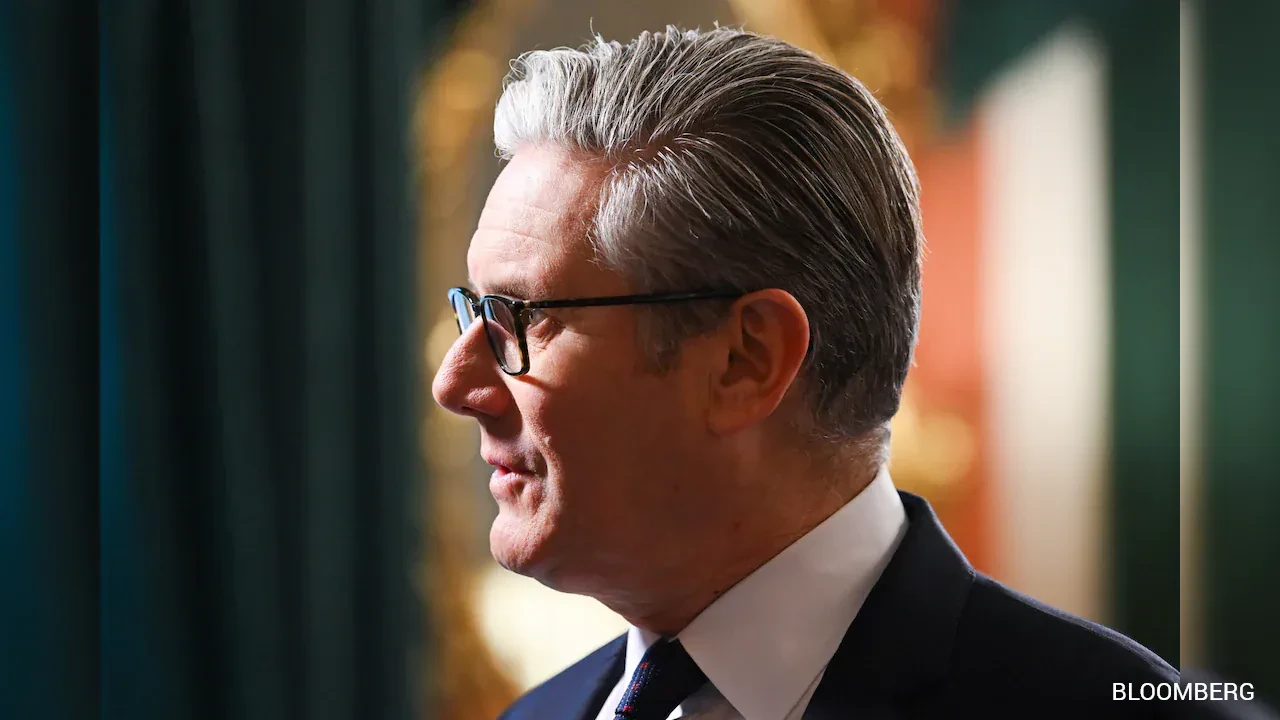
Burnham's acceptance speech was even more direct. He said that everyone knows politics is not working and that the country is not where it should be, and added that the night could be "the turning point." That is not the language of someone content to be a backbencher.
Burnham is now set to be sworn in as a Member of Parliament on Monday. His return to Westminster puts him in a formal position to launch a Labour leadership challenge. His camp has reportedly signalled it would accept a timetable that kept Starmer in Downing Street until September. The expectation is that Starmer will announce precisely such a timetable on Monday.
Who Could Replace Starmer
The names circulating are significant. Burnham is the frontrunner in public polling and among much of the parliamentary Labour Party. Foreign Secretary Yvette Cooper, despite having reportedly urged Starmer to leave, is also considered a potential candidate. Wes Streeting has confirmed he would run if a contest is held. David Lammy, Shabana Mahmood, Angela Rayner, and Ed Miliband have all been mentioned. If Starmer steps aside without a formal contest, Burnham's allies hope for a smooth coronation. Others, particularly Streeting's camp, would prefer a full leadership election.
Read More: Twenty Rebel Trinamool Congress MPs to Merge with NCPI? The Political Buzz Raising Big Questions
What Happens Constitutionally
A point worth understanding clearly: a British prime minister does not need to call a general election to be replaced. Political parties can change their leader at any time through internal processes. If Labour elects a new leader, that person becomes prime minister without a public vote. A general election would still need to happen by law within the five-year parliamentary term, but a change of prime minister can happen far sooner.
Charlie Falconer, a senior Labour member of the House of Lords, said Starmer had "absolutely no authority" left and called for an agreed transition rather than a protracted fight. Lord Hutton told the BBC there was a high probability of Starmer stepping down, emphasising the need for institutional stability.
Starmer himself said on Friday: "I will run, I will stand." But Downing Street, when CNN asked for comment on Trump's Truth Social post, directed reporters to that same Friday statement. That is not the language of a man who has settled the question.
Closing Thoughts
There is something genuinely unusual about watching a prime minister who won his election by a wide margin face potential departure less than two years later. Starmer did not lose a vote of confidence. He did not face a scandal that ended his position overnight. He was simply, and steadily, worn down by a combination of broken promises, electoral reversals, cabinet departures, and the emergence of a rival who appears to command genuine public enthusiasm.
Whether Starmer announces a departure timetable on Monday or chooses to fight will define the next chapter of British politics. But the weekend at Chequers suggests the decision, in his own mind, may already be made.
Read More: India's AI Problem: Why the World's Fastest-Growing Digital Nation Is Struggling to Keep Up
Disclaimer: This article is based on information available across the web. Parchar Manch does not take responsibility for its complete accuracy, as the content could not be fully verified.
FAQs
Why is Keir Starmer considering resignation?
Starmer is under intense pressure after months of declining polls, cabinet resignations, poor local election results, and the decisive by-election win by Andy Burnham, his main internal rival. Over 95 Labour MPs had already called for him to resign or set a departure timetable, and multiple cabinet ministers including Foreign Secretary Yvette Cooper reportedly urged him to step down.
Who is Andy Burnham and why does his return to Parliament matter?
Andy Burnham is a former mayor of Greater Manchester and former government minister who resigned to contest the Makerfield by-election, which he won with nearly 55 per cent of the vote. His election as an MP gives him the formal standing to challenge for the Labour Party leadership. He is widely regarded as the party's most popular figure.
Who could become the next UK prime minister if Starmer resigns?
Potential candidates include Andy Burnham, Foreign Secretary Yvette Cooper, former Health Secretary Wes Streeting, David Lammy, Angela Rayner, Shabana Mahmood, and Ed Miliband. Burnham is currently considered the frontrunner, though Streeting has said he will contest a leadership election if one is held.
Does the UK need a general election if Starmer resigns?
No. Under the UK's constitutional system, a political party can replace its leader without triggering a general election. The new Labour leader would become prime minister automatically. A wider public vote would only be required if the new government chose to call one or when the parliamentary term expires.
What caused the Labour Party leadership crisis in 2026?
The crisis developed over months due to Labour losing over 1,200 local councillors, control of the Welsh Senedd, broken election pledges on the winter fuel payment, the Peter Mandelson appointment controversy, the cost-of-living crisis, multiple ministerial resignations, and the rise of Reform UK, which made major electoral gains across England.
What did Trump say about Starmer's resignation?
US President Donald Trump posted on Truth Social that Keir Starmer "will resign," attributing his political troubles to failures on immigration and energy policy, specifically calling for the UK to reopen North Sea oil exploration. It is unclear whether Trump had definitive knowledge or was responding to media reports.