
Narendra Modi and Emmanuel Macron Inaugurate Bharat Innovates: Why This India-France Initiative Could Shape the Future of Innovation
Some government announcements disappear from public memory within days. Others quietly signal where the future might be heading.
The news that Narendra Modi and Emmanuel Macron Inaugurate Bharat Innovates falls into the second category.
At first glance, it may sound like another diplomatic event. But the initiative represents something larger: a growing partnership between India and France focused on innovation, technology, startups, research, and future industries. In a world increasingly driven by ideas rather than raw resources, that matters more than many people realize.
Why Narendra Modi and Emmanuel Macron Inaugurate Bharat Innovates Is Important
Economic growth today is not just about factories and infrastructure.
It is increasingly about innovation. Countries that create new technologies, support startups, and invest in research often gain long-term economic advantages.
That is why the announcement that Narendra Modi and Emmanuel Macron Inaugurate Bharat Innovates has attracted attention from policymakers, entrepreneurs, investors, and students alike.
The initiative reflects a shared effort by India and France to encourage innovation-led growth while strengthening strategic cooperation between the two nations.
Read More: Oman in the Crossfire: Why the World's Most Neutral Nation Is Now Under Enormous Pressure
What Bharat Innovates Actually Means
The name itself offers a clue.
Think of Bharat Innovates as a platform designed to encourage collaboration between innovators, startups, researchers, businesses, and institutions.
Instead of countries working independently on every challenge, initiatives like this create opportunities for knowledge sharing, joint research, technology partnerships, and startup cooperation.
The goal is simple in theory but powerful in practice: connect talent with opportunity.
That connection often leads to breakthroughs.
How Bharat Innovates Could Work in Practice
Innovation partnerships generally follow a structured approach:
• Governments create cooperation frameworks.
• Research institutions collaborate on projects.
• Startups gain access to international networks.
• Businesses explore technology partnerships.
• Investors identify emerging opportunities.
• Knowledge and expertise flow between participating countries.
Through these mechanisms, initiatives such as Bharat Innovates can support innovation ecosystems rather than isolated projects.
The impact often grows gradually rather than overnight.
Real-World Benefits for India and France
The practical value becomes easier to understand through examples.
An Indian startup developing clean energy solutions could gain access to French expertise and research networks. A French technology company could explore partnerships with India's rapidly growing innovation ecosystem.
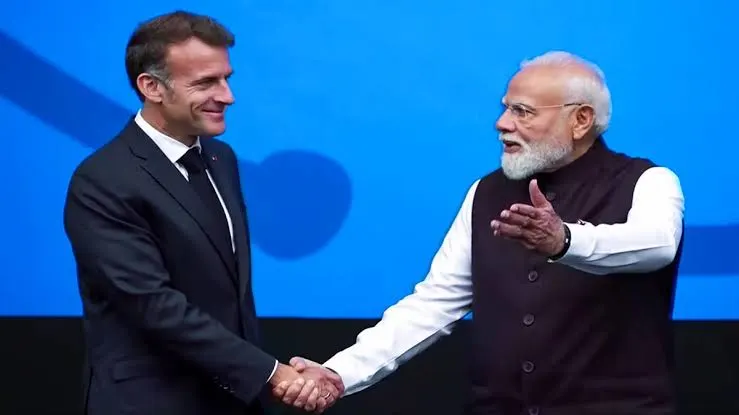
Students, researchers, entrepreneurs, and businesses may all benefit from stronger cross-border collaboration.
Innovation partnerships also help countries address common challenges in areas such as sustainability, healthcare, digital technologies, artificial intelligence, and advanced manufacturing.
That broader perspective is central to why Narendra Modi and Emmanuel Macron Inaugurate Bharat Innovates has significance beyond diplomacy.
Common Misunderstandings About Innovation Initiatives
A common misconception is that innovation programs only benefit large corporations.
In reality, startups, universities, researchers, and young entrepreneurs are often among the biggest beneficiaries of such initiatives.
Another misunderstanding is expecting immediate results.
Innovation ecosystems require time. Relationships must be built. Research takes time to mature. New technologies move through testing and development before reaching the market.
The most meaningful outcomes often emerge years later.
Read More: India's Current Account Surplus Hit $7.1 Billion in Q4 FY26: What the Numbers Are Really Saying
What Experts Will Watch Next
Observers will pay close attention to the practical outcomes following the inauguration.
Will new startup collaborations emerge?
Will research partnerships expand?
Will funding opportunities increase?
Will businesses from both countries launch joint projects?
These are the questions that ultimately determine the success of innovation-focused initiatives.
Announcements create momentum. Execution creates impact.
A Sign of How Global Partnerships Are Changing
There is something interesting about modern diplomacy.
It is no longer focused only on trade agreements and political discussions. Increasingly, countries are building relationships through innovation, technology, education, and entrepreneurship.
The fact that Narendra Modi and Emmanuel Macron Inaugurate Bharat Innovates reflects that shift. It signals a future where international partnerships are measured not only by what countries exchange today, but by what they build together tomorrow.
That may be the most important part of the story.
Read More: “Our Customers Are in America”: Why Opendoor Shut Its India Operations and Fired 250 Employees
FAQs
What is Bharat Innovates?
Bharat Innovates is an initiative aimed at promoting innovation, collaboration, research, and partnerships between India and France.
Why is the inauguration significant?
It highlights growing cooperation between India and France in technology, startups, research, and future-focused industries.
Who can benefit from Bharat Innovates?
Startups, researchers, universities, entrepreneurs, investors, and businesses may all benefit from increased collaboration opportunities.
How does innovation cooperation help countries?
It encourages knowledge sharing, technology development, investment opportunities, and long-term economic growth.
Will Bharat Innovates produce immediate results?
Innovation initiatives typically generate impact over time through partnerships, research projects, and business collaborations.
What sectors could benefit the most?
Technology, artificial intelligence, clean energy, healthcare innovation, advanced manufacturing, and startup ecosystems are among the key areas likely to benefit.