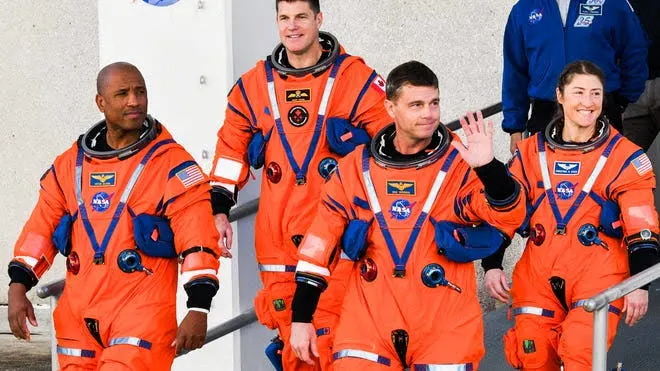
Meet the Artemis III Crew: The Four Astronauts NASA Just Chose for Its Most Ambitious Space Test Yet
There is something about a crew announcement that makes space feel real again. Not theoretical. Not a roadmap on a presentation slide. Real.
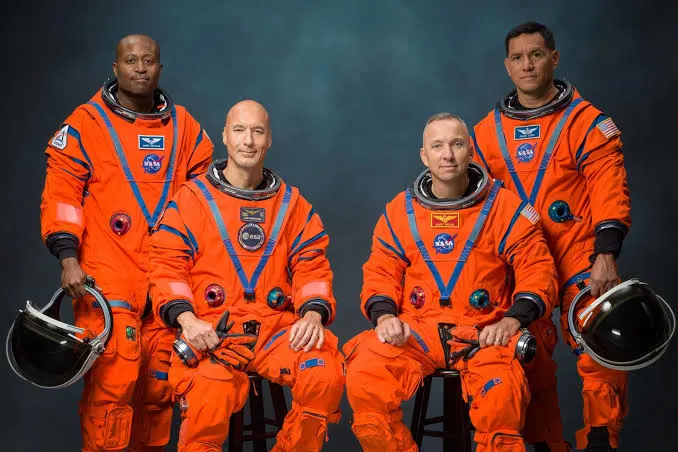
On June 9, 2026, NASA gathered at Johnson Space Center in Houston and did something that had not been done in over half a century in a meaningful new way: it named the people who will fly toward the Moon next. The Artemis III crew is officially Randy Bresnik, Frank Rubio, Andre Douglas, and Luca Parmitano. Four astronauts. One mission. And a very specific job that most headlines are glossing over.
Why the Artemis III Mission Is Not What People Think It Is
Here is where it gets interesting. Many people assume Artemis III is the Moon landing mission. It is not. Not this time.
Artemis II flew around the Moon and back in April 2026, carrying the first woman into lunar territory. That was the orbit test. Artemis III, scheduled for 2027, is the next step in a different direction: a crewed flight in low Earth orbit designed to test whether the Orion spacecraft can successfully rendezvous and dock with two commercial lunar landers one from SpaceX, one from Blue Origin.
Think of it like a dress rehearsal. Before humans actually land on the Moon, NASA needs to confirm that all the moving parts work together: the spacecraft, the landers, the docking systems, the crew protocols. If something goes wrong during a Moon landing with no plan B, the consequences are unthinkable. Artemis III is about eliminating that possibility before it becomes one.
Who Is Actually Flying: The Artemis III Crew, Explained
Randy Bresnik is the mission commander. A veteran NASA astronaut with three spaceflights to his name, Bresnik brings calm and deep operational experience to the role. He was selected as an astronaut in 2004 and has spent decades preparing for precisely this kind of high-stakes mission.
Luca Parmitano, the pilot, is Italian and represents ESA, the European Space Agency. His selection is significant: for the first time in a mission of this profile, a European astronaut will be at the controls alongside a NASA commander. Parmitano is qualified to fly more than 20 types of military aircraft. He was visibly emotional at the announcement, crediting his family for giving him the fuel to get there. ESA's Director General called it a proud moment for European space cooperation.
Frank Rubio, mission specialist, joined NASA in 2017. He holds a record that not many people know about: in 2023, Rubio spent 371 days aboard the International Space Station, breaking the record for the longest single spaceflight by a US astronaut. He knows what extended isolation and precision work in space actually feels like. Not in a textbook way. In a lived way.
Andre Douglas, the fourth mission specialist and the youngest of the four, will be making his first spaceflight. He holds three master's degrees and a doctorate in systems engineering, and before NASA selected him in 2021, he worked on the DART mission, the test that deliberately crashed a spacecraft into an asteroid to redirect it. His reaction at the announcement was unscripted and charming: "My brain is going a mile a minute right now. But my heart my heart it is so warm."
Bob Hines has been named as a backup crew member.
Read More: The Hidden Walking Rule Nobody Knew Existed: Why Humans Naturally Turn Counterclockwise
What This Mission Actually Has to Prove
The Starship lunar lander from SpaceX and the Blue Origin lander both need to demonstrate they can connect reliably with Orion in orbit. This is the crux of the entire Artemis program going forward. SpaceX has confirmed Starship will be ready in time. Blue Origin is in parallel development.
NASA Administrator Jared Isaacman called the Artemis III crew announcement "another bold step in humanity's return to the Moon, building on the extraordinary foundation laid by the Artemis II astronauts."
The long-term goal has not changed: a sustained human presence on the lunar south pole, and eventually a permanent base. But every step in that direction requires the previous one to work. Artemis III is that next step.
Read More: Ebola Is Back and Spreading Fast: Everything You Need to Know About the 2026 Outbreak
A Note on the Crew Composition
It is worth acknowledging: this is an all-male crew, which drew attention given that Artemis II carried the first woman into lunar territory. NASA has not commented extensively on the selection rationale, though the announcement noted the crew is racially diverse. The conversation around crew diversity in the Artemis program remains active and ongoing.
Closing Thoughts
What strikes you about this crew, if you look at them together, is how different their paths were to the same photograph. A record-breaking astronaut who spent a year in space. A European pilot who once landed a fighter jet after a bird strike. A young engineer who helped redirect an asteroid. A veteran commander who has waited decades for a mission like this.
The Artemis III mission is not the Moon landing. But it may be the one that makes the Moon landing possible. And sometimes the quiet, unglamorous work of proving systems and testing docks matters more than the moment the world watches.
Disclaimer: This article is based on information available across the web. Parchar Manch does not take responsibility for its complete accuracy, as the content could not be fully verified.
FAQs
Will the Artemis III crew land on the Moon?
No. Artemis III is a low Earth orbit mission designed to test docking between the Orion spacecraft and commercial lunar landers from SpaceX and Blue Origin. The actual lunar landing is planned for a later Artemis mission.
Who are the four Artemis III astronauts?
Commander Randy Bresnik, pilot Luca Parmitano (ESA), and mission specialists Frank Rubio and Andre Douglas. Bob Hines is listed as backup crew.
What is the Artemis program trying to accomplish?
Artemis aims to return humans to the Moon, with a long-term goal of establishing a sustained presence at the lunar south pole and eventually building toward a Moon base. It is also laying groundwork for future Mars missions.
What happened on Artemis II?
In April 2026, the Artemis II crew flew around the Moon and back, marking the first time humans had reached lunar territory since the Apollo era. It was also the furthest any woman had ever been from Earth.
When is the Artemis III mission scheduled to launch?
The mission is scheduled for 2027, pending confirmation that the commercial lunar landers from SpaceX and Blue Origin are ready for in-orbit testing.
Why is Luca Parmitano's selection significant?
Parmitano is an ESA (European Space Agency) astronaut, making him the first European to serve as pilot on a mission of this level under the Artemis program. It reflects the international nature of NASA's lunar exploration strategy.