Microsoft Build 2026: Inside the AI Tools, Hardware Concepts, and Models That Could Reshape How You Work
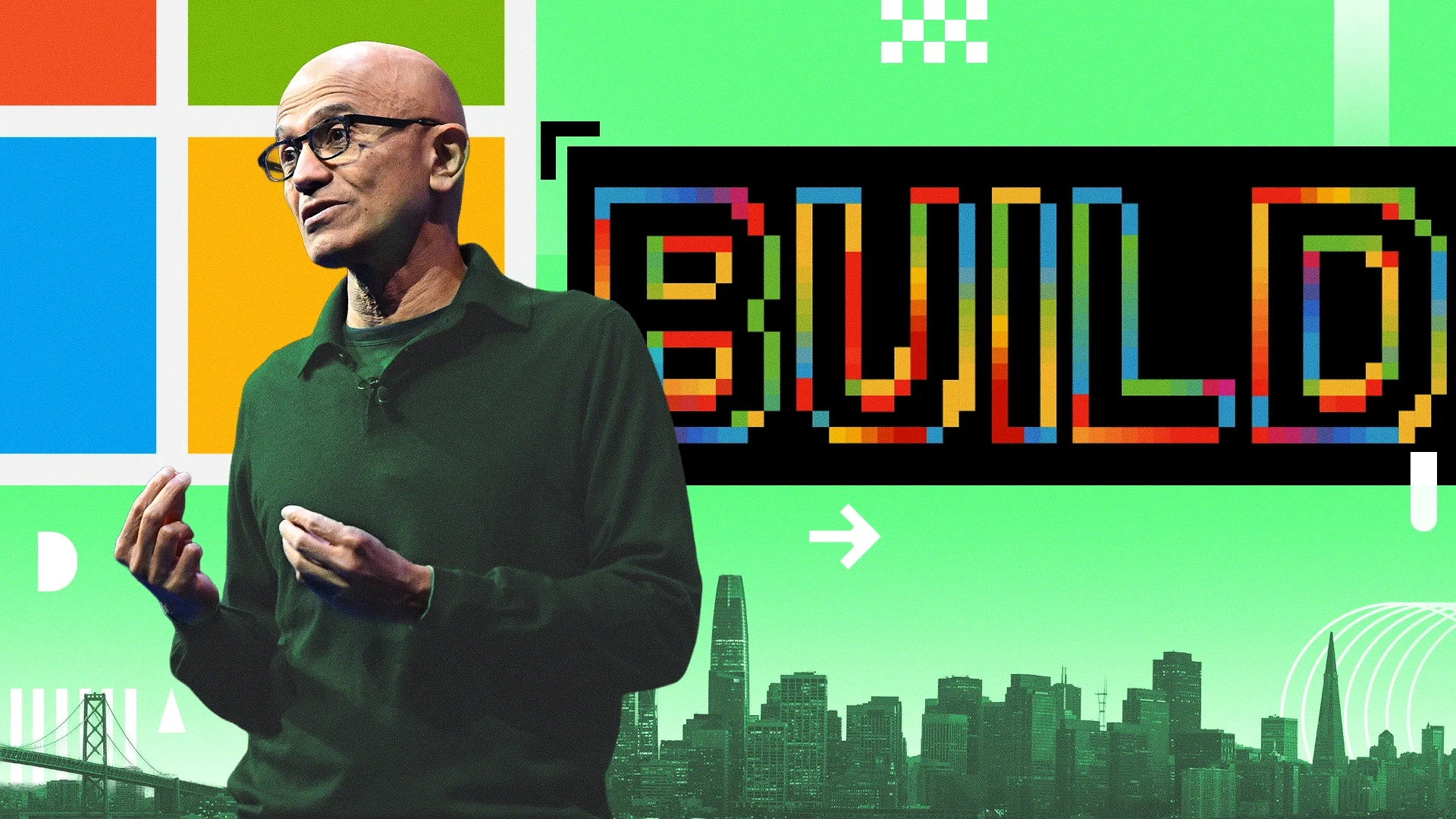
Something shifted at Microsoft's Build 2026 developer conference on June 2 in San Francisco. CEO Satya Nadella took the stage and did not just announce products. He laid out a new computing stack, from silicon to software, and declared that Microsoft AI tools are now built to make autonomous agents the primary way humans interact with technology, not applications, not menus, not search boxes.
Two and a half hours of announcements. The most significant ones are worth understanding clearly.
Microsoft Build 2026 AI Tools: The MAI Model Family Explained
For years, Microsoft has powered its Copilot services using models from OpenAI. That relationship is not ending, but Build 2026 marked Microsoft's most decisive step toward independence. The company unveiled the MAI model family, a suite of seven AI models built in-house from scratch.
The headline model is MAI-Thinking-1, Microsoft's first reasoning model. It has 35 billion active parameters and is designed to compete in what the company calls the medium-sized weight class, handling software engineering tasks and mathematical reasoning with genuine depth.
Alongside it came MAI-Code-1-Flash, a smaller 5-billion-parameter model optimised for fast, efficient coding assistance, and MAI-Image-2.5, a new image generation and editing model that Microsoft's AI chief Mustafa Suleyman claimed outperforms Google's competing image model. There is also MAI-Transcribe-1.5, a new transcription model that Microsoft says beats both Gemini and OpenAI's transcription tools on benchmarks.
The broader strategic intent is clear: Microsoft wants to choose the right model for the right task rather than routing everything through one external provider. That is a subtle but meaningful shift for anyone who relies on Copilot professionally.
Read More:Pope Leo XIV's "Magnifica Humanitas": The Church's Bold Stand Against AI Dehumanization
Surface RTX Spark Dev Box and the New Hardware Picture
Microsoft's new hardware announcements at Build 2026 centred on two things: a serious AI workstation for developers, and a glimpse of something that looks nothing like a traditional computer.
The Surface RTX Spark Dev Box is a compact desktop workstation powered by Nvidia's RTX Spark superchip. It delivers up to 1 petaflop of AI performance, carries 128 GB of unified memory, and can run AI models with up to 120 billion parameters entirely on-device, without sending data to the cloud.
For developers building and testing AI applications, this is significant. It means local iteration at scales previously reserved for data centres.
Microsoft also unveiled the Surface Laptop Ultra, a 15-inch device with Nvidia's RTX Spark system-on-chip, positioned to compete directly with Apple's premium MacBook Pro lineup. The announcement helped boost shares of Microsoft and major PC makers including Dell Technologies.
Read More: Iran Reveals Mojtaba Khamenei's Injuries: What Really Happened the Day Tehran Was Struck
Project Solara: The Hardware That Looks Nothing Like a Computer
The most striking visual moment of Build 2026 was Project Solara, previewed on stage by Microsoft's Steven Bathiche. Solara is a new chip-to-cloud platform designed for AI agents to operate on devices that bear no resemblance to traditional PCs.
Two concept devices were shown: a smart clock-like stationary device and a wearable ID badge. The badge is fingerprint-unlockable, can record video, accept voice instructions, process them, and send the output to a team. It runs on Windows on Arm with Qualcomm's technology, with Qualcomm CEO Cristiano Amon joining Nadella to discuss the AI agent potential of these form factors.
These are not commercial products today. Microsoft explicitly positioned them as a vision for where enterprise computing is heading, a world where AI agents accompany workers outside the laptop frame entirely.
Scout, GitHub Copilot, and the Agent Ecosystem
Scout is Microsoft's new always-on AI agent, accessible via Copilot. It monitors Teams, Outlook, OneDrive, and SharePoint simultaneously, identifying items that require user decisions and handling others autonomously. It runs on a platform called OpenClaw and has its own governed identity within Microsoft's Entra system. Microsoft confirmed its internal sales department is already the largest user of Scout tools.
The GitHub Copilot desktop app was also announced, repositioning GitHub Copilot from a code-suggestion tool to an AI teammate capable of handling planning, implementation, debugging, testing, and documentation workflows.
Microsoft also introduced Majorana 2, its next-generation quantum chip, claiming 1,000x improvement in qubit reliability over the previous generation, with a target of commercially useful quantum computing by 2029.
Closing Thoughts
What Microsoft showed at Build 2026 is not a collection of features. It is a coherent argument: that computing should centre on what needs to get done, not which app to open. The hardware concepts are provocative. The MAI models are real and available. Scout is already being tested internally at scale.
Whether this vision works depends on one thing more than any product announcement: whether the agents prove trustworthy enough that people actually hand them real work.
Disclaimer: This article is based on information available across the web. Parchar Manch does not take responsibility for its complete accuracy, as the content could not be fully verified.
FAQs
What is the MAI-Thinking-1 model announced at Microsoft Build 2026?
MAI-Thinking-1 is Microsoft's first in-house reasoning model. It has 35 billion active parameters and is designed for tasks like software engineering and mathematical reasoning. It competes in the medium-sized model weight class alongside offerings from OpenAI and Google.
What is the Surface RTX Spark Dev Box?
It is a compact AI development workstation powered by Nvidia's RTX Spark superchip. It offers up to 1 petaflop of AI performance and 128 GB of unified memory, enabling developers to run models with up to 120 billion parameters entirely on-device without cloud dependency.
What is Project Solara?
Project Solara is a new Microsoft platform for running AI agents on non-traditional devices. Concept hardware includes a smart clock-like desktop device and a wearable ID badge that can record video, accept voice commands, and communicate with teams. These are concept devices, not yet commercially available.
What is Microsoft Scout?
Scout is an always-on AI agent within Microsoft Copilot. It monitors communication tools like Teams and Outlook, identifies items needing user decisions, and autonomously handles other tasks. It is available through Microsoft's Frontier program for GitHub Copilot subscribers.
How does the new GitHub Copilot app differ from the old Copilot?
The new GitHub Copilot desktop app repositions Copilot from a code-completion tool to a full AI development teammate capable of planning, implementing, debugging, testing, and documenting software projects independently.
What is Majorana 2?
Majorana 2 is Microsoft's next-generation quantum chip, announced at Build 2026. It uses topological qubits and delivers a claimed 1,000x improvement in qubit reliability over the previous generation. Microsoft is targeting commercially useful quantum computing by 2029.