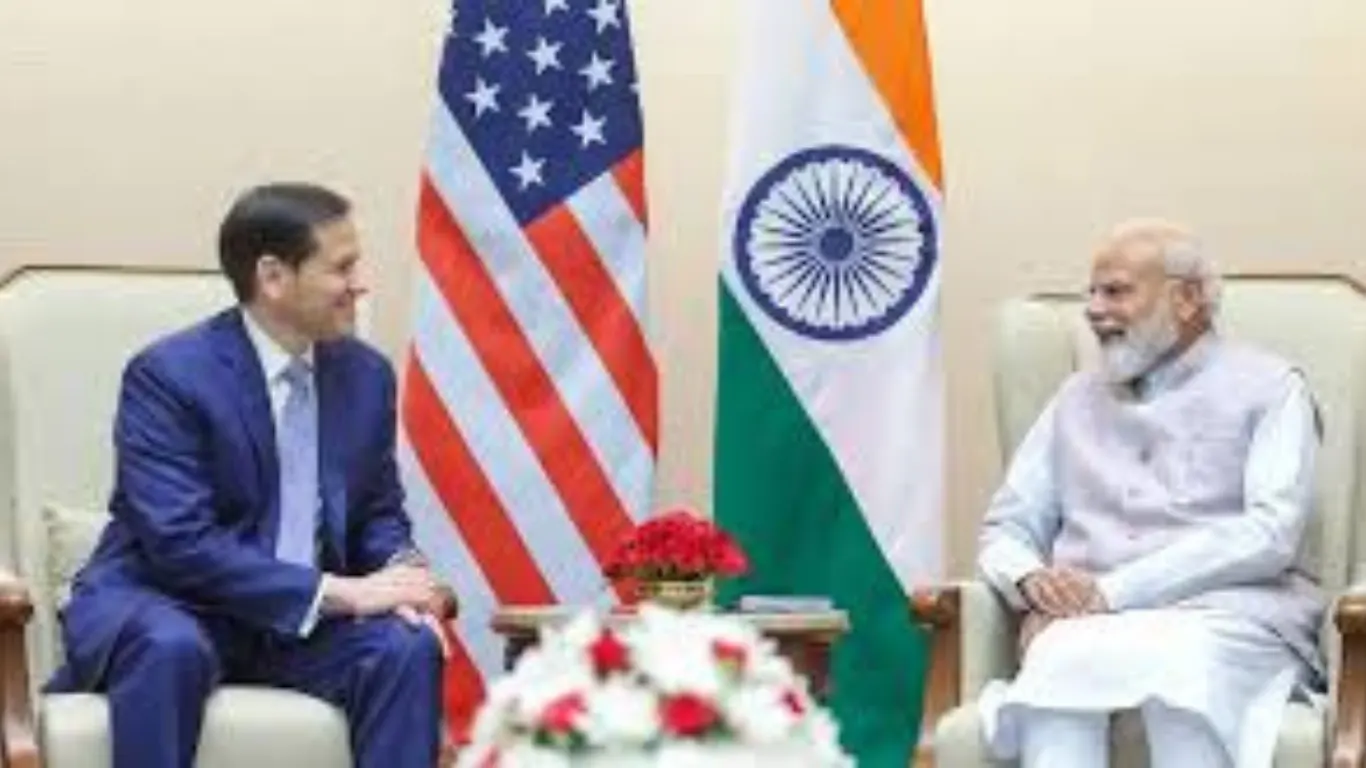
Marco Rubio in India: The High-Stakes Visit That Could Reshape the World's Most Important Diplomatic Partnership
Marco Rubio's India visit was never just a courtesy call. When the US Secretary of State landed in Kolkata on May 23, 2026, it carried the full weight of a relationship in need of repair — and a world watching to see whether Washington and New Delhi could find their footing again.
So what exactly happened, and why should you care?
Why the US-India Relationship Had Hit Rock Bottom
To understand the visit, you need a quick rewind. In April 2025, US-India relations appeared as solid as they had ever been. India had rolled out the red carpet for Vice President JD Vance and his family, a visit that highlighted not just the strength of the bilateral relationship, but also a degree of personal warmth between Prime Minister Narendra Modi and the second Trump administration.
Read More: Four Nations, One Room: What the Quad Foreign Ministers' Meeting in New Delhi Really Signals
Then things unraveled — fast. Trump imposed a 50 percent import tariff on India, among the highest in the world, which included a 25 percent tariff as punishment for India's purchase of Russian oil. No such punitive tariff on Russian oil purchases was applied to China, another large Russian customer.
Trump also drew publicly close to Pakistan's de facto military ruler, Field Marshal Asim Munir — widely reviled in India, which blames Pakistan for the terrorist attack in April 2025 that saw the murder of two dozen Indian tourists and triggered the most recent India-Pakistan military conflict. Analysts at the Council on Foreign Relations described Rubio as going to India in "repair mode." That framing tells you everything.
What Rubio's Four-Day Visit Actually Covered
Rubio took an extended trip to India spanning the cities of Kolkata, Agra, Jaipur, and New Delhi. The itinerary mixed high diplomacy with cultural visits — he toured the Taj Mahal with his wife Jeanette, received a royal welcome at Amer Palace in Jaipur, and visited the Mother Teresa House in Kolkata.
But the real business happened in New Delhi.
In meetings with Indian Prime Minister Narendra Modi and Foreign Minister Subrahmanyam Jaishankar, Rubio stressed cooperation on trade, energy, defense, and maritime security. He described India as one of Washington's most important strategic partners and said he was optimistic the two countries would finalize a bilateral trade deal soon. He also carried a personal invitation. Rubio conveyed an invitation from US President Donald Trump for Modi to visit Washington later this year.
The Quad: Bigger Than Just Two Countries
One reason this visit mattered beyond the bilateral is the Quadrilateral Security Dialogue, or the Quad. Rubio's first official trip to India included talks on Tuesday with foreign ministers from India, Australia, and Japan. The Quad grouping has repeatedly accused China of flexing its military muscles in the South China Sea and aggressively pushing its maritime territorial claims.
Read More: New Flight Seat Rules 2026: 60% Free Seats & Family Seating Guide
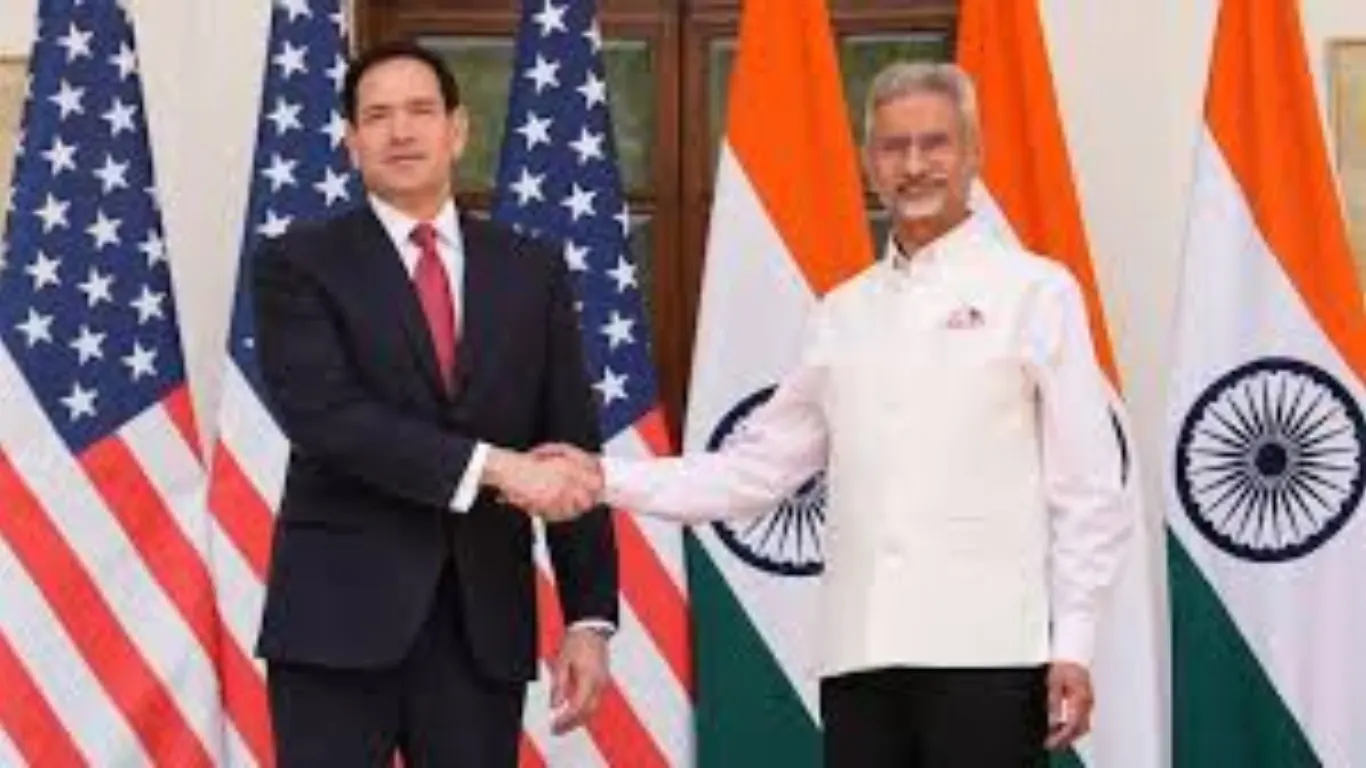
Rubio's meeting with Quad leaders was seen as a sign of the US reaffirming its commitment to the Indo-Pacific region. For India, having the second-ranking US cabinet official show up physically is itself a statement — one directed as much at Beijing as at New Delhi.
Read More: Oil Prices Rise: How US Navy Blockade of Iran Impacts Supply
Trade, Energy, and the $500 Billion Question
The India-US trade deal has been the elephant in every room. Rubio argued that Trump's trade recalibration was part of a broader global effort to rebalance American economic relationships rather than a policy directed specifically at India, saying the two nations were "on the verge of making tremendous progress" toward a new bilateral trade agreement.
On energy, the picture is clearer. Jaishankar said the United States had emerged as a reliable energy source for India. India has significantly ramped up US energy imports — a point both sides pointed to as a sign of deepening economic ties.
Pakistan, Terrorism, and the Uncomfortable Conversations
Here is where the visit got genuinely complicated. Rubio's visit came after months of improving relations between the US and Pakistan, India's arch enemy. Following the Pahalgam attack, India struck nine sites in Pakistan and Pakistan-administered Kashmir with missiles, and Washington had been pressing for de-escalation throughout.
India did not forget that. Rubio had earlier told India: "We have to have relations with a lot of different countries. We see an opportunity to expand our strategic relationship with Pakistan."
Read More: Global Oil Supply: How US-Iran Conflict Impacts Oil Prices
Still, in New Delhi, Rubio stressed that terrorism remained a defining point of convergence between Washington and New Delhi, calling it "one of the great challenges of the 21st century."
What the Visit Signals for Ordinary Indians and Americans
Here is the part that gets lost in the diplomatic noise. Visa delays for Indian professionals were raised directly. Green card backlogs were discussed. Trade tariffs that affect Indian exports affect millions of manufacturing jobs. US energy exports to India shape fuel costs. These are not abstract foreign-policy conversations.
Analysts noted that for India, the visit by one of the senior-most cabinet members of the Trump administration — and a long-time champion of India-US ties — would demonstrate that India remains strategically important to the US.
That reassurance matters for business confidence, for investment decisions, and for the slow grind of bilateral negotiations that affects livelihoods on both sides.
The Honest Takeaway
Rubio's India visit was productive, cautious, and necessary. The two countries moved closer on energy, signaled goodwill on trade, and reinforced the Quad as a counterweight to Chinese influence. But the underlying tensions — tariffs, Pakistan, visas — were acknowledged rather than resolved.
The relationship is too large and too important to let drift. Both sides appear to know that. Whether the political will holds is the question that will answer itself in the months ahead.
Read More: पाकिस्तान स्टॉक एक्सचेंज में 14,000 अंकों का रिकॉर्ड उछाल: KSE-100 में ऐतिहासिक तेजी
Disclaimer: This article is based on information available across the web. Parchar Manch does not take responsibility for its complete accuracy, as the content could not be fully verified.
FAQs
Why did Marco Rubio visit India in May 2026?
Rubio visited to rebuild strained US-India relations, attend the Quad Foreign Ministers meeting, and hold talks on trade, energy, defense, and terrorism with PM Modi and EAM Jaishankar.
What is the Quad, and why does it matter to India?
The Quad is a strategic alliance of the US, India, Australia, and Japan, focused on maintaining a free and open Indo-Pacific region, primarily as a counterbalance to China's growing influence in Asia.
Was a US-India trade deal signed during Rubio's visit?
No formal deal was signed, but Rubio expressed strong optimism that a bilateral trade agreement was close, and both sides discussed resolving tariff disputes.
How did the Pakistan issue affect Rubio's India visit?
India remains wary of the US's improved ties with Pakistan following the 2025 India-Pakistan military conflict. Rubio acknowledged India's concerns while defending Washington's policy of maintaining relations with multiple regional partners.
What did Rubio and Jaishankar agree on regarding energy?
Both sides confirmed that the US has become a reliable energy supplier for India, with India significantly increasing imports of American oil and gas as part of efforts to reduce its trade deficit with the US.
Did Rubio visit any cultural or historical sites in India?
Yes. Rubio visited the Taj Mahal in Agra with his wife, the Amer Fort in Jaipur, and the Mother Teresa House in Kolkata — part of a broader multi-city tour across the country.