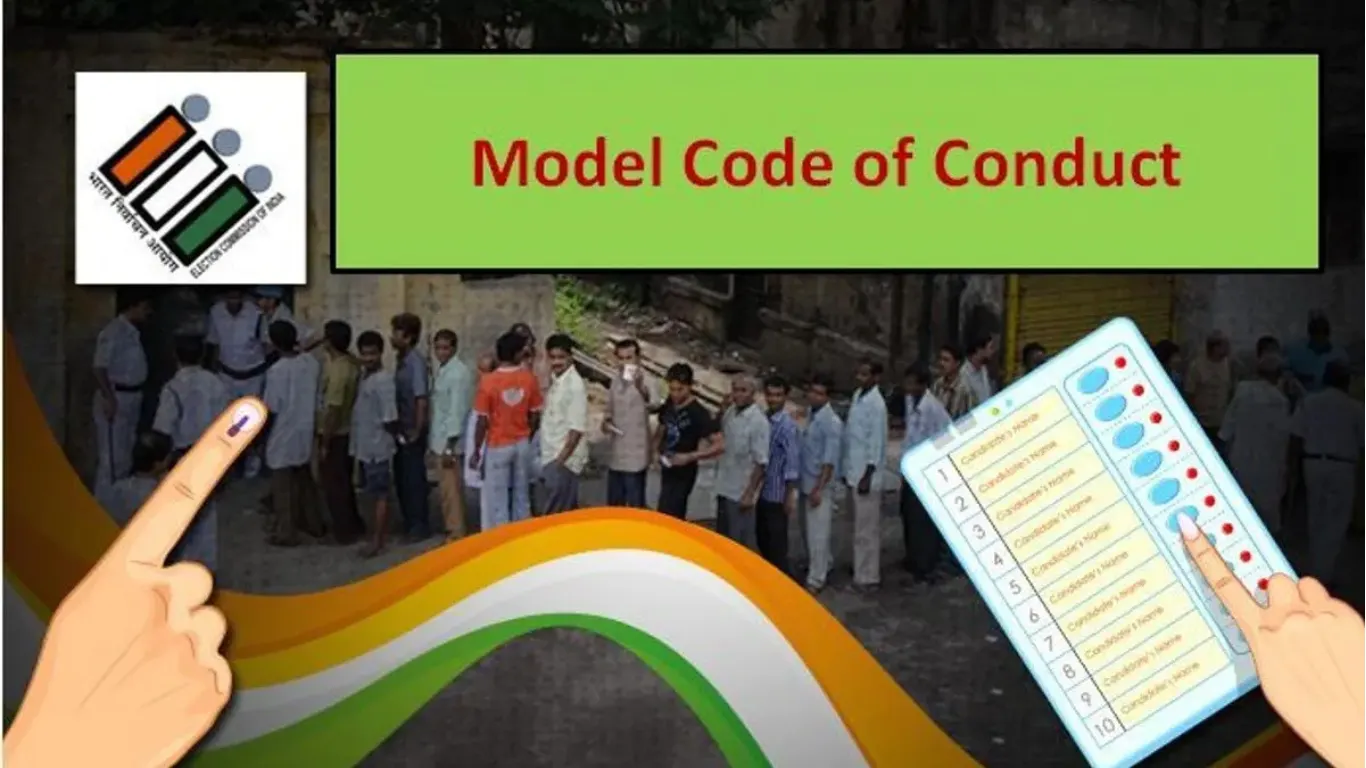
What Is the Model Code of Conduct: Meaning, Rules and Why It Actually Matters in Indian Elections
There's a certain type of silence that hangs over the government offices just when an election is scheduled in India. No new schemes get launched. No ribbon cuttings. There aren't any sudden announcements about free gas cylinders or surprising pay increases. In case you've wondered how this happens, you've found the answer, but without knowing its name. This is what's known as the Model Code of Conduct at work, quietly performing its duties and knowing what constitutes an example Code of Conduct is something that all voters should be aware of, not just journalists or political professionals. This article explains an example Code of Conduct, the reasons it's needed, and the way it is implemented every election year.
Why This Actually Matters to You
Many people read "code of conduct" and put it in the category of dull legal jargon. It's ok. But here's the problem: this rule determines how power is used before you decide to vote. When elections are announced, ministers are not allowed to use government resources to campaign. There are no new welfare programs that can be launched to attract votes. Ministers cannot launch any scheme for the sake of political gain. This is the true meaning behind the codes of conduct and, when you do not understand it, you'll miss the whole point of understanding how Indian elections actually work on the ground, and not only in theory.
If you're a first-time voter, a small-scale business owner who is near a polling place, or anyone who wants to understand the news cycle each election, this idea is more important than you believe. Each time a news station refers to the acceptable guidelines for conduct during debates on prime time, it's because someone has violated one of the rules. This is enough to show how important it is to the way India manages its elections.
What It Really Is, Explained Simply
Consider it as the rules for the cricket game that are announced ahead of the toss. When the umpire announces that the game is over, each team must adhere to the same set of rules regardless of who's more successful in terms of performance or popularity. In the same way, the Model Code of Conduct works in a similar way. It's a set of guidelines issued by the Election Commission of India, a recommendations framework, which was endorsed by the parties themselves and takes effect the moment the elections are announced and remains in effect until the results are announced. If you're still trying to build your mental image of what constitutes the model codes of conduct, the cricket match is the most effective way to remember it.
This isn't a law enacted by Parliament, and this can be a source of confusion for people. There isn't a specific statute to govern it. Its authority is derived on the basis of Article 324 in the Constitution, which gives to the Election Commission the power to oversee, direct and manage elections. The constitutional backing is an integral element of the Election Commission of India guidelines that each party is required to adhere to, which form the legal basis of the wider Election Commission rules and guidelines framework. When people inquire what the model guidelines for conduct are, the truth is that it's more of a moral and administrative agreement as opposed to a strict law; however, violating it could have serious consequences.
How It Works, Step by Step
The mechanism is simpler than they sound when you take it apart. This is actually the practical solution to what constitutes the model of the code of conduct in practice, not only in theory.
The code is activated when the Election Commission announces poll dates and not the moment voting actually commences. This timing issue confuses many people and is among the most frequently sought-after clarifications regarding MCC when it comes to elections. The voters who monitor MCC when they vote closely will often see the difference in tone between official press releases from the government within hours after the announcement.
The second is that it limits the government that is in power specifically. Ministers in the sitting are not able to combine official visits with electoral campaigning. Vehicles, staff and buildings are not able to be used as campaign tools.
Thirdly, it regulates the political parties as well as candidates. Speeches can't appeal to religion or caste opinions. The manifestos, strangely enough, are also scrutinised for statements which appear to be designed solely to bribe voters, rather than serving them in the real sense.
Fourth, this is when MCC is a factor during election time. When MCC is made visible to regular voters, people at polling booths, as well as rallies for candidates, as well as social media posts come under the watch of the Commission. Complaints can be made through the cVIGIL app, and the Commission will respond within a time frame, typically a time of a hundred minutes in the case of serious complaints. The entire monitoring layer is what people envision when they imagine MCC in elections being played out in the field, and this stage gets the most coverage in the news about MCC when elections are in progress during any particular cycle.
After the process of voting is completed, the code is lifted. The government and life are back to normal, and the restrictions associated with MCC for elections gradually fade into the background for the following cycle.
Real World Examples That Make It Click
Some time ago, an official was slapped because he used a helicopter financed by the state's exchequer to attend an event. This is a classic example of blurring official duties with political campaigns, and it's precisely the type of scenario that the law was designed to avoid.
A more common pattern is the announcement of schemes at the last minute, just before the polls are announced, such as free laptops, cash transfers, and a sudden increase in subsidies. If these announcements are made after the code has been activated, they are then delayed or blocked because they're interpreted as an attempt to influence voters, rather than actual policy decisions. These are all typical violations of the model codes of conduct, which is why it's been the case that the Commission has, over time, issued warnings or delayed campaigns and, in some instances, banned candidates from participating for a certain period of time. Reports on election coverage generally refer back to a list of models of codes of conduct violations during the very first week of the campaign; that's a sign of how often the rules are test-driven.
An unspoken example is involving the issue of hate speech, where candidates have been issued show-cause warnings for remarks that were made in a communal setting during rallies. These too are recorded as Model Code of Conduct violations, and recurrence of violations could lead to bans on campaigning in certain constituencies. Anyone who follows the enforcement of the Code of Conduct will be able to see that hate speech cases are often the most prominent in the media more frequently than other scheme or financial violations.
Read more: Election Campaign 2026: Latest Strategies, Manifestos & Voter Outreach Explained
Mistakes People Keep Making, and Why
There's a truth to be acknowledged: even the most experienced political leaders make mistakes from time to time. One of the biggest mistakes is thinking that the code only applies to the opposition parties who keep tabs on the government. The code isn't. It is equally applicable on paper, at the very least, to all parties and candidates.
Another mistake is to think that posts on social media are beyond their reach. They're not. Digital campaigns, political ads, as well as endorsements by influencers are now subject to scrutiny. This has surprised many of the younger candidates who thought that the internet space was somehow different from the formal electoral rules. India is already implementing it.
Many people also confuse the Model Code of Conduct with the Representation of the People Act, believing that they're the same. They're both related, but distinct. The first is a legally enforceable statute, while the second operates more by virtue of moral power and administrative pressure; however, its impact on ground behaviour can be similar to that of the first. Both together form an important part of the larger election rules India is relying on to ensure that the election process remains reliable.
One of the more subtle mistakes, one that journalists too make, is to believe that the code only applies to politicians. Election-related employees of the government, as well as private firms advertising for political causes, are within the scope of the current election rules India implements after polling dates are announced.
Pro Tips That Actually Help
If you're watching an election closely, be sure to watch the dates with care, as the code is in effect from the announcement date but not from the day of the election, which many casual observers do not notice. The timeline alone will answer some of the doubts that people face about the scope of what the model code of conduct applies to and when. If you're a small-scale business owner or a vendor near polling locations, you should know that banners, hoardings and even murals that advertise the candidate's name should be removed when the code has been activated; therefore, don't be shocked by sudden cleaning efforts.
If you truly would like to know a political party's intentions in the election, take a look at what they say before the law takes effect and what happens following. This gap will tell you much more about the party than any campaign document can. It's also worthwhile to bookmark the official Election Commission of India guidelines page in the course of elections, as updates and clarifications are posted quicker than the majority of news media outlets are able to report them.
Closing Thoughts
There's something reassuringly calm about the democratic system that takes a moment, at least for a short time, to ensure that the field is level prior to the millions who cast their ballots. It's the Model Code of Conduct. Model Code of Conduct isn't glamorous, and it's unlikely to make headlines in the same way that scandals are, but it's the structure that stops elections from swaying too much toward the party that holds the majority of power at the time. Knowing an acceptable model code of conduct isn't just an exercise in trivia and is a tiny bit of civic knowledge that will make you a better, more conscious voter next time elections come around. Perhaps that's the true answer to what constitutes a model code of ethics, and not just a simple legal definition, but rather a subtle reminder that fairness during elections requires continuous, thoughtful maintenance.
Read more: How Political Party Developments in 2026 Influence Policy Decisions and Voter Behaviour
FAQs
What is a model code of conduct, in the most basic definition?
It is a set of election-related guidelines that are agreed upon by political parties and enforced by the Election Commission, which restricts the government's ability to misuse its authority and ensures that the campaign is conducted in a fair manner for all candidates. In essence, it is the most straightforward answer to what a model code of conduct is whenever asked casually.
When does the Model Code of Conduct come into force?
It becomes active at the time that the Election Commission announces election dates and is in effect until the entire process for determining results, including the declaration of results, is completed.
Is the Model Code of Conduct legally binding?
Not in the way that a statute of law is. Its authority comes from Article 324 in the Constitution and also from the consensus of political parties, but the Commission may still impose sanctions on violators by imposing warnings, restrictions on campaign participation or sending referrals to the police.
Who is responsible for monitoring model code of conduct infractions?
The Election Commission of India, together with state-level election officials and observers who are deployed to constituencies, is monitoring violations. Citizens are also able to report violations directly via the mobile cVIGIL application, making it simpler than ever before to report violations of the model code of ethics in real-time.
Does a government in session introduce new programs during this time?
Generally, no. New welfare programs or financial announcements that may influence people are generally halted once the code has been activated in the event of pre-approved emergency measures.
Does the code have any effect on social media campaigns?
Yes. Paid political ads as well as influencer content and the social media activities of a party are all subject to the current election guidelines India applies during elections, and this is a particular area in which the rules for elections in India have been tightened in recent years.
What happens when an individual candidate is found to violate it?
Consequences range from formal warnings and restrictions on campaigning to, in extreme cases, the possibility of disqualification or criminal charges, based on the severity of the infraction. Repeated violations of the model code of the candidate are usually subject to greater scrutiny during future elections, too.
What is the best place to find the Election Commission of India regulations?
The Election Commission has the complete text available on its website and provides periodic clarifications every time it updates the Election Commission of India guidelines in advance of an election cycle. The state election offices also show simple versions of guidelines for elections. Indian citizens frequently have questions about.