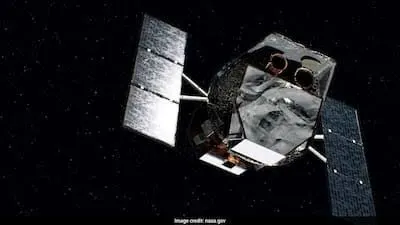
NASA's Swift Observatory Rescue Mission: Inside the Daring Plan to Save a Falling Telescope
There's a satellite up there right now, slowly sinking, and almost nobody noticed until recently. The Swift Observatory, launched back in 2004 on what was supposed to be a two year mission, has spent over two decades doing one job better than anything else in space. Watching for gamma ray bursts. Catching cosmic explosions the instant they happen. Now it's falling, and NASA is attempting something nobody has tried before to stop that fall.
Why This Actually Matters
This isn't just about one old telescope. It's about whether space agencies can keep aging, expensive hardware alive instead of letting it burn up and starting over from scratch. Swift cost around 250 million dollars to build, and over 500 million across its lifetime. Replacing it isn't realistic, NASA's own science chief Nicky Fox has said the agency simply doesn't have the budget for a do-over. So this rescue is a test case. If it works, it changes how every aging satellite gets treated going forward.
Read More: India's AI Problem: Why the World's Fastest-Growing Digital Nation Is Struggling to Keep Up
What's Actually Happening Up There
Here's the simple version. Swift orbits at around 360 kilometers, lower than it should be. Increased solar activity, basically the sun throwing more energy at Earth's atmosphere than expected, has caused that atmosphere to swell slightly and create extra drag on the satellite. Drag pulls things down. Slowly, then faster. NASA realized the orbit was decaying quicker than predicted, and that Swift could plunge into the atmosphere and burn up before the end of 2026 if nothing changed.
So they hired a company called Katalyst Space Technologies to build a rescue spacecraft. Think of it like a tow truck, except this tow truck has to chase down a moving target in space, grab it without a single dock or handle to hold onto, and then push it higher for weeks straight.
How the Rescue Mission Works
The rescue craft is called LINK, roughly the size of a small refrigerator, with a 12 meter solar wingspan and three robotic arms reaching just over a meter. It launched aboard a Pegasus XL rocket, air launched from an airplane near Kwajalein Atoll in the Pacific. Once in orbit, here's what happens next.
LINK spends one to two weeks closing the distance to Swift.
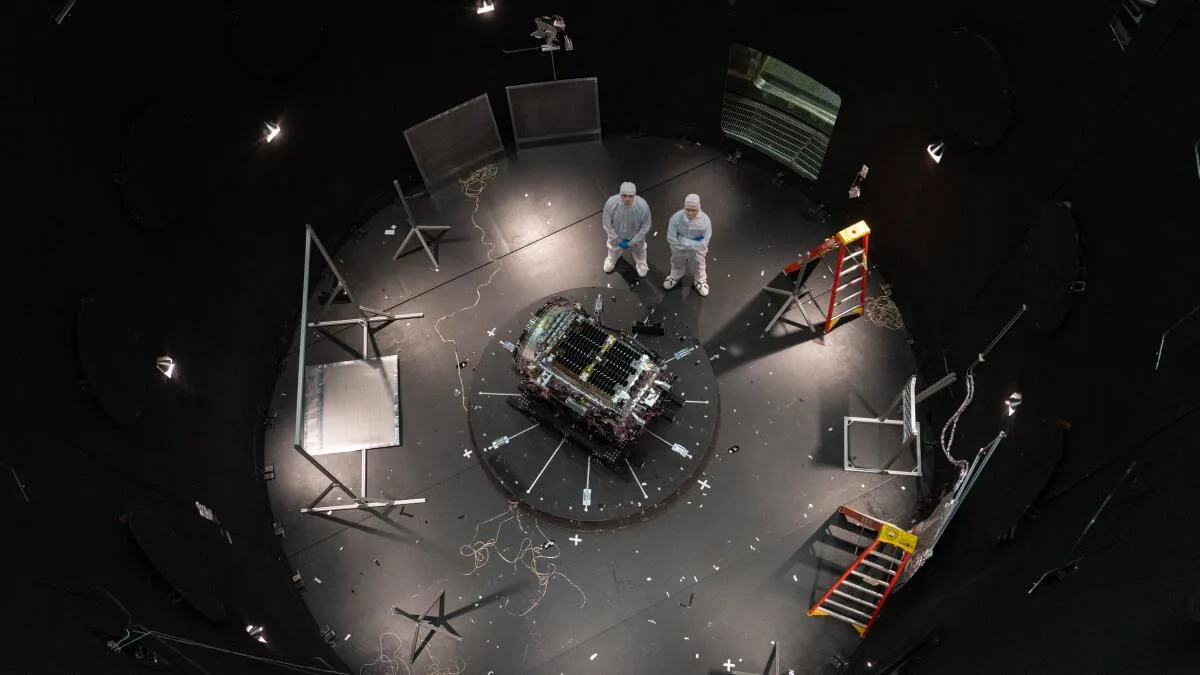
As it approaches, it photographs the telescope from multiple angles so engineers on the ground can check for any damage from debris or micrometeorites before attempting a grab. Then comes the tricky part, LINK uses its three arms to physically seize Swift, something no spacecraft has done to a working scientific satellite before. Once it has a firm hold, LINK fires its thrusters gradually over more than six weeks, lifting Swift's orbit from roughly 360 kilometers up to about 600 kilometers, a much safer altitude.
Real-World Stakes
If Swift drops below 300 kilometers, it's gone, that's described as the point of no return. NASA estimates that threshold could be reached by October. No other observatory, not Hubble, not James Webb, can react to a gamma ray burst as fast as Swift can. Losing it means losing NASA's fastest cosmic first responder.
Mistakes People Keep Making When Talking About This
People assume this is a routine satellite repair. It isn't. Nobody has robotically captured and reboosted a working science satellite like this before. There have been demonstration missions, sure, but nothing at this scale, with this much riding on it.
Pro Tips for Following the Story
Watch for updates around the capture phase, that's the riskiest part, not the launch itself. And keep an eye on Hubble. At 36 years old and also losing altitude, Hubble could get a similar boost from Katalyst as early as 2028 if this mission proves the concept works.
Closing Thoughts
There's something quietly moving about an aging machine getting a second chance instead of a fiery goodbye. Whether LINK succeeds or not, NASA has already proven something simpler. We don't have to just let things fall anymore.
Read More: Madhur Virli Rape Joke Controversy: Why India's Stand-Up Comedy Scene Is in Crisis Again
Disclaimer: This article is based on information available across the web. Parchar Manch does not take responsibility for its complete accuracy, as the content could not be fully verified.
FAQs
What is the Swift Observatory?
A NASA space telescope launched in 2004 that detects gamma ray bursts and other sudden cosmic explosions.
Why is it falling?
Stronger than expected solar activity has increased atmospheric drag, pulling its orbit lower than planned.
What is LINK?
A robotic rescue spacecraft built by Katalyst Space Technologies designed to capture Swift and boost its orbit.
When could Swift be lost if nothing is done?
NASA estimates around October 2026.
Could other telescopes get this treatment?
Yes, Hubble is being considered for a similar orbit boost as early as 2028.