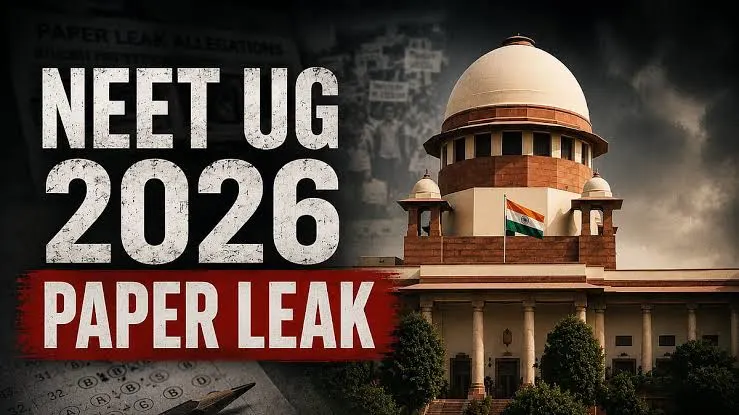
NEET Paper Leak Row Reaches Supreme Court: What Every Student and Parent Needs to Know Right Now
There is a particular kind of silence that falls over a house when a medical aspirant's family hears the words "paper leak" again. Not shock, exactly. More like fatigue mixed with disbelief. That is roughly where lakhs of families across India found themselves this year, when the NEET paper leak controversy of 2026 landed, once again, at the doorstep of the Supreme Court.
This is not a small administrative hiccup. It is a fight over trust, over an exam that decides who gets to become a doctor in this country, and honestly, it is a story that keeps repeating itself with an almost eerie familiarity.
Why This Actually Matters
Here is the thing people outside the exam world often miss. NEET is not just another entrance test. It is the single gateway for over twenty two million students trying to get into MBBS, BDS, and AYUSH courses. When the NEET UG 2026 exam held on May 3 got cancelled following credible reports of question paper leaks, it did not just inconvenience a few hundred candidates. It threw the academic calendar of an entire generation into uncertainty.
If you are a student, a parent, or even someone who just cares about fair competition in India's education system, this NEET paper leak matter should worry you. Because if the same National Testing Agency, the NTA, keeps failing to secure one of the country's most high stakes exams, what does that say about the system meant to protect merit?
Read More: NEET-UG 2026 Results Are Out, Here Is Everything Students Actually Need to Know
What It Really Is, Explained Simply
Let me break this down the way I would to a friend who has never followed exam news. The NEET paper leak issue in 2026 involves allegations that the actual question paper for the May 3 exam overlapped, almost suspiciously closely, with guess papers that were already circulating before the test even began. Investigators reportedly found around one hundred and forty questions matching leaked material, with some estimates suggesting sixty to seventy percent of the paper had been compromised.
Think of it like a locked exam vault whose key somehow got copied and sold, allegedly for lakhs of rupees, to a network of middlemen before the vault was even opened. That is the scale of what agencies are alleging happened.
How It Works, Step by Step
So how did this actually unfold, and how does a case like this move through the system? Roughly like this.
First, the exam is conducted. Then reports of leaks surface, usually from state police units, in this case Rajasthan's Special Operations Group. Next, central agencies step in, the government reviews the evidence, and if it is serious enough, the exam itself gets cancelled. That is exactly what happened here. NTA officially cancelled NEET UG 2026 on May 12, and the case was handed to the CBI for a fuller investigation.
After that, aggrieved students, doctors' associations, and advocacy groups start filing petitions in the Supreme Court. Some ask for a fresh exam. Others go further, demanding structural reform, or even dissolution of the NTA itself. The court then hears these pleas in batches, often adjourning and asking the government to respond with concrete safeguards, rather than one time fixes.
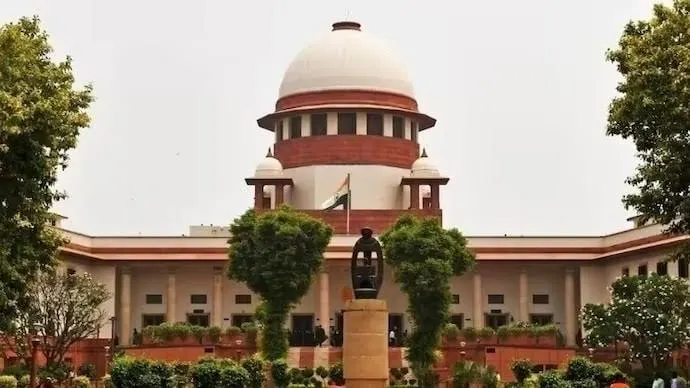
That is precisely where things stand now. The Supreme Court, hearing this batch of NEET paper leak petitions, has been notably blunt about the NTA's track record. It told the Centre it wants permanent institutional reform, not what it called "adhocism," referring to last minute measures like flying in question papers by airforce transport during the crisis.
Real World Examples
Take the re-exam angle. NTA announced the NEET UG 2026 re-exam would be held on June 21, in offline pen and paper mode, with revised shift timings. Students did not need to reapply, their earlier submitted details carried forward. That single decision affected the daily lives of millions, shifting study plans, travel arrangements, and mental health, almost overnight.
Or consider the protests. Students marched to Parliament in what was dubbed the "Chalo Sansad" demonstration on July 20, and gatherings continued at Jantar Mantar. Some of these protests reportedly saw heavy handed police action, which is now itself the subject of separate petitions before the Supreme Court, scheduled to be heard on July 27.
Read More: Delhi High Court Police Force Allegations: What The CJP Protest Case Is Really About
Mistakes People Keep Making, And Why
A common mistake, understandably, is assuming that once an exam is cancelled and a re-exam is announced, the matter is resolved. It is not. The legal process around a NEET paper leak case can run for months, sometimes years, as we saw with the 2024 controversy which dragged through multiple Supreme Court hearings before the court eventually declined to order a fresh exam.
Another mistake is treating every petition as identical. Some seek compensation or a re-test. Others, like the ones filed by the United Doctors Front, aim squarely at systemic NTA reform. Lumping these together in casual conversation, or in news consumption, blurs what is actually being argued in court.
Pro Tips That Actually Help
If you are tracking this case, follow the Solicitor General's submissions closely, since government assurances often hint at what reforms are actually coming, things like biometric verification, computer based testing shifts, or stricter data protection for question papers. Also, do not ignore adjournment dates. The current batch has been pushed to the first week of August, and that is when real clarity on NTA's future structure may emerge.
Closing Thoughts
There is something quietly exhausting about watching this cycle repeat, 2021, 2024, now 2026, each time with the same ingredients: leaked papers, cancelled exams, student protests, and a Supreme Court asking why nothing permanent ever gets fixed. Maybe this time the court's insistence on institutional change, rather than emergency patchwork, will actually stick. Maybe not. Either way, the students waiting on the other side of this NEET paper leak saga deserve better than another round of adhoc solutions.
FAQs
What is the current status of the NEET paper leak case in the Supreme Court?
The Supreme Court adjourned the main batch of petitions seeking NTA reforms and dissolution to the first week of August 2026, while separate pleas on police action during protests are listed for July 27.
Why was NEET UG 2026 cancelled?
NTA cancelled the exam held on May 3, 2026, after investigations suggested overlaps between leaked guess papers and the actual question paper, prompting a CBI probe.
When was the NEET UG 2026 re-exam held?
The re-exam was conducted on June 21, 2026, in offline mode with revised shift timings.
Who is asking for the NTA to be dissolved?
Petitioners including the United Doctors Front and other stakeholder groups have sought reforms and, in some pleas, complete restructuring or dissolution of the National Testing Agency.
Is this the first time NEET has faced a paper leak controversy?
No. Similar allegations surfaced in 2021 and, more prominently, in 2024, when the Supreme Court eventually declined to cancel the exam despite finding the paper leak was not systemic enough to affect the entire test.