One Year Since the Ahmedabad Tragedy: Why the Air India Flight AI171 Crash Investigation Is Still Not Over
Thirty-two seconds. That is all the time there was between the moment Air India Flight AI171 lifted off from Ahmedabad and the moment it was gone.
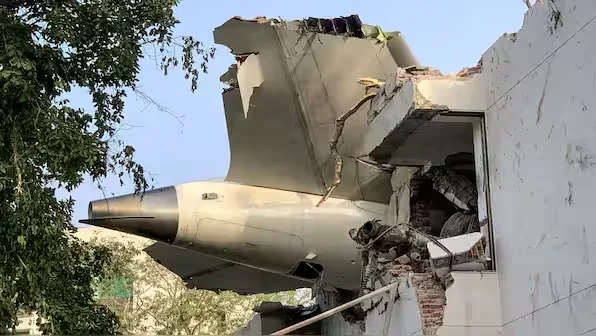
Today marks exactly one year since that morning June 12, 2025 when a Boeing 787-8 Dreamliner bound for London Gatwick crashed into the BJ Medical College hostel complex just minutes after departure. The Boeing 787 Dreamliner operating to London's Gatwick Airport crashed just 32 seconds after takeoff. The tragedy claimed the lives of 241 of the 242 people on board and 19 people on the ground. The total death toll stands at 260 making it, by most accounts, India's deadliest aviation accident in nearly three decades.
And yet, 365 days later, nobody can officially tell you why it happened.
What We Know About the AI171 Crash So Far
The basic sequence of events is no longer a mystery. A preliminary report released last year showed the 787's engine fuel control switches moved almost simultaneously from "RUN" to "CUTOFF," starving both engines of fuel shortly after the flight took off.
The report found that within seconds of liftoff, both engine fuel control switches transitioned from "RUN" to "CUTOFF" one after another, with a one-second gap between them, cutting off fuel supply and causing the engines to lose thrust. With both engines losing power simultaneously, the aircraft had no chance of recovery.
But knowing the sequence is not the same as knowing the cause. And that is the part that still haunts this investigation.
Read More: “Our Customers Are in America”: Why Opendoor Shut Its India Operations and Fired 250 Employees
The Question That Keeps Everyone Awake
Was it pilot action? A mechanical failure? An electronic fault?
What remains unresolved nearly one year later is not whether fuel supply to the engines was interrupted. Investigators have established the sequence of events that caused the aircraft to lose power but have yet to determine publicly why it happened.
The pilots at the controls were highly experienced. Captain Sumeet Sabharwal, 56, was one of Air India's most experienced pilots, with more than 15,600 flying hours, including over 8,500 hours on the Boeing 787 Dreamliner. His co-pilot, 32-year-old Clive Kunder, had accumulated more than 3,400 flying hours after joining Air India in 2017. Both pilots held valid certifications and were fully qualified to operate the Boeing 787.
This is exactly why the investigation remains so contested. The pilots' union has pushed back hard against speculation. The Federation of Indian Pilots union has previously pushed for investigators to seek more technical data on the plane from Boeing and Air India to allow for a "rebuttal of the pilot suicide theory being explored by the AAIB."
Why the Final Report Is Delayed
India's Aircraft Accident Investigation Bureau (AAIB) is expected to release an interim investigation report on Friday, the first year anniversary. The investigative body has missed the one-year deadline for releasing its final investigation report.
The primary reason for the delay? The engines.
The final report may be delayed by about three months. The delay is linked to unfinished analysis of the aircraft's GE Aerospace engines and related engine-management electronics. Investigators have carried out work in France, and further studies are continuing in the United States.
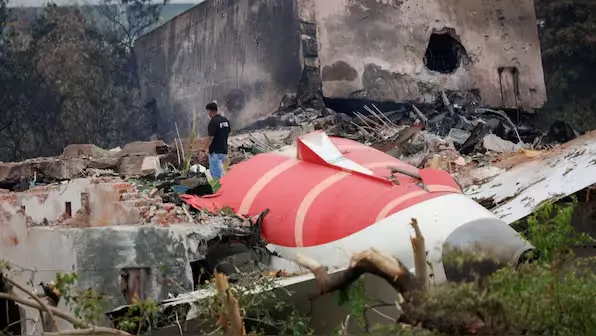
Under international investigation standards, India's AAIB is responsible for the AI171 report, with participation from other parties including the US National Transportation Safety Board (NTSB), Boeing, GE Aerospace and the Federal Aviation Administration (FAA). This multi-country structure, while thorough, adds layers of coordination that slow things down.
According to a retired official who has taken part in such investigations, the process itself is highly structured and technical. "Investigators reconstruct the sequence through flight data recorder analysis, cockpit voice recorder analysis, component testing, maintenance record examination, human factors assessment, simulator-based reconstruction, operational reviews and technical evaluation of systems that may have contributed to the crash."
It is exhaustive work. It is also, frustratingly, slow.
The Human Cost Behind the Numbers
Victims' families have not been waiting quietly. Memorial events held in Ahmedabad and in other cities connected to the victims have emphasized both remembrance and a call for accountability. Public statements from community groups and professional associations representing medical students and aviation workers have urged that the crash not be treated as an isolated catastrophe but as a catalyst for lasting improvements in safety and support systems.
The sole survivor of AI171 has also spoken publicly, demanding honest answers from investigators. The families of those killed on the ground — students living in the BJ Medical College hostel have been an often-overlooked part of this grief. Nineteen of them never even boarded a plane.
A Supreme Court bench headed by Chief Justice Surya Kant accepted the government's plea for an extended deadline during proceedings on February 11, 2026. That deadline has now also passed. The court's patience, like that of the families, is wearing thin.
What Comes Next
The final report, when it is released, is expected to address the fuel cutoff sequence, engine performance, aircraft systems data, cockpit voice recorder evidence and any maintenance or technical factors that may have contributed to the crash.
AI171 involved the first fatal hull-loss accident in the Boeing 787 Dreamliner programme since the aircraft entered commercial service in 2011. That fact alone makes this investigation significant far beyond India's borders. Airlines worldwide that operate the 787 are watching. Regulators are watching. Boeing is watching.
As of the first anniversary, there is still only an interim public picture of what happened in the 32 seconds between liftoff and impact. The final report from investigators is expected to provide a detailed reconstruction of the flight, a breakdown of causal factors and specific recommendations intended to prevent similar tragedies.
Until then, 260 people remain uncounted for in the only way that truly matters an official answer to why they died.
Read More: When Missiles Move Markets: Why Indian Stocks Fell as US-Iran Tensions Reignited
Disclaimer: This article is based on information available across the web. Parchar Manch does not take responsibility for its complete accuracy, as the content could not be fully verified.
FAQs
What was Air India Flight AI171?
Air India AI171 was the Ahmedabad-to-London-bound flight that crashed into a residential neighbourhood on June 12, 2025, claiming the lives of 241 people on board and 19 people on the ground.
What caused the AI171 crash?
The definitive cause has not been established yet. A preliminary report showed the 787's engine fuel control switches moved almost simultaneously from "RUN" to "CUTOFF," starving both engines of fuel. The full reason for this switch movement remains under investigation.
Who is investigating the Air India crash?
India's AAIB is responsible for the AI171 report, with participation from the US National Transportation Safety Board (NTSB), Boeing, GE Aerospace and the Federal Aviation Administration (FAA).
Why is the final crash report delayed?
The delay is linked to unfinished analysis of the aircraft's GE Aerospace engines and related engine-management electronics, with work being carried out in France and the United States.
Did anyone survive Flight AI171?
Yes. One passenger survived the crash. The tragedy claimed the lives of 241 of the 242 people on board and 19 people on the ground. The sole survivor has since called for full transparency in the investigation.
Was this the first Boeing 787 crash?
Yes. AI171 involved the first fatal hull-loss accident in the Boeing 787 Dreamliner programme since the aircraft entered commercial service in 2011.