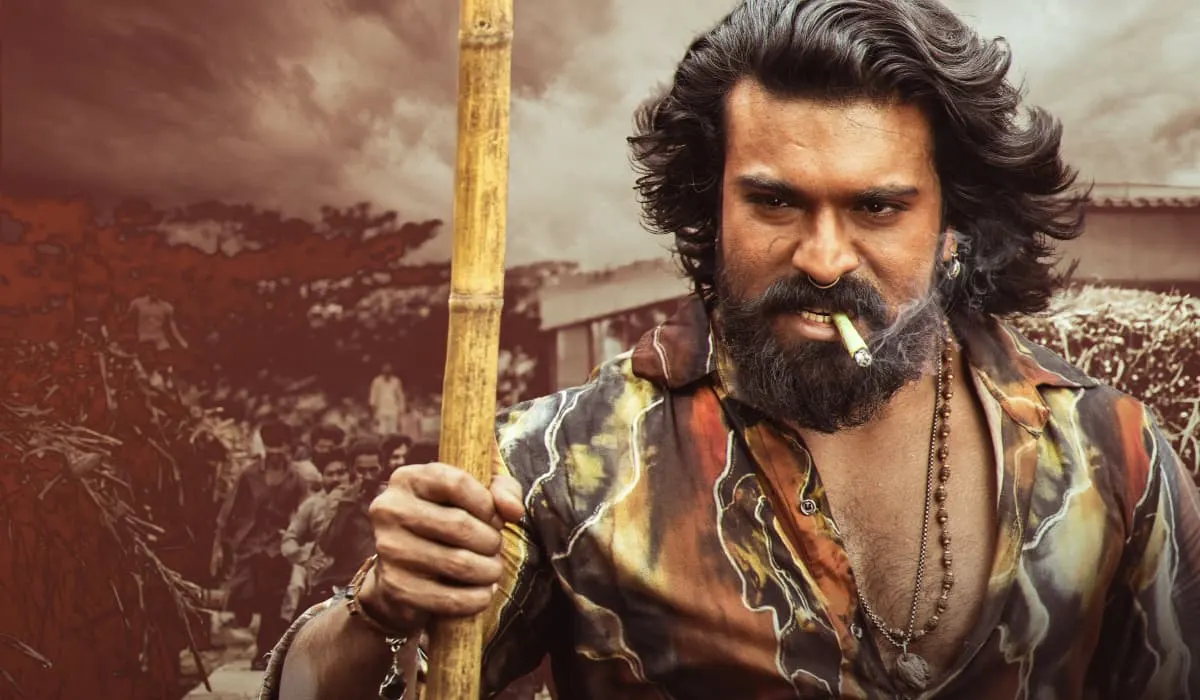
Peddi Review: Ram Charan's Most Ambitious Performance Arrives With a Mixed Verdict
Ram Charan has spent the last few years carrying the weight of expectations that would crush most actors. After the global phenomenon of RRR, every subsequent release has been measured against an impossible benchmark. Two setbacks in a row. And now, on June 4, 2026, Peddi finally arrived in theatres carrying more pressure than almost any Telugu film this decade.
The verdict is honest: it is a film that rises and falls on the shoulders of one man. And that man delivers.
Why Peddi Matters Beyond the Box Office
Peddi is not just another big-budget Tollywood release. This is Buchi Babu Sana's second directorial outing after his critically acclaimed debut Uppena, this time scaled up massively with Ram Charan in the lead. The budget sits at Rs 350 crore. The cast includes Shiva Rajkumar, Jagapathi Babu, Janhvi Kapoor, Divyenndu Sharma, and Boman Irani. The music is by A.R. Rahman. Cinematography by Rathnavelu ISC.
On paper, this is a film that should have had no weak spots. On screen, it is more complicated than that and worth understanding properly before you decide whether to watch it.
What Peddi Is Actually About
The story is set in the 1990s in Vizianagaram district, Andhra Pradesh. As of 1996, there were reportedly around 18,000 villages in India with no official name — no voter card, no railway station, no identity on the map. Peddi's village is one of them.
Peddi (Ram Charan) is a cricketer-for-hire, a man who plays for whoever pays him. He is a gifted athlete in a community that has never been formally recognised by the state. He falls for Achiyamma (Janhvi Kapoor), a local girl whose father is contesting elections against a powerful rival's family. After Peddi defends her from an attack by Rambujji (Divyenndu), the son of a wealthy patriarch, he ends up in serious danger.
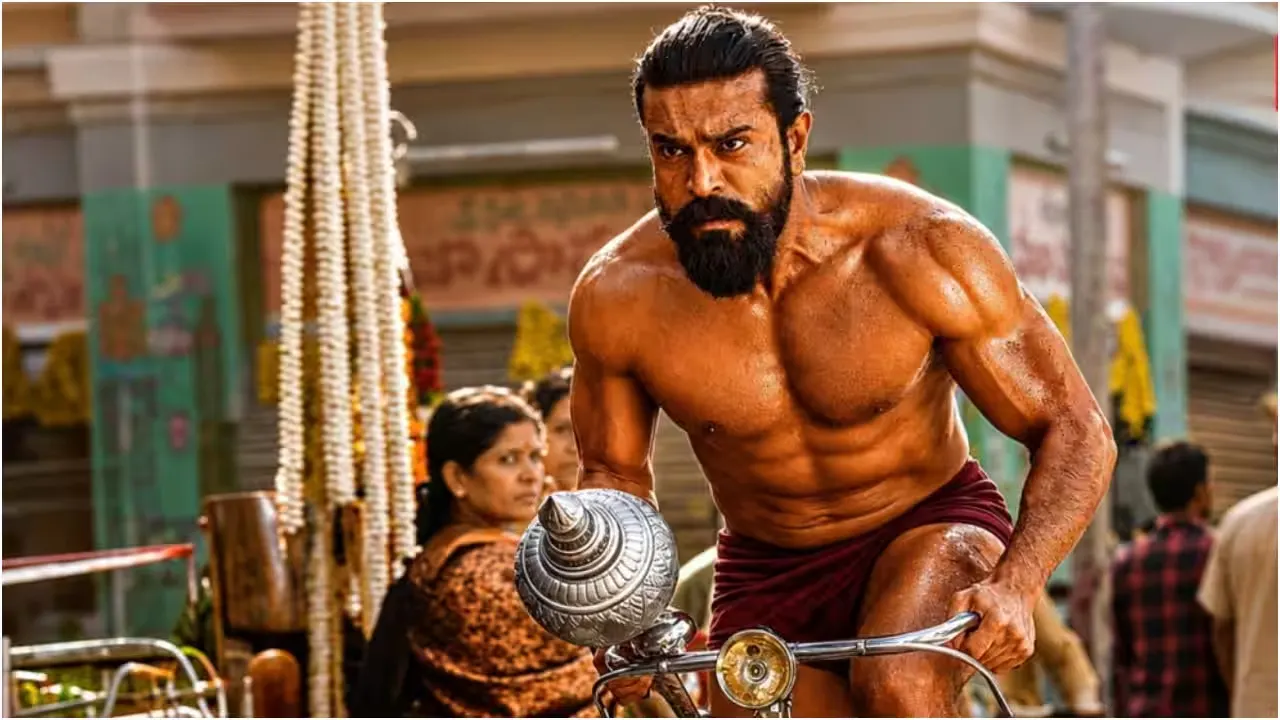
That is when the film pivots. Gournaidu (Shiva Rajkumar), who runs a wrestling akhada nearby, spots Peddi's athletic talent and asks him to train in wrestling. Peddi resists at first. But eventually, he understands something deeper — that sport can be his village's path to recognition. The rest of the film follows his fight, through multiple sports, to earn an identity for his people.
The premise is social and emotional at its core. This is not a standard sports film. It uses sport as a lens to examine something far more painful: what it means to exist without being seen by your own country.
Ram Charan's Performance Is the Film's Spine
Every major review agrees on this much. Ram Charan delivers what critics are calling his best performance to date. His physical transformation for the role is visible and demanding. The emotional range he shows, especially in the pre-climax and climax portions, lands with real weight.
The film's most powerful stretch — roughly the final 20 minutes — works almost entirely because of him. His portrayal of Peddi's quiet desperation and eventual resolve is the kind of performance that stays with you after the credits roll.
Read More: From a Beijing Apartment to $92.8 Billion: How Zhang Yiming Just Overtook Mukesh Ambani
What Works, and What Does Not
The cricket and wrestling sequences are handled with genuine craft. Cinematographer Rathnavelu captures the sports episodes with flair, making them feel kinetic and grounded at the same time. The period production design authentically recreates the 1990s Vizianagaram setting.
The supporting cast brings weight where they are used well. Jagapathi Babu, in a role completely unlike his ruthless turn in Rangasthalam, plays a villager fighting for his community and brings emotional texture to the narrative. Shiva Rajkumar commands the screen in every scene he is in.
The problems sit in the writing. Janhvi Kapoor's role is significantly underwritten — largely confined to songs and a romantic subplot that never fully connects with the main story. Several emotional sequences in both halves of the film feel less powerful than the script intended, partly because of pacing issues and partly because of predictable storytelling patterns. The film runs 189 minutes, and the editing does not always justify that runtime.
AR Rahman's music is atmospheric more than chart-topping. It serves the film's mood without producing standout moments. The special song featuring Shruti Haasan feels oddly placed within the narrative.
Closing Thoughts
Peddi is the kind of film that frustrates because you can see exactly what it was trying to be. The social core is powerful. The central performance is exceptional. But a movie this ambitious — Rs 350 crore, a two-hour-fifty-minute canvas, a story about nameless villages fighting for identity — needed tighter writing to match its emotional scope.
What you get is a film that earns your respect even when it loses your patience. That is not a small thing.
Disclaimer: This article is based on information available across the web. Parchar Manch does not take responsibility for its complete accuracy, as the content could not be fully verified.
FAQs
What is the story of Peddi?
Set in 1990s Vizianagaram, Peddi follows a gifted cricketer from a village with no official name who uses sport to fight for his community's recognition and identity.
Who is in the cast of Peddi?
The film stars Ram Charan, Janhvi Kapoor, Shiva Rajkumar, Jagapathi Babu, Divyenndu Sharma, and Boman Irani, with a special appearance by Shruti Haasan.
Who directed Peddi?
Peddi is directed by Buchi Babu Sana, who previously made the acclaimed Telugu film Uppena.
What is the runtime and rating of Peddi?
Peddi has a runtime of 189 minutes (just over three hours) and carries a U/A certificate. Most critics have rated it around 3 to 3.25 out of 5.
Is Peddi worth watching?
Yes, primarily for Ram Charan's standout performance and the emotionally powerful climax. However, viewers should be prepared for pacing issues in both halves and an underwritten female lead.
What language is Peddi in?
Peddi is a Telugu-language film that released on June 4, 2026. A Hindi dubbed version is also in release, though early reports suggest it may struggle to find wide audiences in non-Telugu markets.