
Satya Nadella Wants Cheaper AI Models and Less Power in Fewer Hands — Here Is Why That Changes Everything
There is something striking about the CEO of one of the world's most powerful technology companies sitting down with a newspaper and saying, essentially, that the industry he is part of is getting dangerously out of hand.
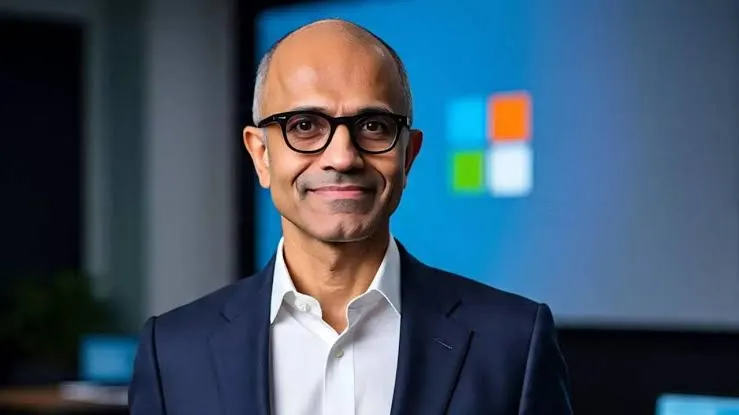
That is what happened on June 21, 2026, when Satya Nadella, chief executive of Microsoft, gave a wide-ranging interview to The Wall Street Journal. His message was pointed: cheap AI models, broader user control, and a sharp pullback from the kind of unchecked consolidation that is letting a handful of companies define the future of how the world works and thinks.
It landed because it was unexpected. And because it is true.
Why the Call for Cheaper AI Models Is Not Just Talk
When a company like Microsoft pushes for lower AI costs, there is always a reasonable question lurking underneath. Is this genuine, or is it competitive positioning dressed up as principle?
The answer here is: both, and that actually makes it more interesting.
As of mid-2026, three companies, OpenAI, Google, and Anthropic, account for over 80 percent of the large language model inference market. Training a single frontier model can cost north of $500 million. When the entry price for building competitive AI is half a billion dollars, the "small club" Nadella warned about is not a metaphor. It is a structural reality.
Nadella said, directly, that you cannot hand the world's curiosity to a handful of companies and call it progress. He added that you cannot tell everyone that white-collar jobs are gone, describe AI as a potential weapon, and then demand unlimited resources to build more data centers. That is a fairly blunt challenge to the kind of existential framing that companies like Anthropic and OpenAI have used to justify their scale.
What Microsoft Is Actually Doing, Not Just Saying
Nadella's comments are not purely philosophical. Microsoft has already begun rolling out low-cost AI models designed to reduce the bills enterprises pay for AI inference. Its Copilot product line, including Copilot Cowork, now allows users to choose between different AI models for different tasks rather than being locked into one expensive frontier system.
The company is also reportedly considering hosting DeepSeek, the lower-cost Chinese AI model, on its Azure cloud infrastructure. That decision, if it happens, would signal that cost pressures now outweigh loyalty to incumbent partners. It is a significant signal.
What Nadella is describing is a pivot from model dependency to platform neutrality. Microsoft does not need to win the race to build the most powerful model. It already owns the enterprise infrastructure, through Azure, Office, Teams, and GitHub, where AI gets deployed at scale. If AI models become more interchangeable and less expensive, Microsoft benefits from being the neutral layer that makes them all accessible.
Read More: The Iran-US Peace Deal Is Almost Here — But Israel's War in Lebanon Could Still Unravel Everything
The Argument About Jobs That Actually Matters
One part of Nadella's interview that deserves more attention than it has received is his position on work and AI and employment.
Rather than predicting mass job loss, which has become a familiar posture from some AI executives, he said something more grounded: companies need to redesign workflows where humans and AI work together more effectively. His framing was that AI is a knowledge engine, not a replacement engine. The differentiation in the AI era, he argued, will come from the unique knowledge and expertise of people inside organizations, not from whoever has the biggest model.
Disclaimer: This article is based on information available across the web. Parchar Manch does not take responsibility for its complete accuracy, as the content could not be fully verified.
That is a meaningfully different message than "half of entry-level jobs will disappear by 2029," which is the kind of prediction that, regardless of whether it proves accurate, tends to generate anxiety without offering a path forward.
Nadella described this as earning "social permission." AI companies need to demonstrate that the technology reorganizes and elevates work rather than simply eliminating it. Without that trust, the public and regulatory pressure will only intensify.
Read More: From a Beijing Apartment to $92.8 Billion: How Zhang Yiming Just Overtook Mukesh Ambani
What This Means If You Are a Business Using AI Right Now
For enterprise customers, the immediate takeaway from Nadella's positioning is practical: AI model choice is becoming a real option, not a theoretical one. Companies that have built deep dependencies on a single expensive frontier model may want to begin exploring whether multi-model strategies make more sense for their workflows and their costs.
Microsoft's push toward model interoperability inside Copilot tools is a direct response to what enterprise buyers have been asking for: the ability to pick the right model for the right task at the right price, rather than defaulting to the most capable and most expensive option for everything.
Closing Thoughts
Nadella's Wall Street Journal interview is not the kind of thing that typically moves markets or generates headlines about product launches. But it is the kind of statement that tends to look prescient in hindsight.
AI democratization is either the direction the industry takes on its own, or the direction regulators and public pressure eventually force it toward. Nadella is betting that getting there first, with lower-cost models and genuine user control, is the smarter long game. Whether that turns out to be strategy or necessity may be the more interesting question to revisit a year from now.
Disclaimer: This article is based on information available across the web. Parchar Manch does not take responsibility for its complete accuracy, as the content could not be fully verified.
FAQs
What did Satya Nadella say about AI models in his recent interview?
In a June 2026 Wall Street Journal interview, Nadella called for cheaper AI models, greater user control, and a pushback against the consolidation of AI power among a small number of frontier model developers. He argued that the public would not accept a world where only a handful of companies control the AI systems shaping human productivity.
Which companies was Nadella criticizing without naming?
While Nadella did not name specific companies, his remarks were widely understood as directed at OpenAI, Google, and Anthropic, which collectively account for over 80 percent of the large language model inference market as of mid-2026.
What is Microsoft doing to make AI more affordable?
Microsoft has rolled out low-cost AI models and updated its Copilot tools to offer multi-model choice, allowing users to select from different AI systems for different tasks. The company is also considering hosting DeepSeek, a lower-cost AI model, on its Azure infrastructure.
Does Nadella think AI will eliminate jobs?
No. Nadella pushed back on AI doom narratives around job losses, arguing that companies should redesign workflows so that humans and AI work together more effectively. He framed AI as a knowledge engine that enhances human expertise rather than a replacement for workers.
What is AI democratization and why does it matter?
AI democratization refers to making AI technology accessible and affordable to a wider range of businesses, developers, and users rather than concentrating its benefits in the hands of a few large companies. Nadella argued this is essential for building public trust in AI and for ensuring the technology delivers broad societal benefits.
What is the multi-model AI strategy Microsoft is pursuing?
Microsoft is building its Copilot products to allow customers to choose from multiple AI models rather than relying on a single expensive frontier system. This gives enterprises more flexibility, control over costs, and the ability to match AI capabilities to specific tasks within their existing cloud and software infrastructure.