Siddaramaiah Steps Down: Why DK Shivakumar’s Rise Matters in Karnataka Politics
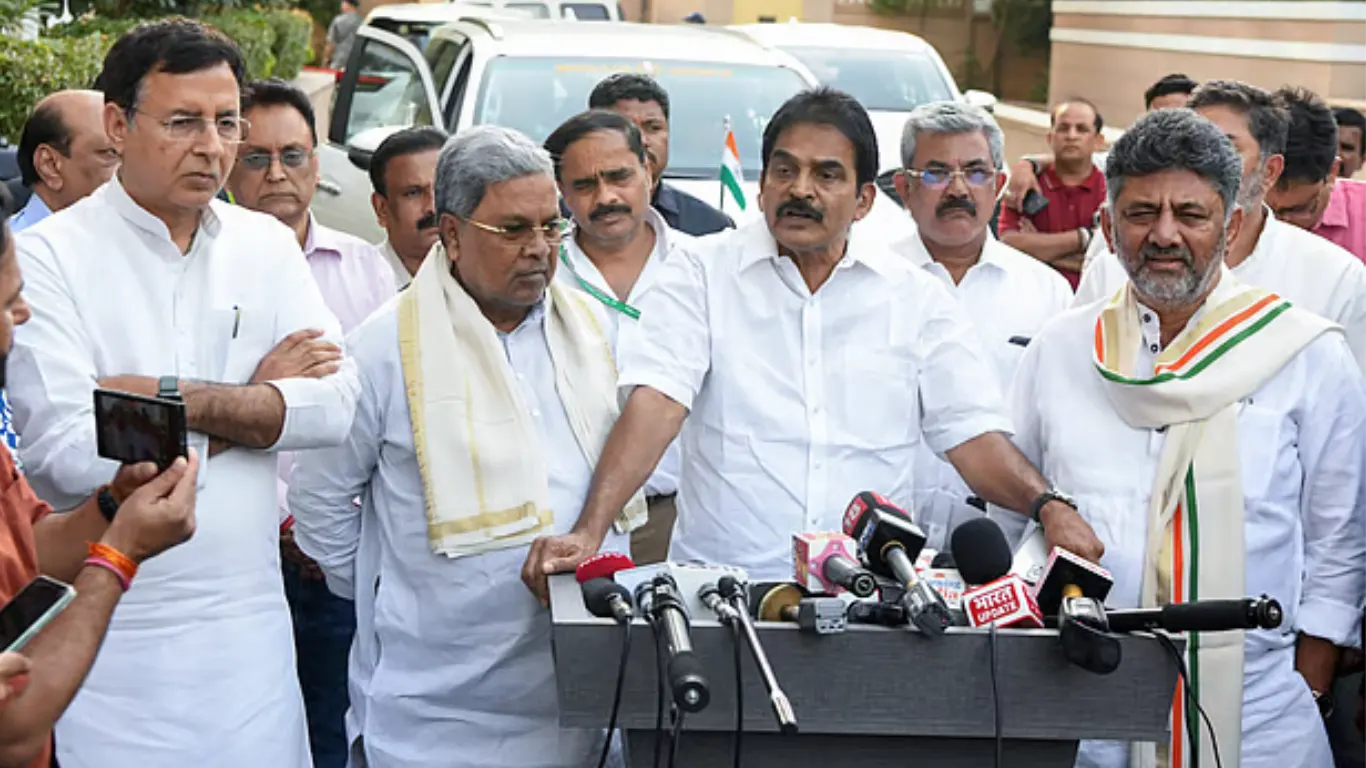
Siddaramaiah's resignation as Karnataka Chief Minister is not a surprise exactly. It was always coming. But watching it unfold in real time, with a breakfast meeting, Cabinet hugs, and sweets being distributed outside a rival's residence, there is something almost theatrical about how Indian politics closes a chapter.
The story, though, is bigger than one man leaving office.
Why This Political Transition in Karnataka Matters Right Now
Karnataka Chief Minister Siddaramaiah was scheduled to submit his resignation to Governor Thaawarchand Gehlot on May 28, 2026, clearing the deck for Deputy Chief Minister D.K. Shivakumar to assume the top post.
This is not an abrupt collapse of a government. It is the fulfillment of an internal arrangement that was always part of the plan. The Congress party won Karnataka's assembly elections in 2023, and from day one, there was an understanding that power would rotate. Under that rotational power-sharing agreement struck after the 2023 assembly election victory, Siddaramaiah was assigned to lead the government for the initial half of the five-year term, with the understanding that Shivakumar would eventually take the reins to spearhead the party ahead of the 2028 elections.
That moment has now arrived.
What Happened: The Sequence of Events
Speculations of a change of guard intensified after the party's top brass held marathon discussions with both Siddaramaiah and Shivakumar in Delhi, with reports indicating the transition of power was very much likely.
On Thursday morning, Siddaramaiah hosted his Cabinet colleagues for breakfast at his official residence, 'Kaveri'. It was, by all accounts, a warm if quietly emotional gathering. Deputy CM DK Shivakumar touched the feet of Karnataka CM Siddaramaiah and the two shared a hug at the CM residence during the breakfast meeting.
The optics were deliberate: this is a handover, not a collapse.
A Congress Legislature Party (CLP) meeting was to be convened shortly after, where DK Shivakumar is anticipated to be formally elected as the new CLP leader. If everything proceeds according to the high command's blueprint, Shivakumar is set to be sworn in as the 24th Chief Minister of Karnataka on Saturday, May 30.
Who Engineered This, and How
The transition did not happen overnight. The dramatic shift follows days of intense marathon meetings in New Delhi at the Congress headquarters, Indira Bhawan, where top central leaders including Congress President Mallikarjun Kharge, Leader of Opposition Rahul Gandhi, and Priyanka Gandhi Vadra held prolonged negotiations to iron out the details of a smooth transition.
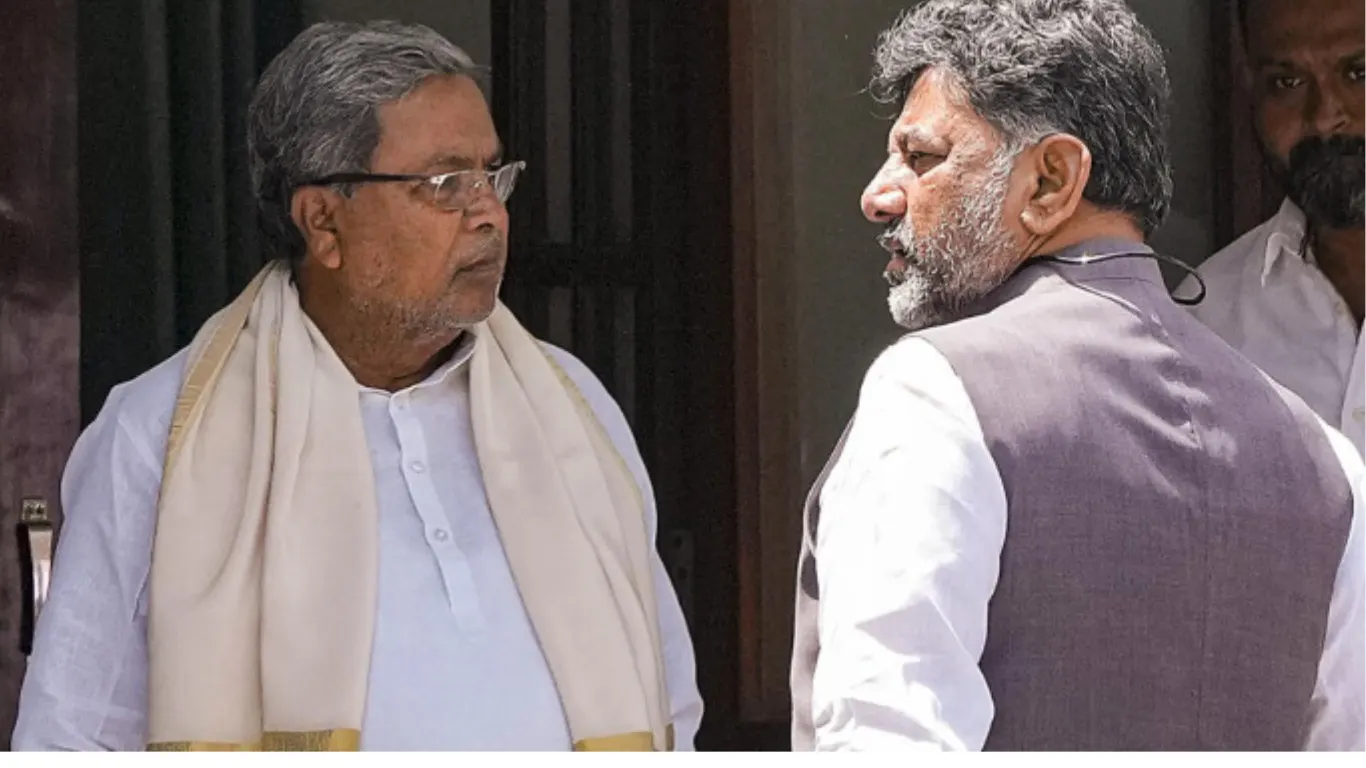
The sudden turn of events has left the incumbent's supporters with a bitter aftertaste, even as the party projected unity publicly. Behind the scenes, the Congress high command made clear that the agreement made in 2023 would be honored.
Read More: Trump's "Mandatory" Demand: Why Saudi Arabia and Qatar Must Now Choose Between Iran and Israel
What Siddaramaiah's Exit Leaves Behind
Siddaramaiah has been a dominant figure in Karnataka politics for decades. His government's AHINDA coalition, a Kannada abbreviation representing minorities, backward classes, and Dalits, was the social foundation of Congress's 2023 win. The concern now being raised in political circles is whether that vote bank holds when the face on the ballot changes.
The Congress, for its part, is betting that Shivakumar's organizational muscle and fundraising ability can hold the coalition together, while positioning the party for the 2028 elections.
What DK Shivakumar Brings to the Karnataka CM Chair
Shivakumar is not a newcomer to power. He has served as a Cabinet minister under multiple Congress governments, has a reputation as a tireless party organizer, and was credited with keeping the Karnataka Congress together during difficult years in opposition. His ability to manage both the party machinery and complex political alliances is widely acknowledged.
His ascension follows a period in which Karnataka's tech sector has been booming, though analysts note that bridging the gap between Bengaluru's growth and the rural economy remains an unresolved challenge for any administration.
Closing Thoughts
What makes this moment interesting is not the drama of who is leaving or who is arriving. It is the rarer story of a rotational power deal actually being kept. Indian coalition politics is littered with such agreements being renegotiated, delayed, or quietly buried. This one, it seems, held.
Siddaramaiah leaves without a full-blown political crisis. Shivakumar steps in with the weight of expectations and the clock already counting down toward 2028.
Karnataka is watching. So is New Delhi.
Read More:Pope Leo XIV's "Magnifica Humanitas": The Church's Bold Stand Against AI Dehumanization
Disclaimer: This article is based on information available across the web. Parchar Manch does not take responsibility for its complete accuracy, as the content could not be fully verified.
FAQs
Why is Siddaramaiah resigning as Karnataka CM?
He is stepping down as part of a power-sharing agreement the Congress party made internally after winning the 2023 state elections. Siddaramaiah was to lead for the first half of the term, with DK Shivakumar taking over thereafter.
Who will be the next Chief Minister of Karnataka?
DK Shivakumar, currently the Deputy Chief Minister and Karnataka Pradesh Congress Committee (KPCC) president, is set to be sworn in as the next Chief Minister, reportedly on May 30, 2026.
Did the Congress high command force Siddaramaiah out?
Not exactly. The transition was negotiated at the top level, involving Congress President Mallikarjun Kharge, Rahul Gandhi, and Priyanka Gandhi. It is framed as fulfilling a prior agreement rather than a removal.
What happens to Siddaramaiah after resignation?
Reports suggest he may meet Rahul Gandhi after his resignation and is likely to decline a Rajya Sabha seat offer, preferring to remain active as an MLA.
What was the Congress rotational power-sharing deal in Karnataka?
After the 2023 Karnataka assembly election win, Congress agreed internally that Siddaramaiah would serve as CM for the first portion of the five-year term and Shivakumar would take over for the second phase to lead the party into the 2028 elections.
Will this leadership change affect Karnataka's governance?
Any transition creates short-term uncertainty. DK Shivakumar's priorities are expected to include retaining the AHINDA voter coalition, managing fiscal pressures from the state's guarantee schemes, and preparing for the 2028 assembly elections.