
Supreme Court Questions CBSE Three-Language Mandate: What Every Parent and Student Needs to Know Right Now
There is something quietly unsettling about a policy that affects millions of school children and their families landing before the highest court in the country just weeks before it is supposed to kick in. That is exactly where the CBSE three-language mandate stands today.
The Supreme Court of India has stepped in.
Why the CBSE Three-Language Policy Has Reached India's Highest Court
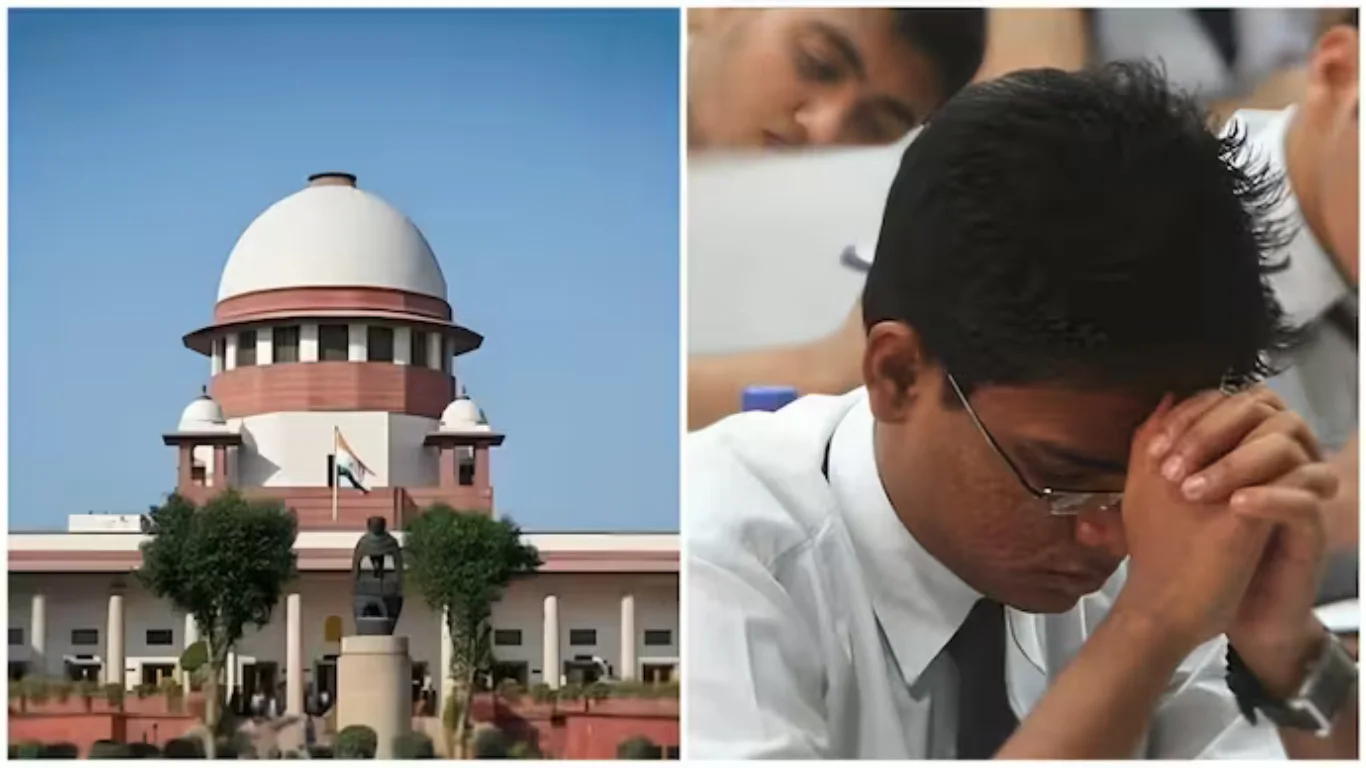
The Supreme Court agreed to examine a plea challenging the Central Board of Secondary Education's new three-language policy for Class 9 students, which is set to take effect from July 1. The court issued notices to the Centre, CBSE, and the National Council of Educational Research and Training, seeking their replies within two weeks.
The bench hearing the matter is led by Chief Justice Surya Kant, along with Justices Joymalya Bagchi and Vipul M. Pancholi.
This is not a routine administrative matter. The policy affects every Class 9 student enrolled in a CBSE school across India, starting the 2026-27 academic session. And it is being pushed mid-year, which has left many parents and school administrators scrambling.
Read More: Tata Sons Board Meeting: The Crisis Inside India's Most Powerful Conglomerate
What the CBSE Three-Language Policy Actually Says
Here is the core of what is being debated.
As per the CBSE's May 15 circular, issued as part of a transitional alignment with the National Education Policy (NEP) 2020 and the National Curriculum Framework for School Education (NCF-SE) 2023, Class 9 students will be required to study three languages, referred to as R1, R2, and R3, with at least two being native Indian languages. Students may opt for a foreign language only as the third language, provided the other two are Indian languages, or as an additional fourth language.
The board said that till the dedicated R3 textbooks are available, Class 9 students shall use the Class 6 R3 textbooks of the 2026-27 edition of the chosen language.
Think of it this way: a student who has been studying Hindi, English, and French since Class 6 may now have to replace French with a regional Indian language. The policy does not erase choice entirely, but it significantly narrows it.
What Parents and Advocates Are Arguing Against It
Senior advocates Mukul Rohatgi and Kapil Sibal argued against the policy, citing practical difficulties and constitutional concerns. Sibal stated that language is a matter of choice and cannot be imposed.
The constitutional concerns run deep. Article 29 of the Indian Constitution protects the right of citizens with a distinct language to conserve it. The imposition of a mandatory two-Indian-language requirement raises questions about whether students in non-Hindi states are being nudged toward Hindi under a policy that claims to be neutral.
Tamil Nadu Chief Minister M.K. Stalin had earlier called the CBSE three-language policy a "calculated attempt at linguistic imposition," with widespread criticism from academics, parents, and civil society groups in Tamil Nadu and beyond.
There is also a more practical, urgent concern the court itself flagged. Schools across India do not all have teachers trained to teach a third Indian language. Textbooks are not ready. The July 1 deadline feels rushed to many educators on the ground.
What the Supreme Court Said, and What Happens Next
The court did not grant an interim stay. The policy is still on track for July 1 unless the final orders say otherwise.
The Supreme Court asked Additional Solicitor General Aishwarya Bhati to submit a report on the logistical preparedness of the CBSE to implement the decision and posted the matter for hearing in the second week of July.
That last detail matters. The next hearing is scheduled for July, which means the policy may go into effect before the court issues its final word. The government's position, submitted through the Additional Solicitor General, was that implementation remains subject to the court's final orders, which is a slight safety net, but not a full stop.
Read More: Sensex Slides as US-Iran Tensions Shake Dalal Street: What Every Indian Investor Must Know Today
The Bigger Picture: NEP 2020 and Language Politics in India
The NEP 2020 three-language formula is not new as an idea. India has debated versions of this policy for decades. What is new is the mandatory nature of its rollout through CBSE, affecting students who had already made subject choices under the old system.
The case raises major questions about students' academic pressure, language choice, and implementation readiness across schools in India.
The NCF-SE 2023 framework underpins this change, and NCERT's role in developing compliant textbooks is central to whether the policy can practically work. That textbooks for Class 9 are not yet ready, and schools are being told to use Class 6 books as a stopgap, tells its own story.
Closing Thoughts
A policy aimed at preserving India's rich linguistic heritage should not put children in a position where they must choose between their academic plans and a mid-year curriculum overhaul. The intent behind the NEP 2020 language policy is not unreasonable. Multilingualism is genuinely valuable. But intent and implementation are two different things, and right now, the gap between them is wide enough for the Supreme Court to notice.
The next hearing in July will be the real test.
Read More: Ram Rahim Gets Parole Again — 16 Times Out of Jail Since 2017, and the Count Keeps Rising
Disclaimer: This article is based on information available across the web. Parchar Manch does not take responsibility for its complete accuracy, as the content could not be fully verified.
FAQs
What is the CBSE three-language mandate for Class 9?
Under a CBSE circular effective July 1, 2026, Class 9 students must study three languages, of which at least two must be native Indian languages. This aligns CBSE with the NEP 2020 and NCF-SE 2023.
Why did the Supreme Court issue notice on the CBSE language policy?
Petitioners, including senior advocates Kapil Sibal and Mukul Rohatgi, challenged the policy on grounds of constitutional concerns, practical implementation difficulties, and the argument that language cannot be mandatorily imposed. The Supreme Court issued notices to the Centre, CBSE, and NCERT, seeking responses within two weeks.
Has the Supreme Court stayed the CBSE three-language policy?
No. The court declined to grant interim relief. The policy is still scheduled to begin July 1, with the next hearing posted for the second week of July.
What is the R1, R2, R3 structure under the CBSE scheme?
R1, R2, and R3 refer to the three language slots in the new scheme of studies. At least two of these must be Indian languages. A foreign language, such as French or German, can only be the third option if the first two are Indian languages.
Can students continue studying foreign languages like French or German under the new CBSE policy?
They can, but only as the third language or an additional fourth language, provided their other two languages are Indian. Students cannot replace both Indian languages with foreign ones.
When is the CBSE three-language rule effective and what happens to existing students?
The policy is effective from July 1, 2026, for the 2026-27 academic session, starting with Class 9. Schools have been asked to update their R3 language offerings on the OASIS portal by June 30.