Supreme Court Questions CBSE Three-Language Policy for Class 9, and Parents Should Be Paying Attention
Picture a fourteen year old, already juggling board exam pressure, suddenly handed a brand new language to learn from scratch. No warm up, no gentle introduction, just straight into it right before the exams that decide their next academic step. That is roughly the scenario the Supreme Court pushed back on this week, and it is worth understanding properly, because it touches almost every CBSE household in the country.
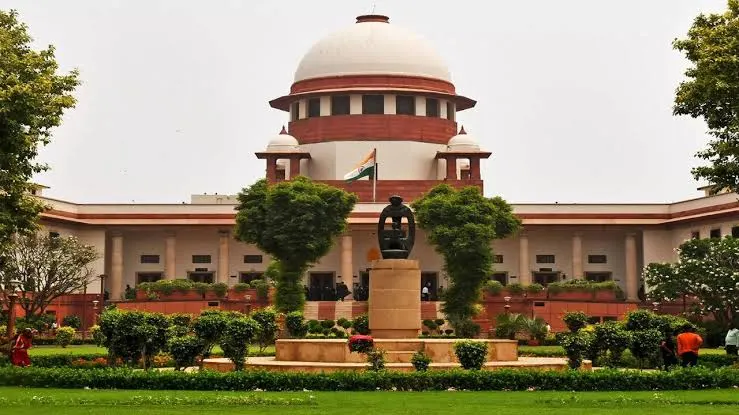
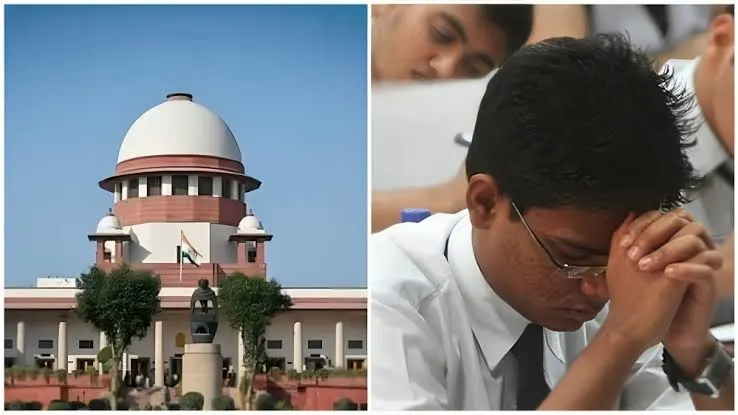
On Thursday, a bench of Justices B.V. Nagarathna and R. Mahadevan raised sharp concerns over the Supreme Court CBSE three-language policy for Class 9, telling the Centre in fairly plain terms that introducing a new language at that stage puts unnecessary pressure on students who are already bracing for board exams. Justice Nagarathna's comment during the hearing was direct, she suggested language should be introduced far earlier, around Class 6, not dropped on students right before their Class 10 boards begin looming.
Why This Actually Matters to CBSE Families
Here is why you should care even if Class 9 feels years away for your child, or years behind you. This is not a small procedural tweak. CBSE had made the three-language formula compulsory starting from the 2026-27 academic session, meaning it directly affects the current batch of students moving into Class 9 right now. If the policy shifts because of this court intervention, it changes what your child studies, how many exams they sit for, and frankly, how stressed their final two years of school become.
There is also a bigger, quieter story running underneath this. Tamil Nadu has been resisting versions of this three-language formula for years, arguing it functions as compulsory Hindi imposition dressed up in neutral policy language. Chief Minister M.K. Stalin called the framework a calculated attempt at linguistic imposition earlier this year, and that tension between the Centre and southern states is exactly what brought this case in front of the Supreme Court in the first place.
Read More: Kuku Technologies Files Confidential IPO: What the Rs 3,500 Crore Listing Really Means
What the Three-Language Policy Really Is, Explained Simply
Think of it like renovating a house while people are still living in it. The National Education Policy, or NEP 2020, envisioned a phased rollout where students would gradually pick up three languages starting from the early school years, giving them time to build comfort before any exam stakes got involved. CBSE's own curriculum framework for 2026-27 initially followed that logic too, introducing the third language, referred to as R3, from Class 6 onward.
The catch is what happens by the time that Class 6 cohort reaches Class 9 and 10. Under CBSE's own notification, the three languages are meant to continue right through board exam years, meaning students end up sitting an exam paper in a third language exactly when board exam pressure is at its peak. For any student who was not part of that Class 6 rollout, or whose school introduces the requirement without adequate preparation, this becomes exactly the abrupt language introduction the Court flagged as academically burdensome.
How the Legal Case Actually Unfolded
- The dispute reached the Supreme Court through an appeal, with Tamil Nadu challenging a Madras High Court order connected to setting up Jawahar Navodaya Vidyalayas, or JNVs, in the state.
- Tamil Nadu objected because JNVs follow the three-language formula, which conflicts with the state's long standing two-language policy built around Tamil and English.
- The Centre told the Court that 689 JNVs have been sanctioned across 666 districts nationally, but none exist in Tamil Nadu since the state has not accepted the scheme.
- During the hearing, the bench turned its attention specifically to the CBSE notification making a third language compulsory for Class 9 students starting 2026-27.
- Justice Nagarathna drew on her own schooling experience, recalling that a third language was introduced during her middle school years, giving students time to prepare before board level exams.
- The Court has now sought a formal response from the Centre on the timing and implementation of the policy.
Real World Examples That Show the Stakes
Petitioners in the case pointed to practical gaps that make this more than an academic debate. Many schools reportedly lack trained language teachers for the third language option, and NCERT textbooks are not yet available in several of the languages schools are expected to teach. Students currently studying a foreign language like French or German also raised concerns about being forced into a sudden shift under the new rules.
Meanwhile, Tamil Nadu has argued that its own model residential schools already achieve what JNVs are meant to do, without requiring the three-language formula at all, an example of how a national policy designed for uniformity keeps colliding with regional education models that already work differently.
Mistakes People Keep Making When Discussing This Policy
A common mistake, and an easy one to make, is treating this purely as a Hindi versus Tamil political fight and missing the actual academic complaint the Supreme Court raised. The Court's concern here was about timing and pressure on Class 9 students specifically, not about which languages are chosen.
Another frequent error is assuming CBSE has already reversed the policy because of this hearing. It has not. The Court has only questioned the approach and sought the Centre's response, no formal order changing the Class 9 language requirement has been issued yet.
Read More: A Judge Just Killed Trump's $100,000 H-1B Visa Fee , Here Is What That Actually Means
Pro Tips for Parents and Students Right Now
If your child is entering Class 9 under a CBSE school, check directly with the school administration on which R3 language option they have registered under the OASIS portal, since that choice, made back at the Class 6 level, is what determines your child's options now. Do not wait for a final Supreme Court ruling before addressing preparation gaps, if your school lacks trained teachers or textbooks for the assigned third language, raise it with the school now rather than after the academic year begins. And keep an eye on the Centre's formal response to the Court, since that filing is likely to clarify whether any transition relief will be offered to current Class 9 students specifically.
Closing Thoughts
There is something almost reassuring about a court pausing to ask, quite plainly, whether a policy actually makes sense for the age group it is imposed on. Education policy debates in India tend to get swallowed by politics fast, Hindi versus Tamil, Centre versus states, and somewhere in that noise, an actual fourteen year old with an exam looming gets forgotten. This week, at least for one hearing, that student was the one the Court seemed to be thinking about.
Read More: Oman in the Crossfire: Why the World's Most Neutral Nation Is Now Under Enormous Pressure
Disclaimer: This article is based on information available across the web. Parchar Manch does not take responsibility for its complete accuracy, as the content could not be fully verified.
FAQs
What did the Supreme Court say about CBSE's three-language policy?
The Court questioned CBSE's decision to make a third language compulsory from Class 9, saying it adds pressure on students already preparing for board exams, and suggested it should be introduced earlier, around Class 6.
Has the policy been officially changed or cancelled?
No, the Supreme Court has only raised concerns and sought a response from the Centre, no formal order has changed the CBSE Class 9 requirement yet.
Why is Tamil Nadu part of this case?
Tamil Nadu challenged a Madras High Court order related to Jawahar Navodaya Vidyalayas, arguing the schools' three-language formula conflicts with the state's two-language policy of Tamil and English.
When does the CBSE three-language rule apply?
CBSE has made the three-language formula compulsory for students entering Class 9 from the 2026-27 academic session, following an earlier rollout starting at Class 6.
What problems have schools reported with this policy?
Petitioners cited a shortage of trained language teachers and the unavailability of NCERT textbooks in several languages required under the new framework.
What should parents do while this case is pending?
Confirm your child's registered R3 language option with the school, raise any teacher or textbook gaps immediately, and watch for the Centre's formal response to the Supreme Court for further clarity.